
Ingredients
The chorizo
- 4chorizos criollos, fresh and uncured, about 150 g each
- 2 kghardwood charcoal, or a hot grill
The bread and sauce
- 4crusty rolls (pan francés or baguette cut in 20 cm lengths)
- 250 mlchimichurri
- 150 mlsalsa criolla: 1 tomato, 1 onion and ½ red pepper finely diced, dressed with 2 tbsp oil, 1 tbsp vinegar and salt
Directions
- Bring the chorizos to room temperature and prick them nowhere. Piercing releases the fat that keeps the sausage juicy and causes flare-ups.
- Grill 20–25 minutes, turning every 5 minutes, until the casing is taut, deep brown and blistered and the juices run clear. The internal temperature should reach 72°C (160°F).
- Set a butterflied chorizo in each roll, pressing it down so the fat soaks into the bread.
- Spoon over chimichurri generously and add salsa criolla if you want it.
Technique
- Chorizo criollo is a fresh coarse sausage of pork and a little beef, seasoned simply with salt, pepper, garlic, nutmeg and sometimes wine. It is not the dried, pimentón-heavy Spanish chorizo and cannot be swapped for it.
- Cook it slowly. A hot fire splits the casing, the fat drains into the coals and the sandwich is dry.
- Choripán is street and stadium food, sold from parrillas at football grounds and on the road out of every Argentine city, and it is also the first thing served at a family asado while the meat cooks.
- The bread should be crusty enough to hold the fat without going to pulp.
Substitutions
- No chorizo criollo: use a fresh coarse pork sausage such as a Toulouse or a plain butcher’s sausage; season the chimichurri a little harder to compensate.
- No charcoal: cook in a heavy pan over medium heat for 20 minutes with a splash of water at the start, then let it evaporate and brown.
Variations
- Choripán a la mariposa, split flat and crisped on the cut side.
- Bondiola al pan, the same idea with slow-cooked pork shoulder.
- Morcipán, made with morcilla (blood sausage) instead of chorizo.
History
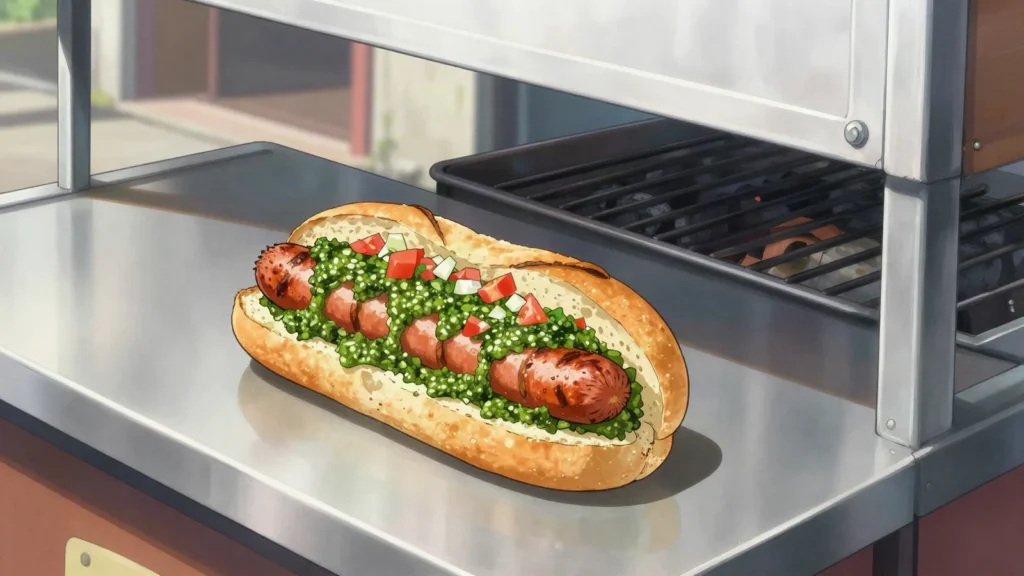
A sandwich combining a grilled chorizo sausage, split lengthwise and served on crusty bread, typically topped with chimichurri sauce, documented across Argentina as one of the country’s most iconic street foods and barbecue staples, closely tied to the broader Argentine asado, or barbecue, tradition. Its name, a direct combination of chorizo and pan, the Spanish word for bread, describes the sandwich’s simple, defining two-part structure, and choripán is traditionally the first food served at the start of a larger Argentine asado gathering while the main cuts of meat continue cooking. Choripán remains an essential and beloved part of Argentine barbecue culture, commonly sold from street vendors at sporting events and public gatherings across the country.
Frequently asked questions
What is Choripán?
Choripán is a street food from Argentina: grilled chorizo in crusty bread with chimichurri, match-day food. A sandwich combining a grilled chorizo sausage, split lengthwise and served on crusty bread, typically topped with chimichurri sauce, documented across Argentina as one of the country’s most iconic street foods and barbecue staples, closely tied to the broader Argentine asado, or barbecue, tradition. Its name, a direct combination of chorizo and pan, the Spanish word for bread, describes the sandwich’s simple, defining two-part structure, and choripán is traditionally the first food served at the start of a larger Argentine asado gathering while the main cuts of meat continue cooking. Choripán remains an essential and beloved part of Argentine barbecue culture, commonly sold from street vendors at sporting events and public gatherings across the country.
How long does Choripán take to make?
Choripán takes 15 min of preparation and 30 min of cooking. The recipe makes 4 sandwiches. It is rated easy to make.
What can I substitute in Choripán?
Yes, within limits. No chorizo criollo: use a fresh coarse pork sausage such as a Toulouse or a plain butcher’s sausage; season the chimichurri a little harder to compensate. No charcoal: cook in a heavy pan over medium heat for 20 minutes with a splash of water at the start, then let it evaporate and brown.