
Ingredients
From the tree
- 1mature oil palm or raffia palm, at least 8 years old
- sap, 4–6 litres a day per tree
- 1sterilised gourd or plastic container, tied under the cut
Tapper’s kit
- 1climbing rope or hoop of woven fibre
- 1sharp machete or tapping knife
- 1length of hollow reed or split bamboo, to guide the sap
- clean cloth, to strain the sap
To serve
- 1 litremaruvo per 4 people
- chilled gourds or glasses
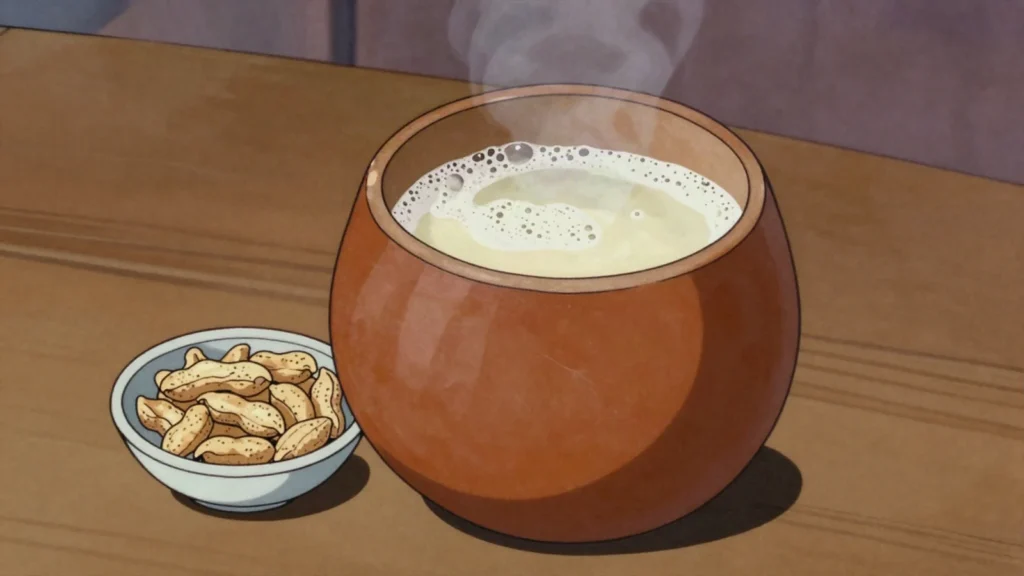
- roasted peanuts or paracuca alongside
Directions
- The tapper climbs the trunk with a fibre hoop at first light and cuts into the crown of the palm, either at the base of an unopened flower spathe or into the soft heart of the trunk.
- A reed is set into the cut to guide the sap, and a scalded gourd is lashed beneath it and left through the day.
- The sap runs on its own: clear, sweet and faintly perfumed as it leaves the tree, with no yeast added by anyone.
- Wild yeasts living on the tree and in the gourd begin fermenting it within minutes of collection, so what is drawn off is already changing before the tapper is back on the ground.
- The gourd is collected in the afternoon or the following morning and the sap strained through cloth to remove insects and bark.
- In the first hours the drink is sweet, cloudy white and barely alcoholic, at around 1–2% alcohol; this is when it is sold to children and to people who want it fresh.
- By the middle of the day it is 3–5% alcohol, sharp and lively with a bready smell; by nightfall it has gone sour and vinegary and is at its strongest.
- The cut is reopened with a fresh shaving each morning to keep it running, and a single palm can be tapped for weeks before it needs to rest.
- Serve cool, straight from the gourd, shaken to redistribute the yeast, with roasted peanuts. It cannot be stored: what is not drunk the same day becomes vinegar.
Technique
- Maruvo is not brewed, it is harvested. There is no recipe in the usual sense, because the fermentation begins in the tree and is finished by the time the drink reaches the drinker, which is why it tastes different at every hour of the day.
- The two chief risks are hygiene and adulteration. Sap collected into dirty containers spoils fast, and sellers watering it down or adding sugar or worse is a persistent problem in Angolan markets, so it is bought from a known tapper.
- Tapping is skilled and dangerous work: the climb is unroped in many places, and cutting too deep into the crown kills the palm.
- In Cabinda and the north, palm wine has a ceremonial role at weddings and funerals, and the first gourd is often poured on the ground for the ancestors.
Substitutions
- There is no home substitute for a tapped palm. Bottled palm wine from African shops, pasteurised or refrigerated, is the practical alternative, though it tastes tamer than the fresh sap.
- For something in the same register, a very young, cloudy cider or a lightly fermented ginger beer gives the same low-alcohol sweet-sour bite.
Variations
- Maruvo doce, drunk within an hour of collection while it is still sweet.
- Maruvo azedo, left until evening, sour and strong, preferred by older drinkers.
- The soured sap left another week and used as palm vinegar in the kitchen.
History
Tapped from oil and raffia palms in the north; it ferments spontaneously within hours and is drunk at village gatherings and funerals.
Frequently asked questions
What is Maruvo?
Maruvo is a wine & spirit from Angola: palm sap tapped and left to ferment, sweet in the morning, sour by night. Tapped from oil and raffia palms in the north; it ferments spontaneously within hours and is drunk at village gatherings and funerals.
How long does Maruvo take to make?
Maruvo takes 1 hr for the first tapping of preparation and collected daily, drinkable within hours of cooking. The recipe makes about 5 litres a day from one palm. It is rated hard to make.
What can I substitute in Maruvo?
Yes, within limits. There is no home substitute for a tapped palm. Bottled palm wine from African shops, pasteurised or refrigerated, is the practical alternative, though it tastes tamer than the fresh sap. For something in the same register, a very young, cloudy cider or a lightly fermented ginger beer gives the same low-alcohol sweet-sour bite.
What is the most important thing to get right in Maruvo?
Maruvo is not brewed, it is harvested. There is no recipe in the usual sense, because the fermentation begins in the tree and is finished by the time the drink reaches the drinker, which is why it tastes different at every hour of the day.