
Ingredients
The dates
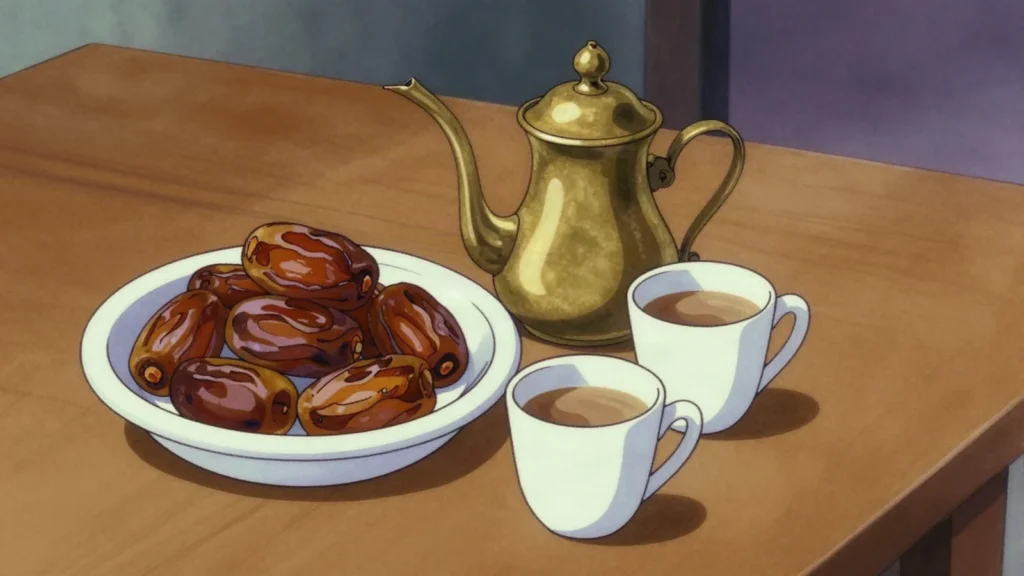
- fresh or dried Omani dates
- khalas, fardh or khunaizi
- at room temperature
The coffee
- Omani kahwa
- lightly roasted coffee
- ground cardamom
- sometimes rosewater or saffron
To serve
- a small handleless cup
- a dallah, the long-spouted pot
- a shallow dish for the dates
The custom
- offered to every visitor
- taken with the right hand
Directions
- Pick plump unblemished whole dates. They should not be dry and shrivelled.
- Take the dates out of the refrigerator. Let them come to room temperature. Cold dates are firm and less sweet.
- Set the dates in a shallow dish. Grind the lightly roasted beans. Add ground cardamom generously.
- Adjust it all to your own taste. Brewing it is straightforward enough. Bring water to a boil in a pot. Add the coffee and cardamom to it.
- Let it simmer for about ten minutes. Add a little rosewater to the pot. Add either of them quite sparingly. Pour it through a fine strainer.
- Let it stand a minute before pouring. Pour the coffee into the small cups. Fill each of the cups only partway. The guest takes a date and sips.
- Keep pouring until the guest shakes it. That shake means they have had enough.
Technique
- Oman’s aflaj irrigation channels were inscribed on the UNESCO World Heritage list in 2006 — five of them — and the system is genuinely ancient and still in use. Water is led by gravity from mountain sources, running underground for stretches to reduce evaporation, and water rights are divided by time with each household’s share carefully recorded, as it has been for centuries. Date palms are the main oasis crop, tolerating heat and some salinity and shading the crops grown beneath them.
- Dates and coffee are offered to every visitor before any business, and the offering is a genuine social obligation rather than a courtesy. The small handleless cup is filled only partway and refilled repeatedly; shaking it slightly from side to side is the understood signal for enough, while handing it back plain means more. Both cup and dates are taken with the right hand.
- The dates are very sweet and the lightly roasted cardamom coffee bitter and aromatic, and each balances the other exactly — which is why they are served together and eaten alternately.
Substitutions
- Khalas dates are soft and caramel-sweet and widely considered the finest; fardh are darker, firmer, keep very well dried and are exported in quantity.
- A little rosewater or a few saffron threads in the coffee are both traditional in Oman; rosewater is easy to overdo.
Variations
- Dates are eaten at named ripening stages: rutab is the soft fresh stage eaten in season and keeping only days, tamr the fully dried stage that keeps for months.
- White crystals on the surface are sugar bloom, which is harmless but shows age and a drier date inside.
- Take dates out of the refrigerator half an hour before serving, since cold dates are firm and taste less sweet.
History
Date palms underpin Oman’s oasis farming, watered by the falaj irrigation channels listed by UNESCO in 2006.
Frequently asked questions
What is Omani dates?
Omani dates is a snack from Oman: khalas and fardh dates served with coffee to every visitor. Date palms underpin Oman’s oasis farming, watered by the falaj irrigation channels listed by UNESCO in 2006.
How long does Omani dates take to make?
Omani dates takes 10 minutes of preparation and no cooking at all. The recipe makes serves any number. It is rated easy to make.
What can I substitute in Omani dates?
Yes, within limits. Khalas dates are soft and caramel-sweet and widely considered the finest; fardh are darker, firmer, keep very well dried and are exported in quantity. A little rosewater or a few saffron threads in the coffee are both traditional in Oman; rosewater is easy to overdo.
What is the most important thing to get right in Omani dates?
Dates and coffee are offered to every visitor before any business, and the offering is a genuine social obligation rather than a courtesy. The small handleless cup is filled only partway and refilled repeatedly; shaking it slightly from side to side is the understood signal for enough, while handing it back plain means more. Both cup and dates are taken with the right hand.