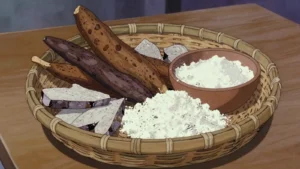
Ingredients
Toasted flour
- 200 gfine cassava flour (fuba de mandioca)
- 1 pinchof fine salt
To mix
- 800 mlwhole milk, or water, or a mixture of the two
- 60–80 gcaster sugar, to taste
- 0.5 tspground cinnamon, optional
- 1 pinchof grated nutmeg, optional
To serve
- 4mugs or bowls
- 2 tbsproasted peanuts, chopped, optional
Directions
- Set a wide dry frying pan over medium-low heat and add the cassava flour with the pinch of salt.
- Toast 8–12 minutes, stirring constantly with a wooden spoon and sweeping the flour off the base so nothing sits still, until it turns from chalk white to pale biscuit brown and smells nutty and faintly popcorn-like.
- Tip it straight out onto a cold plate. Flour left in the hot pan goes on colouring and scorches within a minute.
- Let it cool completely; hot flour hitting milk clumps instantly.
- Warm the milk with the sugar until it steams but does not boil, and stir until the sugar has dissolved.
- Rain the toasted flour into the warm milk in a thin stream, whisking hard the whole time, until it is smooth and free of lumps.
- Let it stand 5 minutes so the flour hydrates and the drink thickens to the consistency of thin cream; it should coat the back of a spoon lightly and drink easily.
- Adjust with more milk if it has gone too thick, and season with cinnamon and nutmeg.
- Pour into mugs, scatter chopped peanuts over if you like, and serve warm at breakfast or cold as an afternoon drink.
Technique
- Ngonguenha is the everyday breakfast and lean-season drink of much of Angola: cheap, filling, and built entirely on cassava, the crop that underpins the country’s food.
- Toasting is the whole recipe. Untoasted cassava flour tastes raw and pasty and slides straight to the bottom of the cup, while properly toasted flour is nutty and stays suspended.
- Whisk while pouring, not after. Cassava starch swells fast and lumps that form on contact will not whisk out.
- How thick it should be is a matter of household preference: some make it a drink, others a spoonable porridge, and children are often given the thicker version.
Substitutions
- Use water instead of milk for the plainer, traditional version, sweetened with sugar or honey; it is thinner and tastes more strongly of the toasted cassava.
- Fuba de bombo, the fermented cassava flour, can replace plain cassava flour and gives a sour, more complex drink.
Variations
- Ngonguenha with condensed milk stirred through instead of sugar, the Luanda city version.
- Served cold over ice with grated coconut in hot weather.
- Made with toasted maize flour in maize-growing regions, for a sweeter, heavier drink.
History
A cheap filling drink of the Angolan musseques, made from the same fuba that thickens funge.
Frequently asked questions
What is Ngonguenha?
Ngonguenha is a drink from Angola: toasted cassava flour stirred into water or milk with sugar. A cheap filling drink of the Angolan musseques, made from the same fuba that thickens funge.
How long does Ngonguenha take to make?
Ngonguenha takes 15 min of preparation and 15 min of cooking. The recipe makes 4 servings. It is rated easy to make.
What can I substitute in Ngonguenha?
Yes, within limits. Use water instead of milk for the plainer, traditional version, sweetened with sugar or honey; it is thinner and tastes more strongly of the toasted cassava. Fuba de bombo, the fermented cassava flour, can replace plain cassava flour and gives a sour, more complex drink.
What is the most important thing to get right in Ngonguenha?
Rain the toasted flour into the warm milk in a thin stream, whisking hard the whole time, until it is smooth and free of lumps.