
Ingredients
Rice
- 500 gbasmati or Iranian rice
- 3 tbspsalt
- water
Jewels
- 100 gbarberries, zereshk
- 100 gcandied orange peel
- 80 gslivered pistachios
- 80 gslivered almonds
- 50 graisins or golden sultanas
Syrup and spice
- 80 gsugar
- 60 mlwater
- 2 tbsprose water
- 1 tspground cardamom
- a good pinch of saffron in 3 tbsp hot water
Also
- 100 gbutter
- 2 tbspoil
Tahdig
- 2 tbspyoghurt
- 1egg yolk, optional
- a little of the saffron water
Directions
- Wash the rice in several changes of water until it runs clear, then soak it in heavily salted water for 2 hours. Both the washing and the salted soak matter: they take off the loose starch and season the grain from the inside, and this is why Persian rice cooks up separate.
- Grind saffron with sugar rather than using it whole, because the crystals shred the threads and release far more colour. Soak the barberries in cold water 15 minutes, then rinse them well and drain. Barberries carry grit and must be soaked and rinsed, and they burn in seconds.
- Fry the barberries in a little butter with a spoonful of sugar for no more than 30 seconds, then take them straight off the heat. Boil the sugar and water into a light syrup and simmer the candied orange peel in it for 5 minutes. If your orange peel is bitter, blanch it in fresh water two or three times first.
- Toss the pistachios and almonds briefly in butter, and plump the raisins in a little hot water. Boil 5 to 7 minutes only, until the grains are soft on the outside but still firm at the very centre when bitten. Parboil, do not cook.
- Drain it and rinse briefly with lukewarm water. Heat the oil and some butter in a heavy pot and spread the yoghurt rice evenly across the base. Heap it into a cone rather than flattening it, which lets the steam circulate up through the grains. The cloth catches condensation that would otherwise drip back and make the top layer soggy.
- Cook on a medium heat for 10 minutes, then on the lowest heat for 45 minutes. Do not lift the lid during the steaming, because every look releases the steam doing the work.
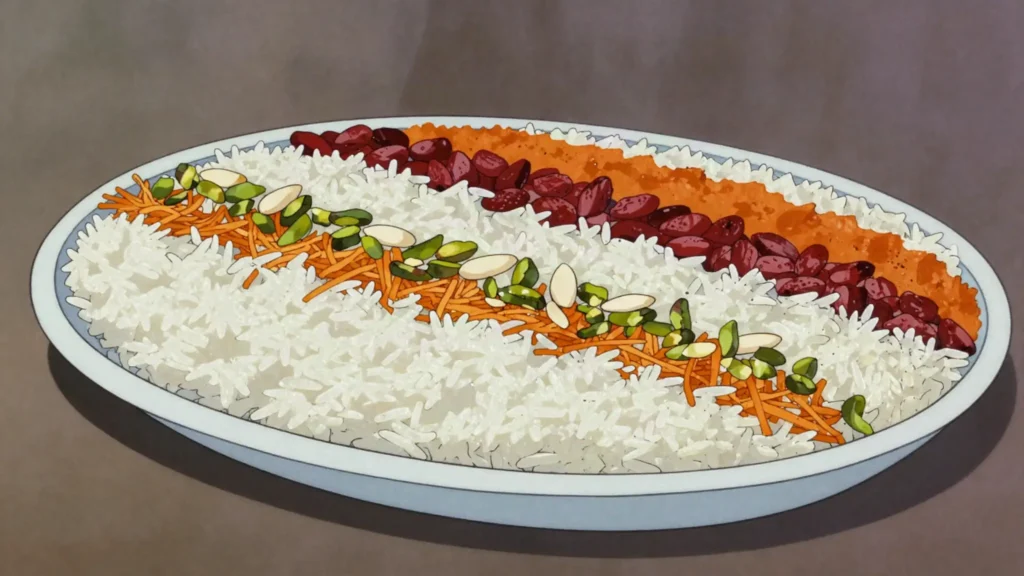
- Stand the pot in a sink of cold water for a minute, which loosens the tahdig. Pile the rice on a platter, arrange the remaining jewels over it in bands or heaps, and break the tahdig into shards on top or alongside. Arrange the jewels in distinct sections rather than scattering them, so each one is visible, which is the whole point of the dish.
Technique
- Zereshk, barberries, are sold in Iranian shops and are worth ordering; nothing else has quite that sourness.
- The tahdig is the prized part and Iranian families argue over it.
- It is festive food and is not made for an ordinary weeknight.
Substitutions
- Dried cranberries in place of barberries, which are sweeter and less sharp.
- Home-candied orange peel, made by simmering blanched peel in syrup.
Variations
- Served with saffron chicken, which is the wedding pairing.
- With carrot slivers candied alongside the peel.
- Shirin polo, the closely related sweet rice.
History
A jeweled rice dish, its name meaning literally bejeweled rice, studded with barberry, pistachio, almond, orange peel and saffron in a visually striking, colourful arrangement, developed within Persian royal court cooking, generally understood as a celebratory dish reflecting the elaborate, visually impressive style associated with Qajar and earlier Persian dynastic banquets rather than everyday home cooking. Its combination of numerous individually prepared and candied or toasted ingredients, each requiring separate preparation before being layered into the finished rice, makes morasa polo one of the more labor-intensive dishes within the broader Persian polo tradition. It remains especially associated with weddings and other major celebratory occasions in Iran, valued as much for its visual presentation as for its taste.
Frequently asked questions
What is Morasa polo?
Morasa polo is a main from Iran: jewelled rice with barberries, candied orange peel, pistachio and almond. A jeweled rice dish, its name meaning literally bejeweled rice, studded with barberry, pistachio, almond, orange peel and saffron in a visually striking, colourful arrangement, developed within Persian royal court cooking, generally understood as a celebratory dish reflecting the elaborate, visually impressive style associated with Qajar and earlier Persian dynastic banquets rather than everyday home cooking. Its combination of numerous individually prepared and candied or toasted ingredients, each requiring separate preparation before being layered into the finished rice, makes morasa polo one of the more labor-intensive dishes within the broader Persian polo tradition. It remains especially associated with weddings and other major celebratory occasions in Iran, valued as much for its visual presentation as for its taste.
How long does Morasa polo take to make?
Morasa polo takes 40 min plus 2 hr soaking of preparation and 1 hr 15 min of cooking. The recipe makes 6 servings. It is rated hard to make.
What can I substitute in Morasa polo?
Yes, within limits. Dried cranberries in place of barberries, which are sweeter and less sharp. Home-candied orange peel, made by simmering blanched peel in syrup.
What is the most important thing to get right in Morasa polo?
Grind saffron with sugar rather than using it whole, because the crystals shred the threads and release far more colour. Soak the barberries in cold water 15 minutes, then rinse them well and drain. Barberries carry grit and must be soaked and rinsed, and they burn in seconds.