
Ingredients
Chiles
- 8mulato chiles, stemmed, seeded and deveined
- 5ancho chiles, stemmed, seeded and deveined
- 5pasilla chiles, stemmed, seeded and deveined
- 2chipotle mora chiles, stemmed
Nuts, seeds and fruit
- 70 gwhole almonds
- 60 gpeanuts
- 50 graisins
- 40 gsesame seeds, plus more for scattering
- 1ripe plantain, sliced
- 1stale bolillo roll, sliced
- 1corn tortilla, torn
Aromatics and spice
- 3tomatoes, halved
- 4tomatillos, husked
- 1white onion, quartered
- 6garlic cloves, unpeeled
- 1 stickMexican canela (5 cm)
- 4cloves
- ½ tspanise seed
- 1 tspcoriander seed
- ½ tspblack peppercorns
To finish
- 180 mllard, or corn oil
- 90 gchocolate de mesa (Mexican tablilla with canela), chopped
- 2 litreschicken broth, hot
- 2 tbspsugar, or to taste
- 2 tspsalt
To serve
- 2chickens, jointed and poached in the broth, or 1 turkey
- White rice and warm corn tortillas
Directions
- Poach the chicken in salted water with half an onion and a garlic clove for 40 minutes; keep the meat warm and reserve 2 litres of the broth, which becomes the liquid of the mole.
- Toast the chiles on a dry comal over medium heat, 20–30 seconds a side, pressing them flat until they puff, soften and smell of raisins and tobacco. Do not let them blacken; a burnt chile makes the whole batch bitter, and unlike mole negro this mole has no burnt element by design.
- Soak the toasted chiles in hot water for 30 minutes until fully pliable.
- Fry the ingredients one type at a time in the lard: almonds until golden, peanuts, sesame, then the plantain until caramelised, the bread and the tortilla until browned, and the raisins last, for a few seconds, until they swell. Lift each out as it is done.
- Char the tomatoes, tomatillos, onion and garlic on the dry comal for about 10 minutes until blistered and soft, then peel the garlic.
- Toast the canela, cloves, anise, coriander seed and peppercorns for 30 seconds, then grind fine.
- Blend in batches with a little broth until very smooth: the chiles first, then the fried nuts and bread, then the charred vegetables. Sieve each batch, pressing hard with a ladle, and discard the fibres.
- Heat the remaining lard in a wide cazuela until it just smokes and add the chile puree all at once. It will spatter fiercely. Fry it, stirring without stopping, for 15 minutes until it darkens to the colour of old brick and the fat separates and pools at the edges.
- Stir in the nut puree and the ground spices, fry 8 minutes more, then add the hot broth a ladle at a time, working each one in smoothly.
- Simmer very gently for 1 hour 30 minutes, stirring every few minutes and scraping the bottom, until the mole is thick enough to coat the back of a spoon and hold a line drawn through it. Add the chocolate, sugar and salt in the last 20 minutes.
- Taste and adjust. Mole poblano should be fruity and warmly spiced, faintly sweet, with a slow heat that builds. It is not a chocolate sauce; the chocolate is a rounding note, not the flavour.
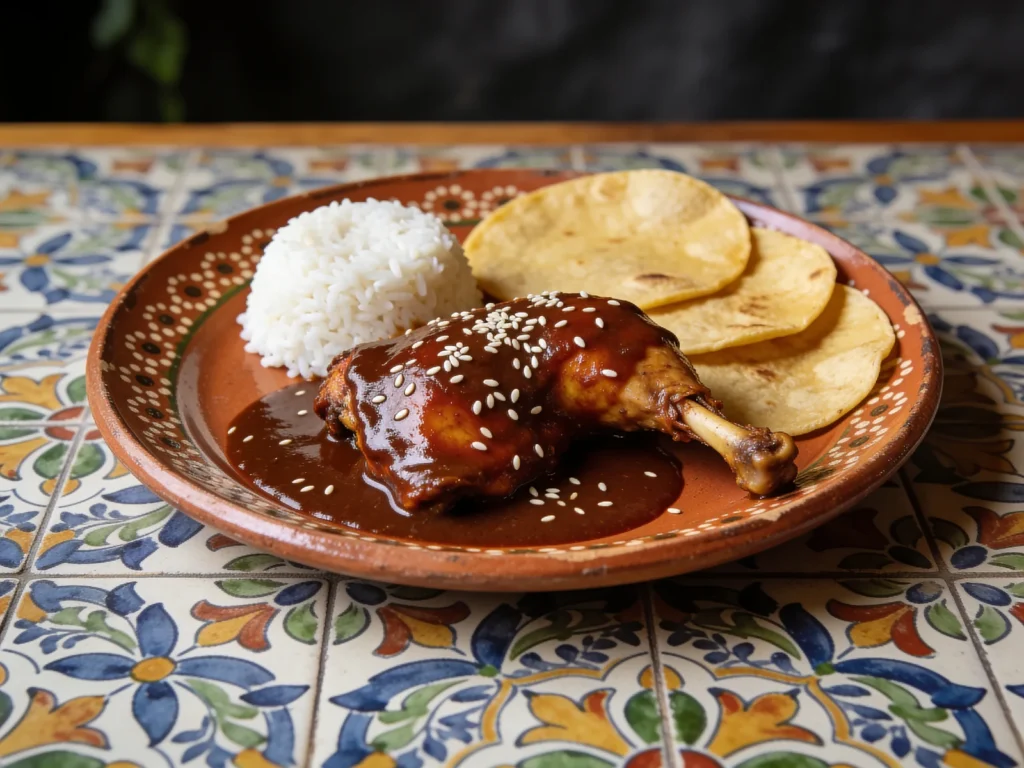
- Serve the poached chicken pieces napped generously with mole, scattered with sesame seeds, with white rice and tortillas alongside.
Technique
- Mole poblano is Puebla’s dish and Mexico’s most famous, traditionally credited to the nuns of Santa Rosa in the seventeenth century, though the story is legend rather than record and the technique clearly builds on pre-Hispanic chile pastes.
- The difference from Oaxacan mole negro is real and worth knowing: poblano is mulato-led, sweeter, fruitier and reddish-brown; negro is chilhuacle-led, smokier and truly black from deliberately carbonised chile seeds.
- Sazonar, frying the raw paste in hot fat until it darkens and the oil separates, is the step that makes a mole taste cooked rather than muddy. Skip it and no amount of simmering will fix the flavour.
- Mole is always better on the second day, and the paste keeps a week in the fridge or months frozen. In Puebla it is bought as a thick paste by the kilo and let down with broth at home.
Substitutions
- No mulato chiles: use more ancho, but expect a sweeter, less earthy mole; mulato is what gives poblano its coffee-and-liquorice depth.
- No Mexican chocolate de mesa: 80 g of 70 percent dark chocolate plus 1 tsp ground canela and 1 tbsp sugar is close.
- Corn oil in place of lard works, though the classic Puebla version is fried in pork fat.
Variations
- Mole de olla and mole verde are unrelated dishes despite the name; mole simply means sauce.
- Enmoladas are tortillas dipped in leftover mole, folded and topped with onion and cheese.
- For weddings and Day of the Dead the same mole is served over turkey, which is its oldest form.
History
Puebla tradition credits 17th-century nuns of the Santa Rosa convent; the sauce fuses New World chiles and chocolate with spices from Asia and Europe.
Frequently asked questions
What is Mole poblano?
Mole poblano is a main from Mexico: chicken in complex chile-chocolate sauce of many ingredients. Puebla tradition credits 17th-century nuns of the Santa Rosa convent; the sauce fuses New World chiles and chocolate with spices from Asia and Europe.
How long does Mole poblano take to make?
Mole poblano takes 1 hr 30 min of preparation and 2 hr 30 min of cooking. The recipe makes 10 servings. It is rated hard to make.
What can I substitute in Mole poblano?
Yes, within limits. No mulato chiles: use more ancho, but expect a sweeter, less earthy mole; mulato is what gives poblano its coffee-and-liquorice depth. No Mexican chocolate de mesa: 80 g of 70 percent dark chocolate plus 1 tsp ground canela and 1 tbsp sugar is close. Corn oil in place of lard works, though the classic Puebla version is fried in pork fat.
What is the most important thing to get right in Mole poblano?
Toast the chiles on a dry comal over medium heat, 20–30 seconds a side, pressing them flat until they puff, soften and smell of raisins and tobacco. Do not let them blacken; a burnt chile makes the whole batch bitter, and unlike mole negro this mole has no burnt element by design.