
Ingredients
Couscous
- 700 gmillet couscous
- 300 mlwater
- 2 tbspgroundnut oil
- 1 tspsalt
Sauce
- 800 glamb or beef, cut into large pieces on the bone
- 3 tbspgroundnut oil
- 2onions, chopped
- 4 clovesgarlic, crushed
- 3 tbsptomato purée
- 4tomatoes, chopped
- 1 litrewater or stock
- 2carrots, cut into batons
- ¼small cabbage, cut into wedges
- 1sweet potato, cut into chunks
- 1aubergine, cut into chunks
- 1Scotch bonnet, left whole
- 1stock cube
- salt and black pepper
Directions
- Rub the millet couscous with the water a little at a time, working it through your fingers so every grain is damp but none are clumped, then rub in the oil and salt. Let it stand 15 minutes to absorb.
- Brown the meat hard in the oil in the base of a couscoussier or a large pot, in batches so it colours rather than steams. Set aside.
- Soften the onions in the same fat, add the garlic and tomato purée and fry two minutes until the purée darkens. Add the tomatoes and cook to a paste.
- Return the meat, add the water, the stock cube and the whole Scotch bonnet, season, and bring to a simmer.
- Set the couscous in the steamer basket above the sauce and steam, uncovered basket, for 30 minutes. The steam must pass through the grain, so do not pack it down.
- Tip the couscous into a wide bowl, break up every lump with a fork and wet hands, sprinkle over a little water, and return it to steam a second time for 20 minutes. This second steaming is what separates good couscous from a dense one.
- Meanwhile add the carrots and sweet potato to the sauce, then the cabbage and aubergine 15 minutes later, so each is cooked but not collapsed.
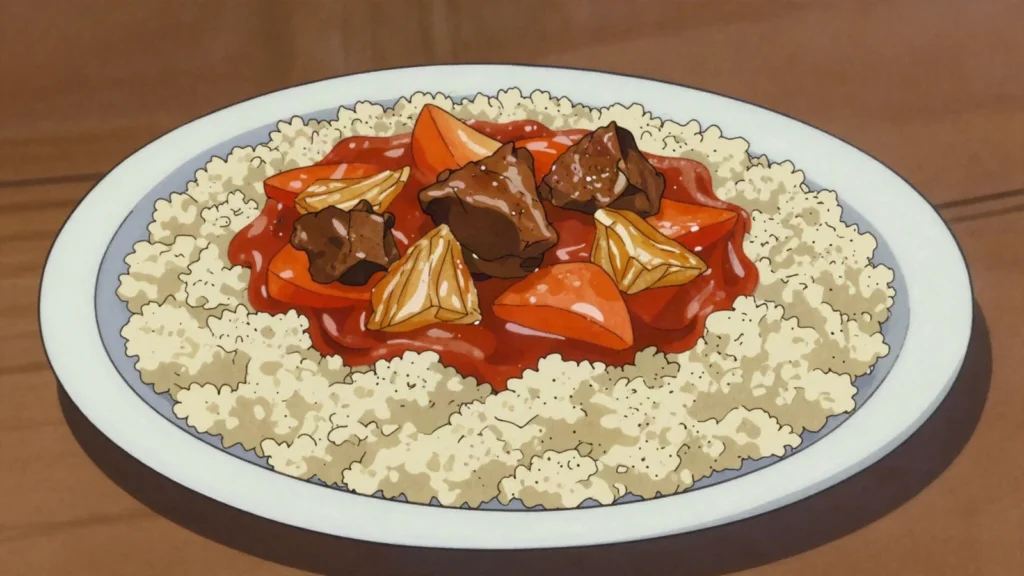
- Fluff the couscous a final time, mound it on a wide platter, make a well in the centre, and ladle the meat, vegetables and plenty of sauce into it. Serve the whole chilli on top for those who want it.
Technique
- Millet couscous is coarser and thirstier than wheat couscous and cannot be made by pouring boiling water over it. It needs steaming twice, with a rubbing-out in between, or it sets into a single mass.
- The chilli stays whole. Burst in the pot it overwhelms a dish meant to be savoury rather than hot.
- Cut the vegetables large. Small pieces disintegrate over the time the meat needs.
Substitutions
- Wheat couscous works and cooks faster, but the flavour is milder and the dish stops being basi.
- Guinea fowl or chicken instead of lamb; reduce the simmer to 40 minutes.
- Sunflower oil for groundnut oil, though groundnut is the West African fat and tastes of it.
Variations
- Served on Fridays and at ceremonies in Bamana and Soninke households, where the platter goes to the middle of the floor and everyone eats from their own side of it.
- A version with dried fish in place of some of the meat is common where meat is scarce; the fish goes in with the vegetables.
History
Millet couscous is steamed in a woven basket over the stew pot; it is served at ceremonies and on Fridays in Bamana and Soninke households.
Frequently asked questions
What is Basi?
Basi is a main from Mali: steamed millet couscous served under a meat and vegetable sauce. Millet couscous is steamed in a woven basket over the stew pot; it is served at ceremonies and on Fridays in Bamana and Soninke households.
How long does Basi take to make?
Basi takes 30 min of preparation and 1 hour 30 minutes of cooking. The recipe makes serves 6. It is rated medium to make.
What can I substitute in Basi?
Yes, within limits. Wheat couscous works and cooks faster, but the flavour is milder and the dish stops being basi. Guinea fowl or chicken instead of lamb; reduce the simmer to 40 minutes. Sunflower oil for groundnut oil, though groundnut is the West African fat and tastes of it.
What is the most important thing to get right in Basi?
Brown the meat hard in the oil in the base of a couscoussier or a large pot, in batches so it colours rather than steams. Set aside.