
Ingredients
Base
- 6very ripe bananas
- 4rounds of khubz or roti, day-old and dry
- 200 mlwarm milk, as needed
To bind
- 150 gqishta or clotted cream
- 3 tbsphoney
- 50 gbutter, melted
- ½ tspground cardamom
To finish
- honey, to pour
- more qishta or clotted cream
- crushed pistachios and almonds
- grated fresh coconut or dates
Directions
- The bananas must be black-spotted and soft, sweet enough to need almost no added sugar.
- Under-ripe bananas give a starchy, bland masoub, and this is the single thing that decides whether it is good.
- Use dry, day-old flatbread rather than fresh. Fresh bread turns to glue when it is worked with the banana.
- Tear the bread into small pieces and put them in a wide bowl.
- Sprinkle over just enough warm milk to soften the bread, and let it stand 5 minutes.
- Add the milk sparingly, a splash at a time. Too much and the whole thing becomes a soup rather than a thick mash.
- Peel the bananas and add them to the bread.
- Now pound and work the mixture with your hands or a heavy spoon until it comes together.
- Work it by hand rather than in a blender. A machine gives a smooth purée, and masoub should keep some texture and pieces of bread you can feel.
- Work in the melted butter, the honey and the cardamom.
- Fold through the qishta, leaving some of it in visible streaks rather than mixing it in completely.
- Taste it, and adjust the honey to the sweetness of your bananas rather than to the recipe.
- Pile it into a wide shallow dish or into individual bowls.
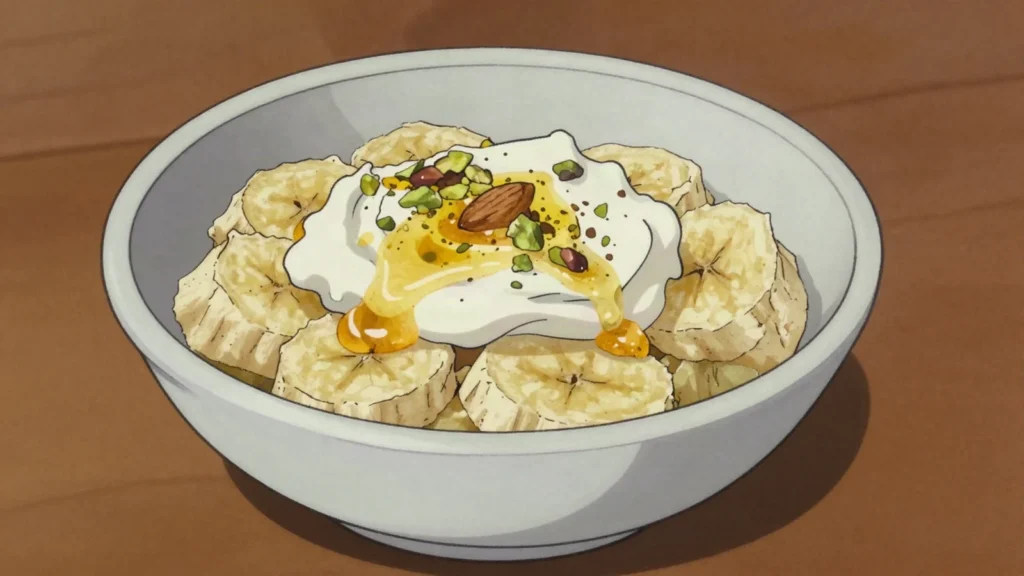
- Pour more honey generously over the surface and spoon extra cream on top.
- Scatter crushed pistachios, almonds and coconut or chopped dates over.
- Serve it at room temperature, or slightly warm, and eat it with a spoon from the shared dish.
- It is a Hejazi breakfast from the Jeddah and Mecca region, traditionally made from stale bread and overripe bananas so that neither was wasted.
- It has moved from a thrift dish to the dessert shops of Jeddah and the Gulf, where it is served in elaborate layers with ice cream.
- Masoob is the common alternative spelling, and Yemeni versions are close relatives.
Technique
- Qishta is the Levantine and Gulf clotted cream and is sold in Middle Eastern shops.
- It is eaten for breakfast in the Hejaz and as a dessert everywhere else.
- It is best eaten within an hour, because the banana darkens as it stands.
Substitutions
- Clotted cream or thick double cream in place of qishta.
- Any dry flatbread, or even stale white bread with the crusts removed.
Variations
- Layered in a glass with ice cream, as the shops serve it.
- With dates blended through the base.
- The Yemeni version, which is often less sweet.
History
Ripe bananas mashed with crumbled bread, cream and honey, a Hejazi breakfast now sold in dessert shops.
Frequently asked questions
What is Masoub?
Masoub is a breakfast from Saudi Arabia: mashed banana with crumbled bread, cream and honey. Ripe bananas mashed with crumbled bread, cream and honey, a Hejazi breakfast now sold in dessert shops.
How long does Masoub take to make?
Masoub takes 15 min of preparation and no cooking at all. The recipe makes 4 servings. It is rated easy to make.
What can I substitute in Masoub?
Yes, within limits. Clotted cream or thick double cream in place of qishta. Any dry flatbread, or even stale white bread with the crusts removed.
What is the most important thing to get right in Masoub?
The bananas must be black-spotted and soft, sweet enough to need almost no added sugar.