
Ingredients
Sponge
- 6eggs, separated, at room temperature
- 200 gsugar
- 150 gcornstarch
- 50 gplain flour
- 1 tspbaking powder
- a pinch of salt
- 1 tspvanilla
- grated zest of 1 lime
Tin
- butter and flour, for the tin
To serve
- black coffee
- icing sugar, optional
Directions
- Have the eggs at room temperature and separate them carefully, with not a trace of yolk in the whites.
- A speck of yolk in the whites stops them whipping to full volume, and this cake is nothing but whipped egg.
- Whisk the whites to soft peaks, then add half the sugar in a slow stream and whisk to a firm, glossy meringue.
- In a second bowl, beat the yolks with the remaining sugar until very pale, thick and roughly tripled in volume.
- Beat the yolks a good five minutes. Pale and ribboning is the sign, and an under-beaten yolk mixture gives a flat, dense cake.
- Beat in the vanilla and lime zest.
- Sift the cornstarch, flour, baking powder and salt together twice.
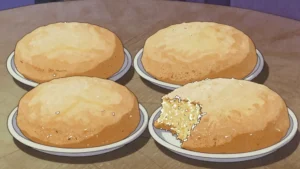
- The high proportion of cornstarch is what makes a marquesote rather than an ordinary sponge: it gives a fine, dry, almost powdery crumb that soaks up coffee.
- Fold the yolk mixture into the meringue in three additions, using a spatula and a light hand.
- Fold the heavier mixture into the lighter one, not the other way round, which keeps far more of the air in.
- Sift the dry ingredients over in three additions, folding gently between each.
- Stop folding the instant the flour disappears. Every extra stroke deflates the batter you spent ten minutes building.
- Pour into a buttered and floured tin about 20 by 30 cm and level it lightly.
- Bake at 170°C (340°F) for 30 to 35 minutes until golden and springy and a skewer comes out clean.
- Do not open the oven for the first 25 minutes, because a draught collapses a sponge risen only on egg.
- Cool it in the tin for 10 minutes, then turn it out onto a rack.
- Cut it into diamonds rather than squares, which is the traditional shape.
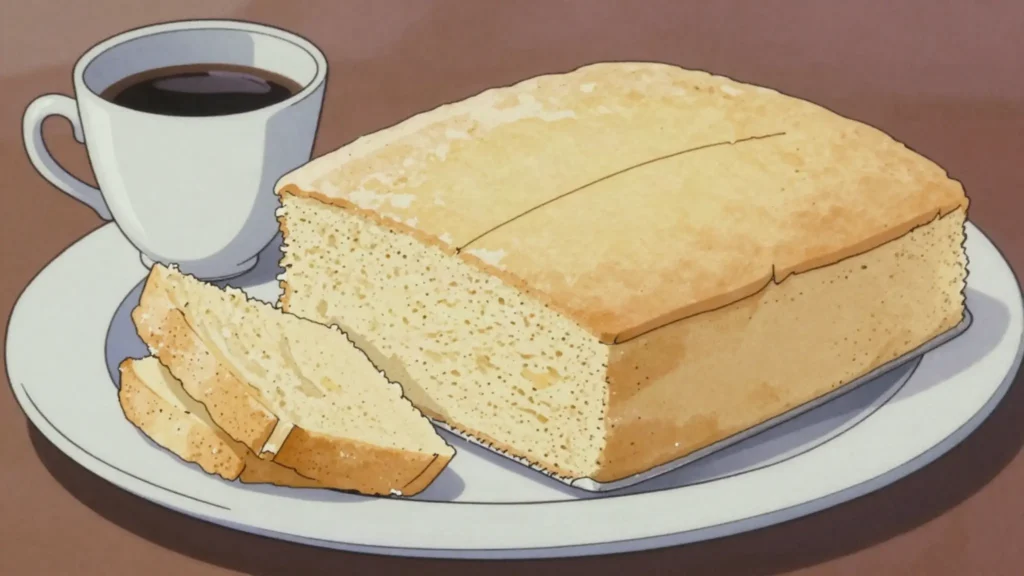
- Serve with black coffee, which is exactly what it is for: it is dry by design and meant to be dipped.
- It is baked in El Salvador and Honduras for wakes, family gatherings and Day of the Dead, and it keeps well in a tin.
- It is a colonial-era cake, and versions of the name and the method run through Spain and across Central America.
Technique
- It is deliberately dry and is not a fault to be corrected with syrup.
- It keeps a week in a tin and some say it improves after a day.
- Rice flour is used in some households in place of part of the cornstarch.
Substitutions
- All cornstarch and no wheat flour, for a gluten-free version.
- Orange or lemon zest in place of lime.
Variations
- With cinnamon in the batter.
- Baked in a ring tin.
- Marquesote de arroz, made with rice flour.
History
A colonial-era Salvadoran and Honduran cake, baked in tins and cut in diamonds for wakes and family gatherings.
Frequently asked questions
What is Marquesote?
Marquesote is a bread & pastry from El Salvador: light cornstarch and egg sponge cake eaten with morning coffee. A colonial-era Salvadoran and Honduran cake, baked in tins and cut in diamonds for wakes and family gatherings.
How long does Marquesote take to make?
Marquesote takes 25 min of preparation and 35 min of cooking. The recipe makes 12 pieces. It is rated medium to make.
What can I substitute in Marquesote?
Yes, within limits. All cornstarch and no wheat flour, for a gluten-free version. Orange or lemon zest in place of lime.
What is the most important thing to get right in Marquesote?
The high proportion of cornstarch is what makes a marquesote rather than an ordinary sponge: it gives a fine, dry, almost powdery crumb that soaks up coffee.