Ingredients
Starting dairy
- 4 litresfull-fat plain yoghurt, live and sour, or the buttermilk (dogh) left after churning butter
Cure
- 30 gfine salt, about 2 to 3 per cent of the drained curd weight
Equipment
- a large muslin cloth or a cotton pillowcase
- a flat tray or a clean reed mat
- fine mesh or muslin to keep off flies
To make the sauce later
- 100 gdried qurut
- 200 mlwarm water
- 1garlic clove, crushed
- 1 pinchsalt
Directions
- Start from the traditional material if you can: yoghurt churned in a skin or a churn until the butter separates, leaving thin sour buttermilk. Otherwise use plain live yoghurt, which gives a richer qurut.
- Pour the buttermilk or yoghurt into a muslin bag, tie it and hang it in a cool place for 2 to 3 days, letting the whey drip away until what remains is a firm, dry, crumbly white curd that holds its shape.
- Turn the curd into a bowl and work in the salt, roughly 2 to 3 per cent of the curd’s weight, kneading until it is evenly distributed. The salt is both the seasoning and the preservative, so do not cut it.
- Taste it. At this stage it should be aggressively sour and clearly salty; it will concentrate further as it dries.
- Roll the curd between wet palms into balls the size of a walnut, or press it into flattened discs, keeping them all the same size so they dry at the same rate.
- Lay them well spaced on a tray or a reed mat and set them on a flat roof in full sun and moving air, covered with mesh against flies and birds.
- Turn them twice a day. Bring them indoors at night and in any damp weather, since dew or rain will spoil a batch.
- Dry for 1 to 2 weeks, until they are rock hard, pale grey-white, and ring against each other like stones; a ball that still dents under a thumbnail is not dry.
- Store in a cloth bag in a dry, cool place. Properly dried and salted, qurut keeps for a year or more, which is the whole point of it in a mountain winter.
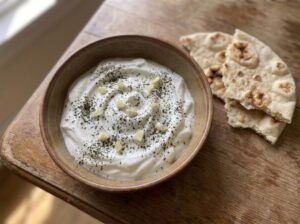
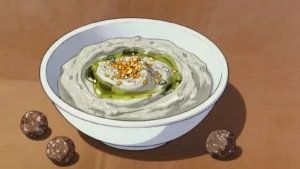
- To use, soak 100 g of qurut in 200 ml of warm water for an hour, then pound it in a mortar with the garlic and a pinch of salt to a smooth, sharply sour white cream, and spoon it cold over kichiri, ashak or rice.
Technique
- Qurut is the Central Asian answer to having milk in summer and none in winter. The same technique, and often the same word, runs from Turkey through Iran and Afghanistan into Mongolia.
- The safety margins here are the acidity of the starting dairy and the salt. Use genuinely sour, live-cultured dairy, keep the salt at or above 2 per cent, and dry fast in hot dry air. If your climate is humid, dry the balls in a dehydrator at 45°C (115°F) or a fan oven on its lowest setting with the door ajar.
- Do not be alarmed by the smell, which is powerfully sour and cheesy. That intensity is what a spoonful of reconstituted qurut is supposed to bring to an otherwise plain plate of rice or dumplings.
- A ball that grows fuzzy mould or smells of ammonia rather than sourness should be thrown out, not scrubbed and dried further.
Substitutions
- No time to dry it: chaka, freshly strained yoghurt beaten with salt and garlic, is used in exactly the same places in summer. Thick Greek yoghurt with lemon juice and extra salt is the closest supermarket approximation.
Variations
- Qurut-e siyah, made from unstrained sour milk and dried longer, is darker and even sharper.
- In the north the balls are sometimes smoked lightly over a low fire, which speeds the drying and adds a woodsmoke note prized in the mountains.
History
Central Asian herders’ way of keeping surplus milk without refrigeration; the same product appears from Turkey to Mongolia as kurut or qurt.
Frequently asked questions
What is Qurut?
Qurut is a cheese & dairy from Afghanistan: rock-hard dried salted whey balls, soaked and pounded into a tangy white sauce. Central Asian herders’ way of keeping surplus milk without refrigeration; the same product appears from Turkey to Mongolia as kurut or qurt.
How long does Qurut take to make?
Qurut takes 30 min over 2 days of preparation and 3 days draining plus 1 to 2 weeks drying of cooking. The recipe makes about 400 g dried balls, enough for a winter of sauces. It is rated medium to make.
What can I substitute in Qurut?
Yes, within limits. No time to dry it: chaka, freshly strained yoghurt beaten with salt and garlic, is used in exactly the same places in summer. Thick Greek yoghurt with lemon juice and extra salt is the closest supermarket approximation.
What is the most important thing to get right in Qurut?
Start from the traditional material if you can: yoghurt churned in a skin or a churn until the butter separates, leaving thin sour buttermilk. Otherwise use plain live yoghurt, which gives a richer qurut.