
Ingredients
Shell
- 400 gfine bulgur wheat
- 100 gplain flour
- 1 tspsalt
- 1 tspground cumin
- 600 mlwarm water, approximately
Filling
- 400 gminced beef or pork
- 2onions, very finely chopped
- 3 tbspolive oil
- 1 tspground cinnamon
- 1/2 tspground allspice
- a large handful of flat parsley, chopped
- salt and black pepper
For frying
- 1 litresunflower oil
To serve
- lemon wedges
Directions
- Put the fine bulgur in a large bowl with the salt and cumin. Pour warm water over it to cover by about two centimetres. Leave it to soak for thirty minutes. Tip it into a sieve and press out any standing water. It should be damp and swollen rather than wet. Add the flour to the drained bulgur.
- Knead it in the bowl with your hands for a full ten minutes. It should go from crumbly to a smooth paste that holds together. Add a spoonful of water if it is too dry to come together.
- Add a little more flour if it feels wet and sticky. Cover it and let it rest for an hour. Warm the olive oil in a frying pan over a medium heat. Add the finely chopped onions and cook them for ten minutes. They must be very soft, since a crunchy piece will tear the shell.
- Add the minced meat and break it up thoroughly. Cook it for ten minutes until browned and dry. Stir in the cinnamon, allspice, salt and pepper. Cook off any remaining liquid, since a wet filling will burst the shell. Stir in the chopped parsley off the heat. Spread the filling on a tray and let it cool completely. Keep a bowl of cold water beside you and wet your hands often.
- Take a ball of dough about the size of an egg. Hold it in one palm and push your forefinger into the centre. Keep working the walls thinner as you turn it. The shell should end up as thin as you can manage without breaking.
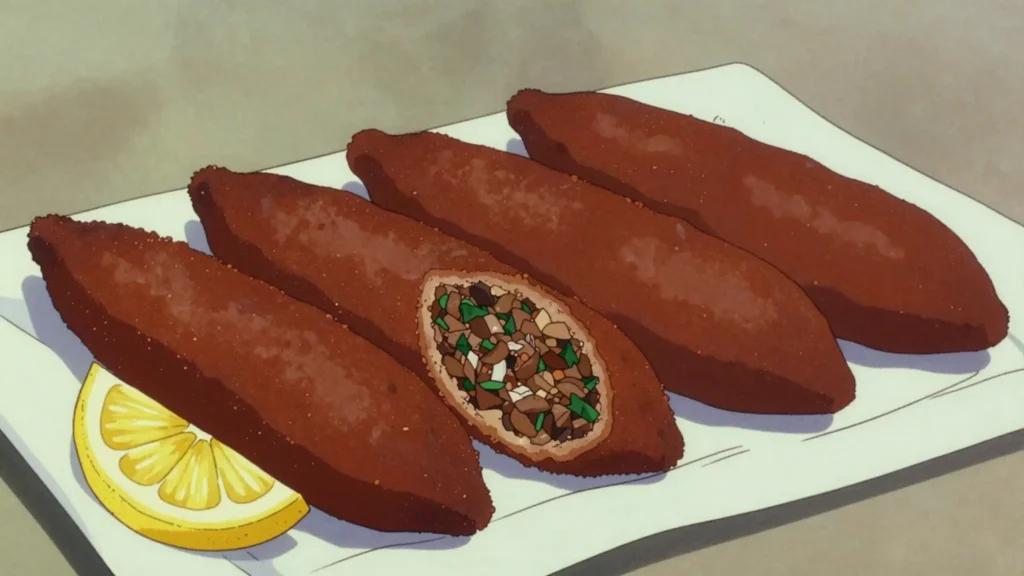
- Spoon the cold filling into the hollow. Fill it generously but leave room to close the end. Pinch the open end closed and roll it to a point. Smooth over any cracks with a wet finger. Roll the finished koupa gently between wet palms to shape it. Set them on a floured tray as you go. Chill them for twenty minutes before frying, which helps them hold. Now frying, which needs a moderate steady oil.
- Heat the oil in a deep pan to about 170C. Too hot and the shell colours before the inside heats through. Fry them for five or six minutes, turning them once. They should be deep golden brown and firm. Lift them onto a rack lined with paper. Let the oil come back to temperature between batches. Now serving, which is done hot. Serve them hot with lemon wedges to squeeze over.
Technique
- Use fine bulgur, since coarse bulgur will not bind and the shells fall apart.
- Knead the dough for a full ten minutes and rest it for an hour.
- Seal every crack with a wet finger, or the shell empties in the oil.
Substitutions
- Minced lamb in place of beef or pork.
- Fine semolina in place of some of the flour.
Variations
- Vegetarian, filled with mushrooms and onion.
- With pine nuts in the filling, as in Levantine kibbeh.
- Baked rather than fried, which is lighter but less good.
History
The Cypriot form of Levantine kibbeh, made with bulgur and sold from bakeries and street stalls.
Frequently asked questions
What is Koupes?
Koupes is a street food from Cyprus: torpedo-shaped bulgur shells filled with spiced minced meat, deep-fried. The Cypriot form of Levantine kibbeh, made with bulgur and sold from bakeries and street stalls.
How long does Koupes take to make?
Koupes takes 1 hour plus 1 hour resting of preparation and 30 min of cooking. The recipe makes 16 koupes. It is rated hard to make.
What can I substitute in Koupes?
Yes, within limits. Minced lamb in place of beef or pork. Fine semolina in place of some of the flour.
What is the most important thing to get right in Koupes?
Put the fine bulgur in a large bowl with the salt and cumin. Pour warm water over it to cover by about two centimetres. Leave it to soak for thirty minutes. Tip it into a sieve and press out any standing water. It should be damp and swollen rather than wet. Add the flour to the drained bulgur.