
Ingredients
Leaves
- 800 gyoung cassava leaves
- or 800 g frozen pounded cassava leaf
- water, for washing
The pot
- 2onions, chopped
- 3tomatoes, chopped
- 3 tablespoonsoil
- 1stock cube
- about 500 ml water
- salt and black pepper
Groundnut
- 200 ggroundnut flour
- or 5 tablespoons groundnut paste
- warm water, to loosen
To serve
- nshima, thick maize porridge
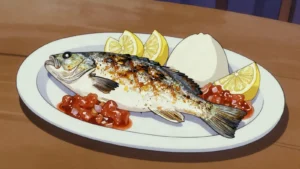
- dried or fresh fish
- chilli sauce
Directions
- Pick the top few leaves from each stem. Discard any yellowed or damaged ones. It grows on nuts stored damp or warm. Discard any that smell musty or taste bitter. Preparing the leaves takes real work. Strip the leaves from their stems. Discard all the stems entirely. Wash the leaves in several changes of water.
- Lift them out rather than pouring the water off. Shake them as dry as you possibly can. Put the leaves in a large mortar. Pound them steadily and firmly. Work them until they break right down. Keep going until it is a fine green pulp. That takes fifteen or twenty minutes.
- Put the pounded leaves in a large pot. Add the measured water to the pot. Bring the pot up to a full boil. Cover the pot and let it cook on. Give it at least one full hour. Heat the oil in a separate pan. Add the chopped onions to the hot oil.
- Cook them for a good eight minutes. Add the chopped tomatoes to the pan. Cook them down for about six minutes. Tip the pan into the leaf pot. Crumble the stock cube into the pot. Season it with salt and black pepper. Stir it all through very thoroughly. Loosen the groundnut flour with warm water first.
- Take a ladle of liquid from the pot. Mix it into the flour until smooth. Adding it dry gives lumps that never disperse. Let it cook for another twenty minutes. Stir it regularly so it does not catch. The leaves should be completely soft.
- Oil should sit at the surface. Any real bitterness means it needs longer. Cook it on if it tastes sharp or bitter. Taste it and adjust the salt as needed. It needs more than you might expect.
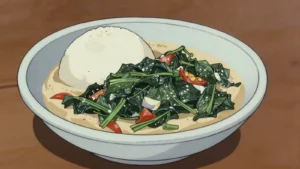
- Spoon it beside a mound of nshima. Serve fish alongside for a fuller meal. Put chilli sauce on the table. Pinch off nshima and scoop with it. It keeps three days refrigerated.
Technique
- Cassava leaves contain more cyanogenic compounds than the root, so they are genuinely dangerous raw or undercooked; two steps together make them safe, pounding to break the cells and release the enzyme that breaks the compounds down, and then long cooking to drive off the released cyanide. Neither step alone is sufficient.
- An hour of simmering is a minimum and ninety minutes is safer and more usual; poorly processed cassava causes documented illness including konzo, a paralytic condition that occurs where processing is rushed during food shortages, which is why the traditional methods matter beyond flavour.
- A food processor chops rather than crushes and breaks fewer cells than pounding does, so compensate with the full ninety minutes of cooking at least.
Substitutions
- Frozen pounded cassava leaf is sold ready prepared in African shops.
- Groundnut paste can replace groundnut flour, loosened with warm liquid first.
Variations
- Some cooks boil and drain the leaves once before cooking them again.
- Dried fish is added to the pot in many households.
- Similar cassava leaf relishes are cooked across central Africa.
History
A Luapula and Northern Province relish; pounding and long cooking remove the bitterness of the raw leaf.
Frequently asked questions
What is Katapa?
Katapa is a salad & side from Zambia: cassava leaves pounded fine and simmered long with groundnut. A Luapula and Northern Province relish; pounding and long cooking remove the bitterness of the raw leaf.
How long does Katapa take to make?
Katapa takes 40 minutes of preparation and 1 hour 30 minutes of cooking. The recipe makes serves 6. It is rated medium to make.
What can I substitute in Katapa?
Yes, within limits. Frozen pounded cassava leaf is sold ready prepared in African shops. Groundnut paste can replace groundnut flour, loosened with warm liquid first.
What is the most important thing to get right in Katapa?
Lift them out rather than pouring the water off. Shake them as dry as you possibly can. Put the leaves in a large mortar. Pound them steadily and firmly. Work them until they break right down. Keep going until it is a fine green pulp. That takes fifteen or twenty minutes.