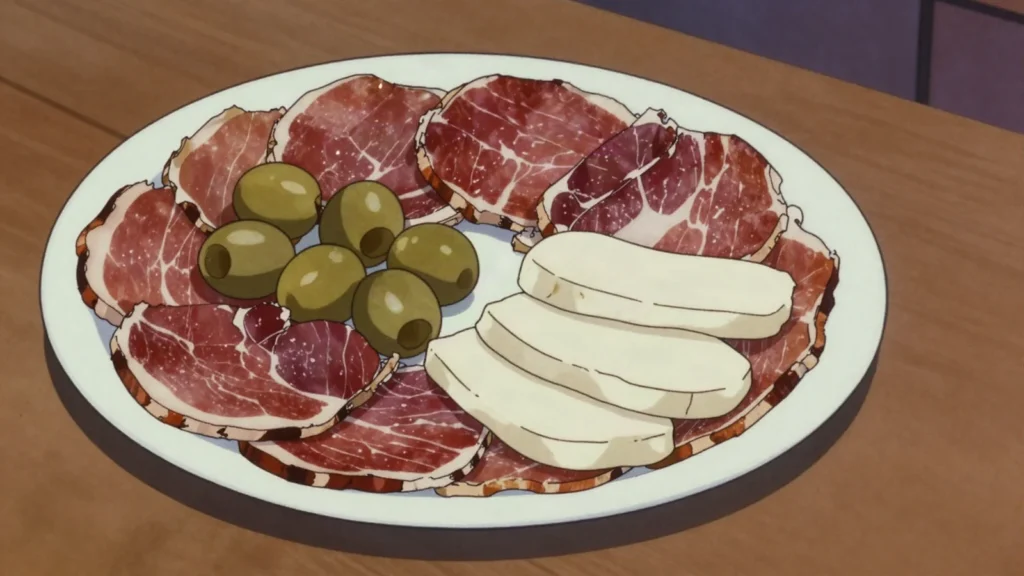

A pressed, wine-cured and smoked Cypriot ham, sliced very thin. The hiromeri of the Pitsilia region holds EU protected geographical indication, and pressing under weights is what gives it its dense, close texture.
It is a whole-leg cure held for months where safety rests on salt penetration, pH and drying conditions that a domestic setting cannot hold steady.
What goes into it
- a whole pork leg
- salt
- dry red wine
- aromatic wood for smoke
How it is made
The leg is salted for weeks, then submerged in red wine, then pressed under heavy weights for days, which drives out remaining moisture and compacts the muscle. It is smoked over aromatic wood and hung to dry for months in the mountain air of Pitsilia.
How long it takes: three to six months
How it is eaten
Shaved very thin on a meze plate with olives and halloumi, or fried in slices.
History
Cured in red wine, pressed under weights and smoked; the hiromeri of the Pitsilia region holds EU protected geographical indication.
Frequently asked questions
What is Hiromeri?
Hiromeri is a charcuterie & cured from Cyprus: pressed, wine-cured and smoked ham sliced very thin. Cured in red wine, pressed under weights and smoked; the hiromeri of the Pitsilia region holds EU protected geographical indication.
How is Hiromeri made?
The leg is salted for weeks, then submerged in red wine, then pressed under heavy weights for days, which drives out remaining moisture and compacts the muscle. It is smoked over aromatic wood and hung to dry for months in the mountain air of Pitsilia. It takes three to six months.
Can I make Hiromeri at home?
No, and the atlas gives no method for it. It is a whole-leg cure held for months where safety rests on salt penetration, pH and drying conditions that a domestic setting cannot hold steady.
What goes into Hiromeri?
A whole pork leg, salt, dry red wine, aromatic wood for smoke.
How is Hiromeri eaten?
Shaved very thin on a meze plate with olives and halloumi, or fried in slices.