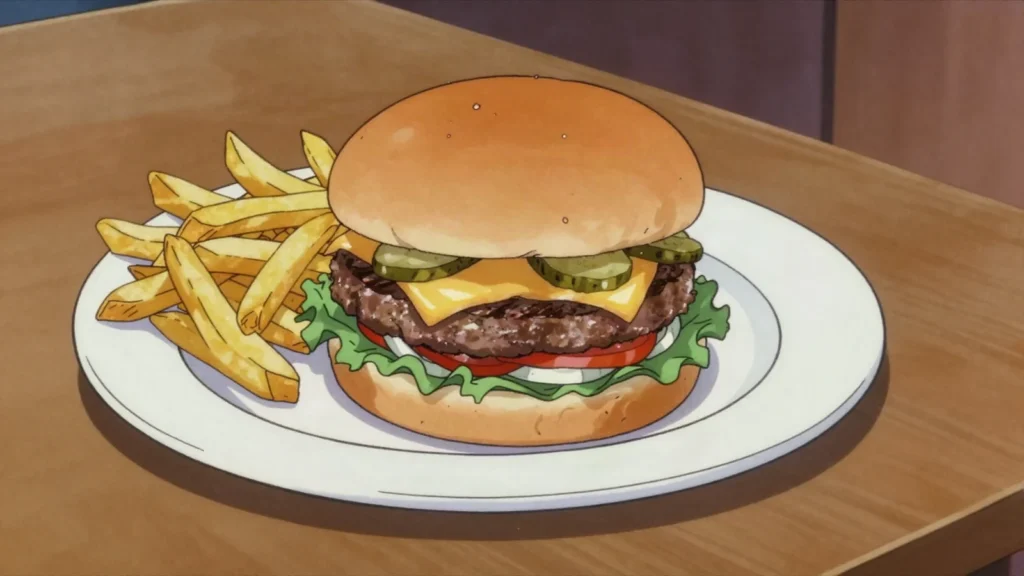

Ingredients
Patties
- 800 gbeef chuck, 20% fat, coarsely minced once, kept fridge-cold
- Flaky salt and coarse black pepper, for the outside only
- 1 tbspneutral oil or beef fat
Build
- 4soft potato or brioche-style buns, split
- 30 gbutter, for toasting the buns
- 4 slicesAmerican cheese or mild cheddar
- 1large white onion, sliced paper-thin, or diced for a smashed onion burger
- 2beef tomatoes, sliced 5 mm
- 4crisp lettuce leaves (iceberg)
- 8dill pickle slices
Burger sauce
- 4 tbspmayonnaise
- 2 tbsptomato ketchup
- 1 tbspyellow American mustard
- 1 tbspfinely chopped dill pickle
- 1 tsppickle brine
- ½ tspsmoked paprika
Directions
- Divide the cold mince into 4 x 200 g portions and form them loosely into balls without compressing. Overworked mince becomes springy and dense, closer to a meatloaf than a burger.
- Whisk the sauce ingredients together and chill. Prepare all the garnishes before you cook; the burgers take four minutes and cannot wait.
- Get a cast-iron frying pan or a flat griddle ripping hot over high heat, with just a film of oil, until it is faintly smoking.
- Place a ball on the hot surface, season the top heavily with salt and pepper, and smash it flat with a stiff spatula to about 1 cm thick, holding for 10 seconds so the beef bonds to the metal.
- Cook undisturbed 2 minutes, until a dark brown crust has built over 80% of the underside and the edges look lacy and ragged. That crust is the Maillard reaction and it is the whole point.
- Scrape under with the spatula, taking the crust with it, flip, season, lay the cheese on and cook 60–90 seconds more for medium.
- Toast the cut buns in butter on the same griddle for 30–45 seconds until golden; the seal keeps the bun from going soggy.
- Build in order: sauce on both cut faces, lettuce, tomato, patty with melted cheese, onion, pickles, top bun. Press gently and serve immediately.
Technique
- The 80/20 chuck ratio matters. Leaner mince gives a dry burger; fattier flares and shrinks. Ask for a single coarse grind, ground the same day.
- Salt only the outside, right before it hits the pan. Salt mixed into the mince dissolves the muscle proteins and gives a bouncy, sausage-like texture.
- Never press the patty after the first smash. Every press after the crust has formed squeezes out the juice you are trying to keep.
Substitutions
- No cast iron? Use the heaviest pan you own or a charcoal grill with the patties formed 2 cm thick and grilled 3 minutes a side, the backyard version.
- Brisket and short rib trim, minced together, makes a richer, beefier patty if your butcher will grind to order.
Variations
- The Oklahoma onion burger, where a fistful of shaved onion is smashed into the raw patty.
- The California-style burger, with a mustard-grilled patty, thousand island and whole grilled onions.
- The pub-style thick patty, 200 g formed 3 cm high and cooked to a pink medium centre.
History
Traces most directly to Hamburg, Germany, where a minced, seasoned beef patty called Hamburg steak was an established dish by the 1800s, brought to the United States by German immigrants throughout that century. Exactly who first put that patty inside a bun is disputed among several competing American claims from the 1880s and 1890s, including vendors in Texas, Wisconsin and Connecticut, none of which left documentation solid enough to settle the question. What is clear is that the sandwich format spread rapidly once it existed, helped enormously by the 1904 World’s Fair in St. Louis, where it was served to a mass audience, and by White Castle, founded in 1921, which built an entire restaurant chain and standardized production method around it well before McDonald’s existed.
Frequently asked questions
What is Hamburger?
Hamburger is a main from United States: grilled beef patty in a bun with classic fixings. Traces most directly to Hamburg, Germany, where a minced, seasoned beef patty called Hamburg steak was an established dish by the 1800s, brought to the United States by German immigrants throughout that century. Exactly who first put that patty inside a bun is disputed among several competing American claims from the 1880s and 1890s, including vendors in Texas, Wisconsin and Connecticut, none of which left documentation solid enough to settle the question. What is clear is that the sandwich format spread rapidly once it existed, helped enormously by the 1904 World’s Fair in St. Louis, where it was served to a mass audience, and by White Castle, founded in 1921, which built an entire restaurant chain and standardized production method around it well before McDonald’s existed.
How long does Hamburger take to make?
Hamburger takes 20 min of preparation and 15 min of cooking. The recipe makes 4 burgers. It is rated easy to make.
What can I substitute in Hamburger?
Yes, within limits. No cast iron? Use the heaviest pan you own or a charcoal grill with the patties formed 2 cm thick and grilled 3 minutes a side, the backyard version. Brisket and short rib trim, minced together, makes a richer, beefier patty if your butcher will grind to order.
What is the most important thing to get right in Hamburger?
Cook undisturbed 2 minutes, until a dark brown crust has built over 80% of the underside and the edges look lacy and ragged. That crust is the Maillard reaction and it is the whole point.