
Ingredients
Meat and marinade
- 1.2 kgpork shoulder or neck, sliced 5 mm thick
- 200 gpork back fat, in thin slices
- 100 mlolive oil
- 2 tbspred wine vinegar
- 4garlic cloves, crushed
- 2 tspdried oregano
- 2 tspsweet paprika
- 1 tspground cumin
- 1 tspdried thyme
- 1 tspcoarsely ground black pepper
- 2 tspfine salt
Tzatziki
- 500 gstrained Greek yoghurt
- 1cucumber, coarsely grated and squeezed bone dry
- 2garlic cloves, crushed to a paste with salt
- 1 tbspred wine vinegar
- 2 tbspolive oil
- 1 tbspchopped dill
To wrap
- 4thick Greek pita breads
- 400 gpotatoes, cut into chips and fried
- 2tomatoes, sliced
- 1red onion, thinly sliced
- Sweet paprika, for dusting
Directions
- Mix the marinade and turn the pork slices through it until every piece is coated. Cover and refrigerate overnight, or at least 6 hours.
- Thread the slices onto a vertical rotisserie spit, laying them flat and pressing them down tight, slipping a slice of back fat in every fourth or fifth layer so the stack bastes itself as it turns.
- Cap the stack with a piece of fat, set the spit turning in front of the gas or charcoal element, and roast for 1.5–2 hours as the outside browns.
- Shave the cooked outer layer off in long thin strips with a sharp knife once it is crisp and deep brown, letting it fall into a warm tray. Never carve into raw meat: only the browned surface comes off, and the stack keeps turning.
- For tzatziki, salt the grated cucumber, leave 15 minutes, then wring it out in a cloth until almost dry. Fold it into the yoghurt with the garlic, vinegar, oil and dill and chill for an hour.
- Fry the chips in two stages, first at 140°C (275°F) until soft, then at 190°C (375°F) until crisp and golden, and salt them immediately.
- Brush the pitas lightly with olive oil and warm them on a hot dry griddle or over the coals for 30 seconds a side, until they puff, blister and turn pliable.
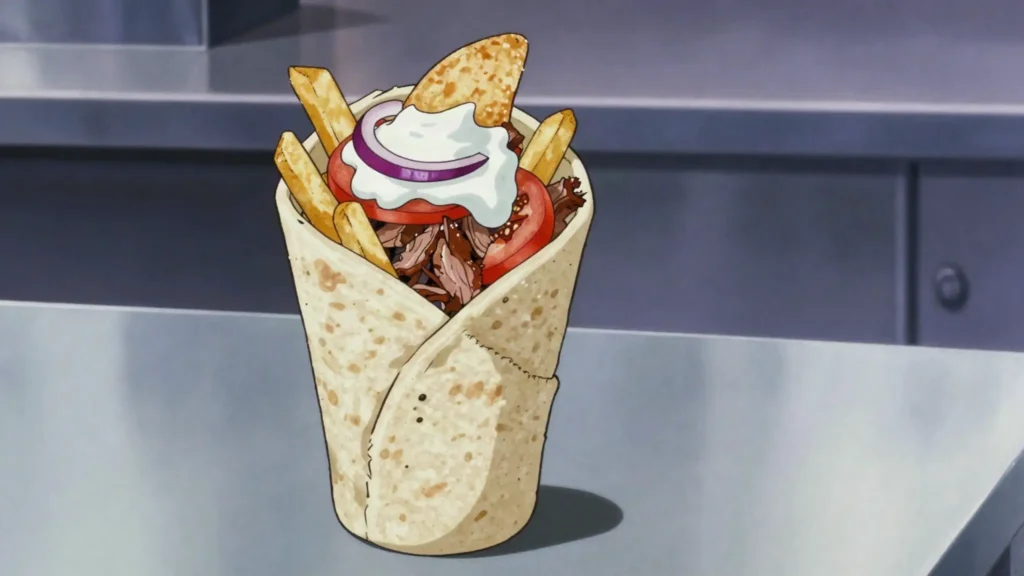
- Build the wrap on greaseproof paper: pita, a stripe of tzatziki, hot gyros meat, tomato, onion, then the chips on top and a dusting of paprika.
- Roll the paper tightly around the pita, twist the base, and eat it hot in the hand before the pita softens.
Technique
- Gyros means turn, and the whole dish is defined by the vertical spit: the fat drips down through the stack while the surface crisps, which is why the meat is both crunchy and juicy.
- In Greece gyros is overwhelmingly pork, with chicken the second option; the lamb-and-beef cone sold abroad is closer to Turkish doner.
- The chips go inside the wrap, not on the side. Leaving them out is the surest sign of a foreign imitation.
- Squeeze the cucumber ruthlessly. Wet tzatziki runs straight out of the bottom of the wrap.
Substitutions
- No rotisserie: stack the marinated slices on two long skewers driven through a foil-lined loaf shape, roast at 200°C (400°F) for 1.5 hours, then shave off the browned outside and return the stack to the oven, repeating until it is used up.
- Simplest home version: fry the marinated slices in a very hot dry pan until the edges char, then chop them coarsely. You lose the layered texture but keep the flavour.
Variations
- Gyros kotopoulo, made with marinated chicken thigh.
- Gyros merida, served as a plate with the meat, chips, pita wedges and tzatziki separate.
- Thessaloniki style, wrapped with mustard and ketchup instead of tzatziki.
History
Meat, traditionally pork or chicken in Greece, seasoned and cooked on a vertical rotisserie, then shaved off and served in warm pita bread with tomato, onion and tzatziki sauce, developed in Greece during the 1900s, closely related to and influenced by the wider vertical-rotisserie cooking tradition found across the former Ottoman Empire, including Turkish döner kebab. Its name, from the Greek word for turn, directly describes the rotating cooking method central to the dish, and gyros became particularly widespread across Greece following waves of Greek refugees from Asia Minor arriving in Greece during the early 1900s, bringing culinary techniques adapted from that broader Ottoman rotisserie tradition. Gyros remains one of Greece’s most internationally recognized and widely eaten street foods today.
Frequently asked questions
What is Gyros?
Gyros is a street food from Greece: spit-roasted pork shaved into pita with fries, tzatziki. Meat, traditionally pork or chicken in Greece, seasoned and cooked on a vertical rotisserie, then shaved off and served in warm pita bread with tomato, onion and tzatziki sauce, developed in Greece during the 1900s, closely related to and influenced by the wider vertical-rotisserie cooking tradition found across the former Ottoman Empire, including Turkish döner kebab. Its name, from the Greek word for turn, directly describes the rotating cooking method central to the dish, and gyros became particularly widespread across Greece following waves of Greek refugees from Asia Minor arriving in Greece during the early 1900s, bringing culinary techniques adapted from that broader Ottoman rotisserie tradition. Gyros remains one of Greece’s most internationally recognized and widely eaten street foods today.
How long does Gyros take to make?
Gyros takes 30 min of preparation and 1 hr 30 min, plus overnight marinating of cooking. The recipe makes 4 wraps. It is rated medium to make.
What can I substitute in Gyros?
Yes, within limits. No rotisserie: stack the marinated slices on two long skewers driven through a foil-lined loaf shape, roast at 200°C (400°F) for 1.5 hours, then shave off the browned outside and return the stack to the oven, repeating until it is used up. Simplest home version: fry the marinated slices in a very hot dry pan until the edges char, then chop them coarsely. You lose the layered texture but keep the flavour.
What is the most important thing to get right in Gyros?
Shave the cooked outer layer off in long thin strips with a sharp knife once it is crisp and deep brown, letting it fall into a warm tray. Never carve into raw meat: only the browned surface comes off, and the stack keeps turning.