
Ingredients
Guacamole
- 4ripe Hass avocados (about 700 g flesh), yielding to gentle pressure at the stem end
- 2serrano chillies, stalks removed, finely chopped, seeds left in
- ½white onion (100 g), very finely chopped
- 1small bunch coriander (25 g), leaves and thin stems chopped
- 1.5 tspcoarse salt
- 1lime, juiced (about 2 tbsp), or to taste
- 1ripe tomato (120 g), deseeded and diced (optional)
To serve
- 300 gtotopos (fried corn tortilla triangles), warm
- 1molcajete and tejolote, or a mortar and pestle
Directions
- If your molcajete is new, cure it first by grinding rice to powder in it several times until the powder comes out white, so no volcanic grit ends up in the food.
- Put the chopped chilli, half the onion, half the coriander and the salt into the molcajete and grind them with the tejolote into a rough, wet green paste. Working the aromatics first is the whole difference between guacamole and mashed avocado.
- Halve the avocados, twist them apart, strike the stone with the heel of the knife and lever it out, then scoop the flesh into the molcajete with a spoon.
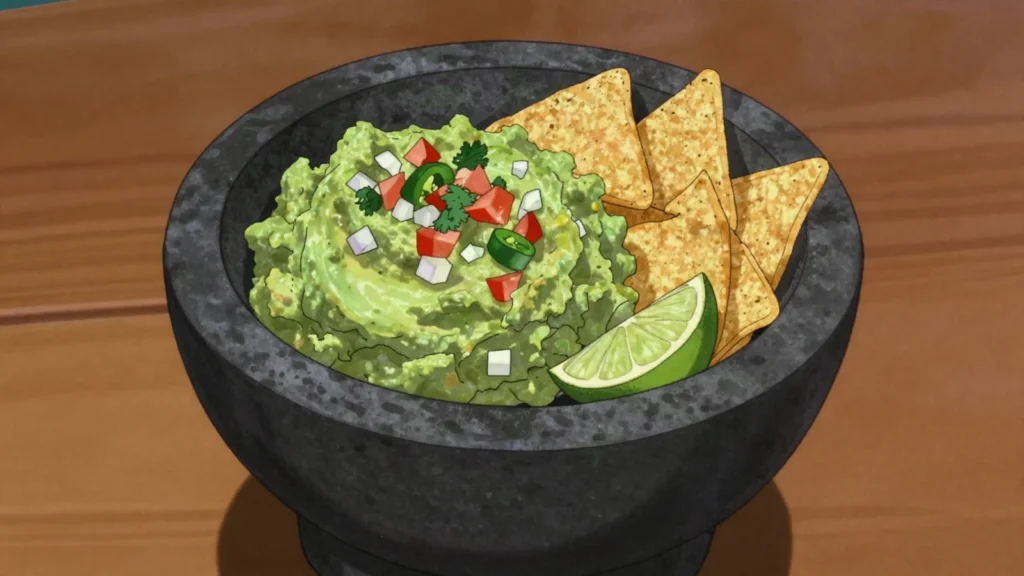
- Mash the avocado into the paste with the pestle using short pressing strokes, not a circular grind. Leave it distinctly lumpy, with pieces the size of a fingernail still visible.
- Fold in the remaining onion, the rest of the coriander and the tomato if you are using it, mixing rather than mashing so they stay in relief.
- Add the lime juice a little at a time, tasting as you go. A squeeze sharpens and holds the colour; too much and the avocado tastes of lime rather than avocado.
- Taste for salt, which almost always needs more than you expect, then smooth the top and leave the guacamole in the molcajete.
- Serve at once, at room temperature, in the stone bowl it was made in, with warm totopos on the side and a wedge of lime.
- If it must wait, press cling film directly onto the surface so no air touches it; browning is oxidation, and the avocado stone left in the bowl does nothing to prevent it.
Technique
- The name is Nahuatl, ahuacamolli, avocado sauce, and the dish predates the Spanish arrival. The classical version is avocado, chilli, onion, coriander and salt; tomato and lime are common but debated, and garlic and cumin have no place in it.
- Texture is the marker of a good guacamole. It should be chunky enough to hold a chip, never whipped smooth in a blender.
- The basalt molcajete is not just tradition. Its porous surface tears the aromatics rather than slicing them, releasing far more of the chilli and onion oils than a knife or a processor can.
- Make it within half an hour of eating. Guacamole does not hold, and the flavour flattens well before the colour turns.
Substitutions
- No serranos: jalapenos are milder and slightly sweeter; use three, or one habanero for a fruitier, much fiercer heat.
- No molcajete: a mortar, or a bowl and the back of a fork, will do, provided you crush the chilli, onion and salt to a paste first.
- Only Hass or a similar oily, thick-skinned avocado will do. Watery, smooth-skinned varieties make a thin, sweet guacamole.
Variations
- Guacamole with pomegranate seeds and diced peach is a Puebla summer version.
- In Michoacan a spoonful of toasted pumpkin seeds is ground into the base.
- Guacamole taquero, a smooth thin sauce of avocado blended with tomatillo and chilli, is the squeezy green sauce on taco stands and is a different preparation altogether.
History
Its name and its core technique both come directly from the Aztec Empire, before Spanish colonization: ahuacamolli, from ahuacatl, avocado, and molli, sauce or mixture, was already an established dish among the Nahua and other Mesoamerican peoples well before the 1500s, since avocados are themselves native to Mexico and Central America and had been cultivated there for thousands of years. Spanish colonizers documented the dish after their arrival, and the recipe changed comparatively little in its basic form over the following centuries, still built around mashed avocado, chili and salt, though lime, onion and coriander were added or adjusted after other ingredients entered Mexican cooking through colonial-era trade.
Frequently asked questions
What is Guacamole?
Guacamole is a sauce & condiment from Mexico: mashed avocado with lime, onion, chile; scooped with totopos. Its name and its core technique both come directly from the Aztec Empire, before Spanish colonization: ahuacamolli, from ahuacatl, avocado, and molli, sauce or mixture, was already an established dish among the Nahua and other Mesoamerican peoples well before the 1500s, since avocados are themselves native to Mexico and Central America and had been cultivated there for thousands of years. Spanish colonizers documented the dish after their arrival, and the recipe changed comparatively little in its basic form over the following centuries, still built around mashed avocado, chili and salt, though lime, onion and coriander were added or adjusted after other ingredients entered Mexican cooking through colonial-era trade.
How long does Guacamole take to make?
Guacamole takes 15 min of preparation and no cooking at all. The recipe makes 4–6 as a botana. It is rated easy to make.
What can I substitute in Guacamole?
Yes, within limits. No serranos: jalapenos are milder and slightly sweeter; use three, or one habanero for a fruitier, much fiercer heat. No molcajete: a mortar, or a bowl and the back of a fork, will do, provided you crush the chilli, onion and salt to a paste first. Only Hass or a similar oily, thick-skinned avocado will do. Watery, smooth-skinned varieties make a thin, sweet guacamole.
What is the most important thing to get right in Guacamole?
Put the chopped chilli, half the onion, half the coriander and the salt into the molcajete and grind them with the tejolote into a rough, wet green paste. Working the aromatics first is the whole difference between guacamole and mashed avocado.