
Ingredients
Vegetables
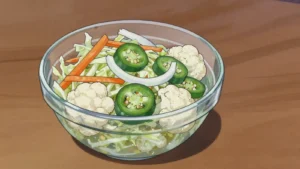
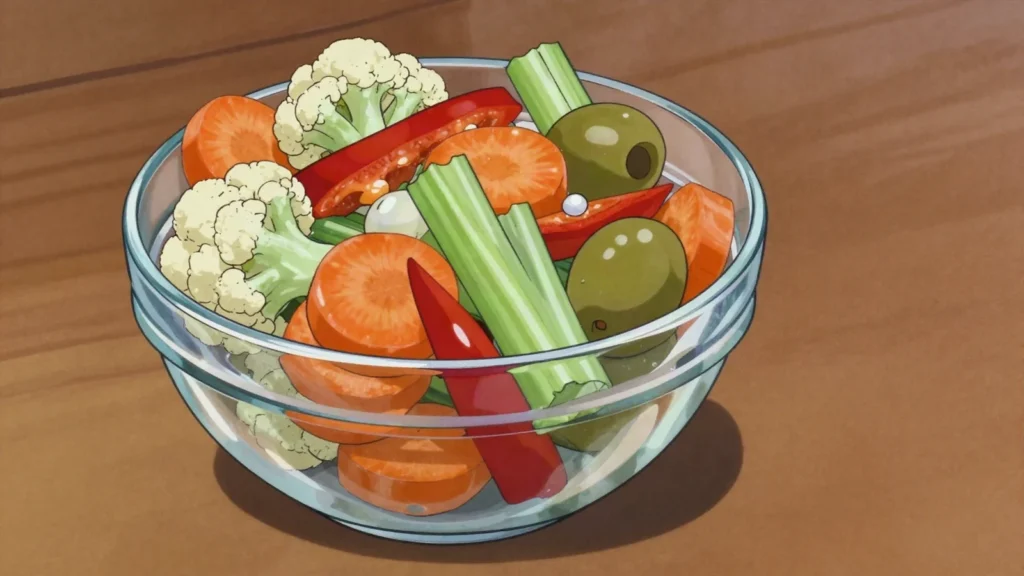
- 1small cauliflower, in small florets
- 3carrots, sliced
- 3celery stalks, sliced
- 2red peppers, diced
- 12small onions, peeled
- 150 ggreen olives, optional
- 60 gcoarse salt
Pickle
- 750 mlwhite wine vinegar
- 250 mlwater
- 2 tbspsugar
- 1 tbspsalt
- 1 tbspblack peppercorns
- 1 tspfennel seed
- 4bay leaves
- 4 clovesgarlic
To finish, for the oil-packed version
- about 400 ml olive oil
- 1 tbspdried oregano
- 2 tspchilli flakes
Directions
- Cut all the vegetables to a similar size so they pickle evenly — small florets, thin slices — then toss with the coarse salt and leave overnight in a colander.
- The next day rinse well and drain thoroughly, then pat dry. The overnight salting is what keeps everything crisp and stops the vinegar being watered down.
- Bring the vinegar, water, sugar, salt, peppercorns, fennel, bay and garlic to a boil.
- Add the vegetables and cook for just 3 minutes. They should still squeak against the spoon — cooked soft here, they are limp in a fortnight.
- For the classic Italian sott’aceto version, pack straight into sterilised jars with the hot vinegar poured over to cover, and seal. Leave two weeks. It keeps a year unopened.
- For the Chicago oil-packed version, drain the cooked vegetables thoroughly and leave them to dry for an hour, then mix with the oregano and chilli, pack into jars and cover completely with olive oil.
- The oil-packed version must be refrigerated and kept fully submerged. Vegetables under oil at room temperature are a low-oxygen store, and the vinegar step beforehand is exactly what makes it safe.
- Serve as antipasto, with boiled meats, or piled onto an Italian beef sandwich.
Technique
- Salt overnight, cook three minutes. Both are about texture and both are skipped by people who then wonder why their jar is soft.
- The oil version goes in the fridge, always. The vinegar version is shelf-stable; the oil one is not.
- Cut everything the same size. Large carrot chunks beside small florets means one of them is always wrong.
Substitutions
- Cider vinegar for white wine vinegar.
- Serrano or jalapeño for a hotter Chicago-style jar.
- Green beans, fennel or courgette in place of any of the vegetables.
Variations
- The Italian sott’aceto is sharp and served as antipasto; the Chicago sott’olio is hot, oily and made for sandwiches.
- A milder version halves the vinegar with water and is eaten within weeks.
History
A way of keeping the summer garden through winter; Italian emigrants turned it into Chicago’s oil-packed hot giardiniera.
Frequently asked questions
What is Giardiniera?
Giardiniera is a fermented & pickled from Italy: vinegar-pickled vegetables served as antipasto or with boiled meats. A way of keeping the summer garden through winter; Italian emigrants turned it into Chicago’s oil-packed hot giardiniera.
How long does Giardiniera take to make?
Giardiniera takes 40 min plus overnight salting and 2 weeks of preparation and 15 min of cooking. The recipe makes fills 3 × 500 ml jars. It is rated easy to make.
What can I substitute in Giardiniera?
Yes, within limits. Cider vinegar for white wine vinegar. Serrano or jalapeño for a hotter Chicago-style jar. Green beans, fennel or courgette in place of any of the vegetables.
What is the most important thing to get right in Giardiniera?
The oil-packed version must be refrigerated and kept fully submerged. Vegetables under oil at room temperature are a low-oxygen store, and the vinegar step beforehand is exactly what makes it safe.