
A creamy blue cow’s-milk cheese, sold mild and young as dolce or aged and sharp as piccante. It is named for a town near Milan where cattle rested on the autumn transhumance, and the blue veining was originally an accident that is now DOP regulated.
It is a DOP cheese needing a mould culture, needle piercing at the right moment and months in a cellar held at a controlled temperature and humidity.
What goes into it
- cow’s milk
- Penicillium roqueforti or glaucum
- rennet
- salt
How it is made
The milk is set with rennet and inoculated with blue mould spores, and the curd is drained without pressing and moulded into tall cylinders. After a few weeks the cheeses are pierced with long needles so air reaches the mould, and the blue spreads from those channels outward. Dolce is ripened around two months and stays spoonably soft; piccante goes three or four and turns firm and sharp.
How long it takes: two months for dolce, three to four for piccante
How it is eaten
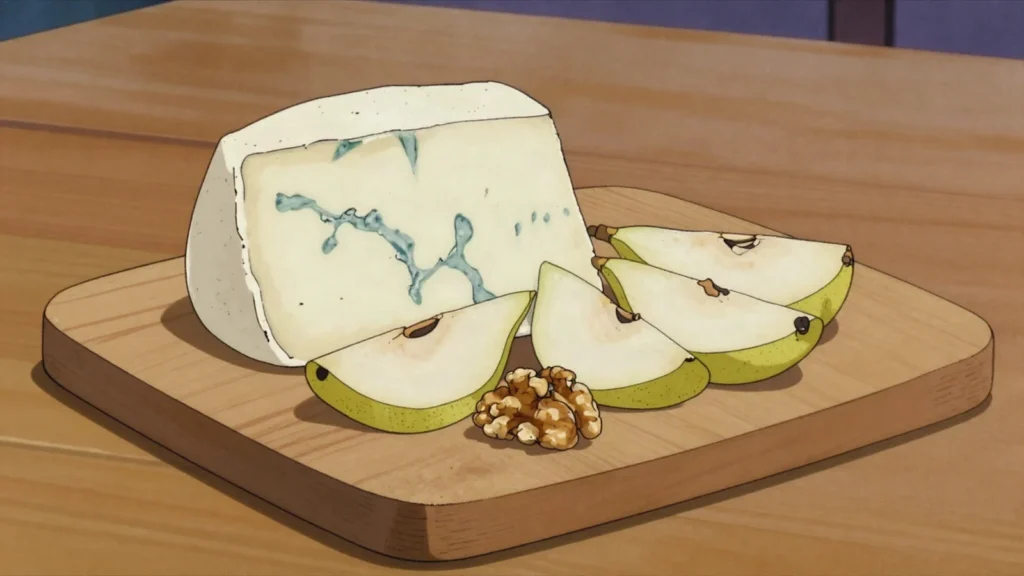
Spooned onto polenta, melted into risotto and pasta sauces, or with pears and walnuts.
History
Named for a town near Milan where cattle rested on the autumn transhumance; the blue veining was originally accidental and is now DOP regulated.
Frequently asked questions
What is Gorgonzola?
Gorgonzola is a cheese & dairy from Italy: creamy blue cow’s-milk cheese, sold mild young or piccante aged. Named for a town near Milan where cattle rested on the autumn transhumance; the blue veining was originally accidental and is now DOP regulated.
How is Gorgonzola made?
The milk is set with rennet and inoculated with blue mould spores, and the curd is drained without pressing and moulded into tall cylinders. After a few weeks the cheeses are pierced with long needles so air reaches the mould, and the blue spreads from those channels outward. Dolce is ripened around two months and stays spoonably soft; piccante goes three or four and turns firm and sharp. It takes two months for dolce, three to four for piccante.
Can I make Gorgonzola at home?
No, and the atlas gives no method for it. It is a DOP cheese needing a mould culture, needle piercing at the right moment and months in a cellar held at a controlled temperature and humidity.
What goes into Gorgonzola?
Cow’s milk, penicillium roqueforti or glaucum, rennet, salt.
How is Gorgonzola eaten?
Spooned onto polenta, melted into risotto and pasta sauces, or with pears and walnuts.