
Ingredients
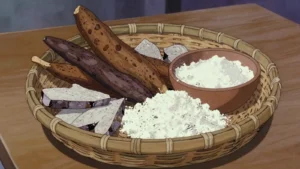
- 300 gfuba de bombó (fine cassava flour)
- 1.2 litreswater
- ½ tspsalt (optional, many cooks use none)
Directions
- Set aside 60 g of the cassava flour and slake it with 150 ml cold water in a bowl, whisking to a smooth, lump-free slurry. This is the step that prevents lumps later.
- Bring the remaining water to a rolling boil in a heavy, deep pan, ideally one with a rounded base, and add the salt if using.
- Pour in the slurry, whisking hard, and let it cook 2–3 minutes until the water thickens slightly and turns translucent, like a thin glue.
- Lower the heat. Now rain in the remaining dry flour a handful at a time with one hand while beating without pause with a stout wooden spoon (colher de pau) in the other.
- Beat against the side of the pan, pressing out lumps as they form. The mixture will fight back and get very heavy: this resistance is how you know the starch is gelatinising properly.
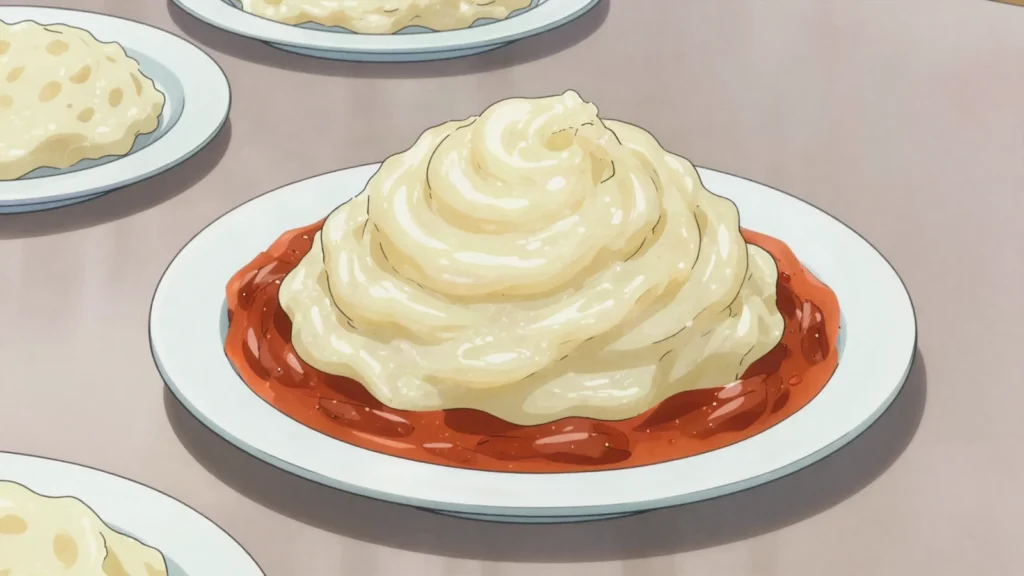
- Keep beating over low heat for 10–12 minutes. The funge is ready when it comes away from the sides of the pan in one mass, looks glossy and grey-beige, and a spoonful holds a soft peak without slumping.
- Test by pinching a little between wet fingers: it should be smooth, elastic and slightly stretchy, with no raw floury taste and no grittiness.
- Wet a bowl with cold water, scrape the funge in, swirl the bowl to shape a smooth dome, and turn it out onto a plate. Serve immediately, still hot; it stiffens as it cools and is torn off with the right hand, rolled into a ball and used to scoop up stews.
Technique
- Cassava flour must be cooked long enough. Undercooked funge tastes raw and chalky and sits heavily; the glossy sheen is the visual cue that the starch has fully gelatinised.
- Constant beating is not optional. Cassava starch seizes on contact with hot water, and any pause leaves hard white lumps that cannot be beaten out afterwards.
- Funge is eaten with the hand, never with cutlery, and it is deliberately bland: it is a vehicle for the sauce it is served with, and salting it heavily is considered wrong.
Substitutions
- No fuba de bombó? Fine cassava flour, gari (rinsed first, as it is fermented and sour) or even tapioca starch cut with maize flour will work, though gari gives a sharper flavour.
- In Luanda many households now use half cassava flour and half fine maize flour for a lighter, paler funge.
Variations
- Funge de milho, also called pirão, made with fine maize flour, yellow and softer in flavour, more common in the south.
- Infundi, the eastern and Congolese name for essentially the same cassava paste.
History
A stiff, smooth dough made from cassava flour, sometimes combined with cornmeal, cooked into a dense, moldable mass eaten by hand alongside a stew, considered one of Angola’s most essential staple foods and closely related in basic technique and role to similar pounded or stirred starch staples found across much of Sub-Saharan Africa under different regional names. Cassava itself is not native to Angola, having arrived through Portuguese colonial-era trade from South America beginning in the 1500s and 1600s, meaning funge in its now-central role within Angolan cooking reflects several centuries of adaptation following that introduction rather than a much older Indigenous tradition predating Portuguese contact. It remains a fundamental everyday staple across Angolan households, typically served with calulu or another traditional Angolan stew.
Frequently asked questions
What is Funge?
Funge is a main from Angola: glossy cassava-flour paste swirled into stews. A stiff, smooth dough made from cassava flour, sometimes combined with cornmeal, cooked into a dense, moldable mass eaten by hand alongside a stew, considered one of Angola’s most essential staple foods and closely related in basic technique and role to similar pounded or stirred starch staples found across much of Sub-Saharan Africa under different regional names. Cassava itself is not native to Angola, having arrived through Portuguese colonial-era trade from South America beginning in the 1500s and 1600s, meaning funge in its now-central role within Angolan cooking reflects several centuries of adaptation following that introduction rather than a much older Indigenous tradition predating Portuguese contact. It remains a fundamental everyday staple across Angolan households, typically served with calulu or another traditional Angolan stew.
How long does Funge take to make?
Funge takes 5 min of preparation and 20 min of cooking. The recipe makes 4 servings. It is rated medium to make.
What can I substitute in Funge?
Yes, within limits. No fuba de bombó? Fine cassava flour, gari (rinsed first, as it is fermented and sour) or even tapioca starch cut with maize flour will work, though gari gives a sharper flavour. In Luanda many households now use half cassava flour and half fine maize flour for a lighter, paler funge.
What is the most important thing to get right in Funge?
Cassava flour must be cooked long enough. Undercooked funge tastes raw and chalky and sits heavily; the glossy sheen is the visual cue that the starch has fully gelatinised.