
Ingredients
Dough
- 500 gstrong white flour
- 7 ginstant yeast
- 10 gsalt
- 1 tbspcaster sugar
- 2 tbspolive oil
- 300 mlwarm water
For frying
- 1 litresunflower oil
Filling
- 2medium potatoes, boiled and cooled
- 4eggs, hard-boiled
- 200 gtinned tuna in oil, drained
- 16black olives, pitted and halved
- 2 tbspharissa
- 2 tbspcapers, rinsed
- 1preserved lemon, skin only, finely chopped
- 4 tbspolive oil
- 1 tspground caraway, if wanted
- salt
Directions
- Put the flour, yeast, salt and sugar in a bowl, keeping the salt away from the yeast at first. Add the olive oil and most of the warm water, and bring it together into a rough dough. Add the rest of the water only if the dough is still dry and ragged.
- Knead it for ten minutes by hand, until it is smooth and elastic and pulls back when stretched. Put it in an oiled bowl, cover it, and leave it until it has doubled in size. This takes about an hour and a half in a warm kitchen, and longer in a cold one. Roll each piece into a ball, then work it into a short oval with tapered ends.
- Set them on a floured tray, cover them loosely, and let them prove for thirty minutes. They should look puffed and feel light, but should not be allowed to overprove and collapse.
- Heat the oil in a deep pan to about 170C, and check it with a thermometer if you can. Too hot and the buns colour before the middle cooks, too cool and they drink oil. Fry them for about three minutes on each side, until they are deep golden all over. They will puff up and float, and should be turned once as they colour.
- Lift them onto a rack over paper and let them drain and cool a little. They must be cool enough to handle before you split them, or the filling slides out. Peel the boiled potatoes and cut them into thick slices or rough chunks. Peel the hard-boiled eggs and cut each one into quarters lengthways.
- Flake the drained tuna coarsely, leaving it in decent pieces rather than shredding it. Have the olives, capers and preserved lemon ready in separate small bowls.
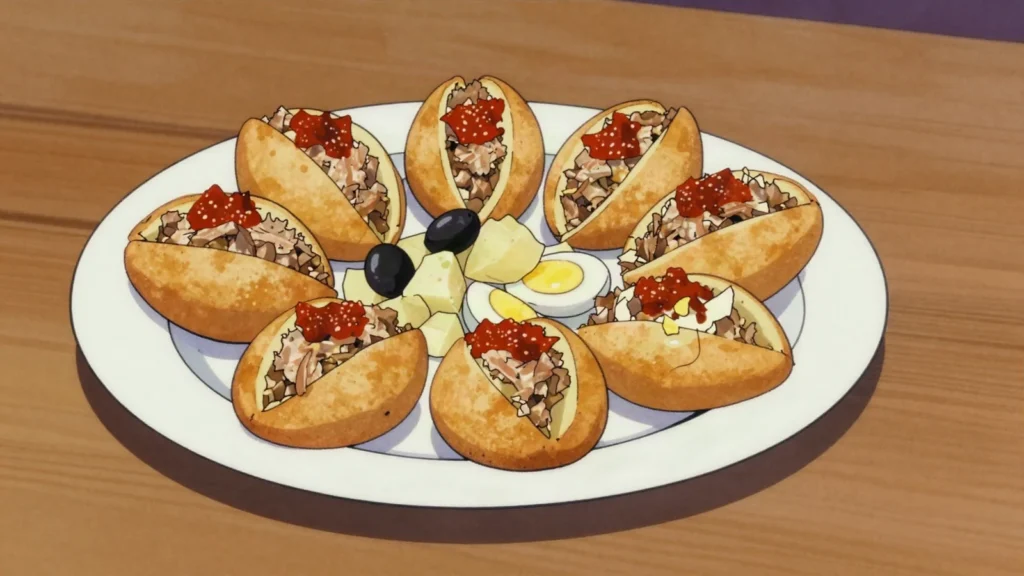
- Lay in a few slices of potato and press them lightly against the bread. Add the flaked tuna next, then two quarters of egg on top of it. Scatter over the olives, the capers and a little of the preserved lemon. Sprinkle over the ground caraway if you are using it, and a pinch of salt.
- Pour a spoonful of olive oil over the whole filling before you close it. Press the sandwich gently closed and serve it while the bun is still warm. Make the buns the same day, since they go leathery once they have gone properly cold.
Technique
- The bun is deep-fried, not baked, and that is what makes it a fricassé.
- Fry at a moderate 170C, since hotter oil colours the outside before the middle cooks.
- Harissa and a good pour of olive oil are structural, not garnishes.
Substitutions
- Tinned tuna in olive oil, which is what is used in Tunisia.
- Ordinary lemon zest and a pinch of salt in place of preserved lemon.
Variations
- With sliced boiled carrot added to the filling.
- With ojja or grilled pepper salad spooned in.
- Made smaller, as a two-bite party version.
History
A small, fried sandwich made from a soft, slightly sweet fried bread dough, filled with tuna, egg, olive, harissa and often potato, documented across Tunisia as a distinctly Tunisian sandwich despite sharing its name with the unrelated French fricassée stew, reflecting a purely coincidental naming overlap rather than any genuine culinary connection between the two dishes. Its combination of a soft, fried bread exterior with a hearty, savory filling makes Tunisian fricassé a popular, filling street food and snack, commonly sold from bakeries and street vendors across the country. Fricassé remains one of Tunisia’s most distinctive and widely eaten street foods, considered a specifically Tunisian culinary invention despite its French-sounding name.
Frequently asked questions
What is Fricassé?
Fricassé is a street food from Tunisia: small fried bun stuffed with tuna, harissa, olives, egg and potato. A small, fried sandwich made from a soft, slightly sweet fried bread dough, filled with tuna, egg, olive, harissa and often potato, documented across Tunisia as a distinctly Tunisian sandwich despite sharing its name with the unrelated French fricassée stew, reflecting a purely coincidental naming overlap rather than any genuine culinary connection between the two dishes. Its combination of a soft, fried bread exterior with a hearty, savory filling makes Tunisian fricassé a popular, filling street food and snack, commonly sold from bakeries and street vendors across the country. Fricassé remains one of Tunisia’s most distinctive and widely eaten street foods, considered a specifically Tunisian culinary invention despite its French-sounding name.
How long does Fricassé take to make?
Fricassé takes 40 min plus 2 hours rising of preparation and 20 min of cooking. The recipe makes 8 sandwiches. It is rated medium to make.
What can I substitute in Fricassé?
Yes, within limits. Tinned tuna in olive oil, which is what is used in Tunisia. Ordinary lemon zest and a pinch of salt in place of preserved lemon.
What is the most important thing to get right in Fricassé?
Lift them onto a rack over paper and let them drain and cool a little. They must be cool enough to handle before you split them, or the filling slides out. Peel the boiled potatoes and cut them into thick slices or rough chunks. Peel the hard-boiled eggs and cut each one into quarters lengthways.