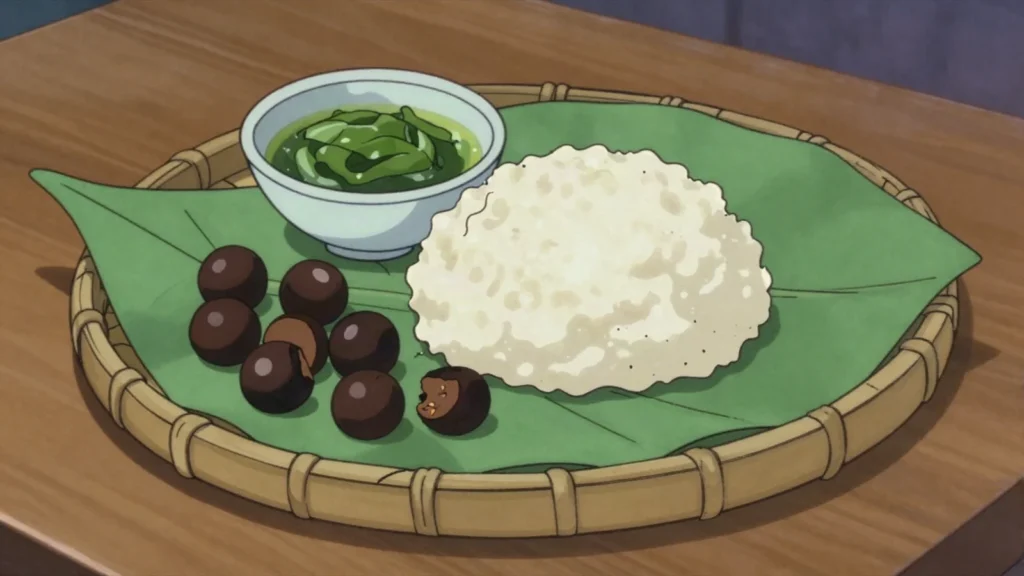

Fermented baobab seeds, sharp and salty, used across Burkina Faso the way a stock cube is used elsewhere — a small amount dropped into a stew to give it depth and salt.
It is an alkaline Bacillus ferment of a protein-rich seed held warm for days, in the same class as dawadawa and bikalga; the traditional inoculum and climate are the method, and there is no reliable domestic substitute.
What goes into it
- baobab seeds
- water
- salt
How it is made
The seeds are boiled at length to soften them and strip the hull, then packed warm into a covered vessel and left for several days while Bacillus species ferment them into a dark, strong-smelling mass. The fermented seeds are salted, shaped and dried in the sun for keeping.
How long it takes: three to five days of fermentation, then drying
How it is eaten
A pinch or a ball dropped into leaf sauces, soups and tô.
Frequently asked questions
What is Maari?
Maari is a fermented & pickled from Burkina Faso: fermented baobab seeds, sharp and salty, used like a stock cube in stews.
How is Maari made?
The seeds are boiled at length to soften them and strip the hull, then packed warm into a covered vessel and left for several days while Bacillus species ferment them into a dark, strong-smelling mass. The fermented seeds are salted, shaped and dried in the sun for keeping. It takes three to five days of fermentation, then drying.
Can I make Maari at home?
No, and the atlas gives no method for it. It is an alkaline Bacillus ferment of a protein-rich seed held warm for days, in the same class as dawadawa and bikalga; the traditional inoculum and climate are the method, and there is no reliable domestic substitute.
What goes into Maari?
Baobab seeds, water, salt.
How is Maari eaten?
A pinch or a ball dropped into leaf sauces, soups and tô.