
Ingredients
Noodles from scratch
- 320 gbuckwheat flour, sobako
- 80 gstrong wheat flour, tsunagi
- about 190 ml water
Or
- 400 ggood dried soba
Tsuyu, the dipping sauce
- 200 mlsoy sauce
- 50 mlmirin
- 50 mlsake
- 1 tbspsugar
- 20 gkatsuobushi, bonito flakes
- a piece of kombu
- 400 mlwater, for dilution
Condiments
- grated daikon
- sliced spring onion
- fresh wasabi
- shichimi togarashi
- grated ginger
To finish
- sobayu, the noodle cooking water
Equipment
- a wide bowl, a long rolling pin, a soba knife
Directions
- Make the tsuyu first, since it needs to cool. Soak the kombu in the water, heat it slowly and remove it just before boiling. Never boil kombu, which makes the stock bitter and slimy. Add the bonito flakes, take it off the heat immediately, and let them sink for 2 minutes, then strain without pressing. Do not press the bonito flakes when straining, which pushes bitterness through.
- Simmer the soy, mirin, sake and sugar together briefly to make kaeshi, then combine with the dashi. Let the tsuyu rest, ideally overnight, and chill it for cold soba. Now the noodles, if you are making them.
- Mix the buckwheat and wheat flours in a wide bowl. Add the water in three additions, and this is the critical part. Add most of the water first and mix with your fingers spread, in fast circular motions, so the flour forms crumbs rather than lumps.
- Keep working until the crumbs are the size of small peas and evenly damp. Now bring it together and knead it into a smooth ball. Knead by pressing and folding rather than stretching, because there is no gluten to develop and you are simply distributing moisture. The surface should become smooth and slightly glossy with no cracks.
- Roll it out on a lightly floured board to about 1.5 mm. Roll it thin and evenly, and work reasonably quickly, because buckwheat dough dries and cracks at the edges. Fold the sheet into layers, dusting generously between each so they do not stick. Now cut it into strips of about 1.5 mm with a heavy knife.
- Cut them evenly, since uneven noodles cook unevenly and it shows immediately. Toss the cut noodles in flour and shake off the excess. Bring a very large pot of unsalted water to a rolling boil.
- Use far more water than seems necessary and no salt at all. Soba is never salted in the water, unlike pasta. Cook fresh soba for 60 to 90 seconds, and dried soba to the packet time. Taste one rather than trusting the clock, and take them out while they still have bite. Now drain and rinse them immediately under cold running water.
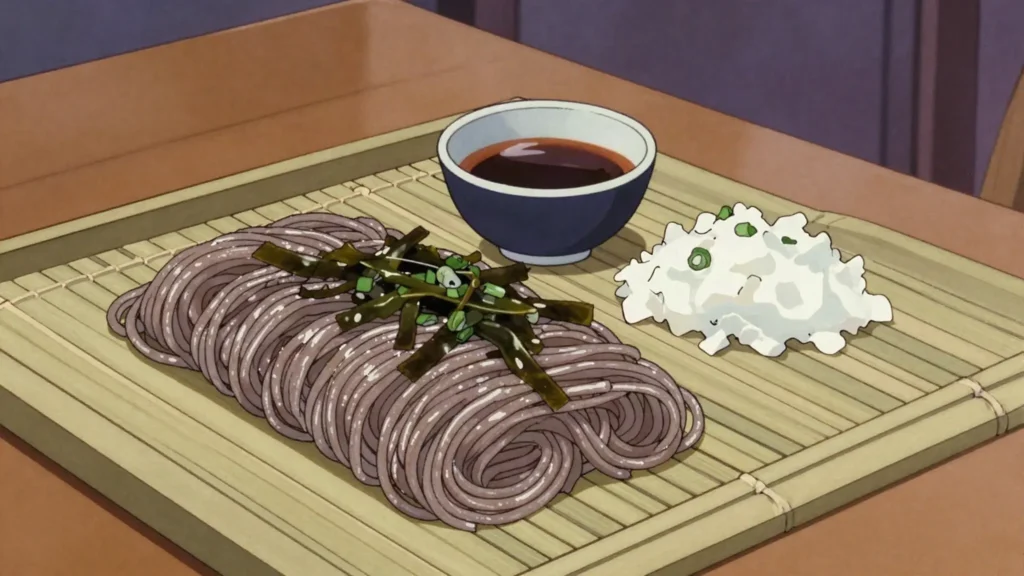
- Rub them gently with your hands as you rinse. For cold soba, finish in iced water so they firm up, then drain thoroughly. Serve cold soba on a bamboo tray with a cup of chilled tsuyu, and the condiments separately.
- Put wasabi and spring onion into your own dipping cup rather than onto the noodles, and dip only the bottom third of each mouthful. Now keep the cooking water, which is the part outsiders miss.
Technique
- Soba shops list the buckwheat percentage and it is the main thing connoisseurs discuss.
- Toshikoshi soba is eaten on 31 December across Japan.
- The rinsing step is what most home cooks outside Japan skip, and it matters.
Substitutions
- Good dried soba, which is what most people use.
- Shop-bought mentsuyu concentrate, diluted, in place of homemade.
Variations
- Zaru soba, cold with shredded nori.
- Kake soba, hot in broth.
- Tempura soba, with prawn tempura.
History
Buckwheat noodles spread through Edo in the 1600s and were credited with warding off beriberi; toshikoshi soba is eaten to cut off the old year.
Frequently asked questions
What is Soba?
Soba is a main from Japan: nutty buckwheat noodles served chilled with tsuyu or in hot broth. Buckwheat noodles spread through Edo in the 1600s and were credited with warding off beriberi; toshikoshi soba is eaten to cut off the old year.
How long does Soba take to make?
Soba takes 1 hr, if making noodles of preparation and 5 min of cooking. The recipe makes 4 servings. It is rated hard to make.
What can I substitute in Soba?
Yes, within limits. Good dried soba, which is what most people use. Shop-bought mentsuyu concentrate, diluted, in place of homemade.
What is the most important thing to get right in Soba?
Make the tsuyu first, since it needs to cool. Soak the kombu in the water, heat it slowly and remove it just before boiling. Never boil kombu, which makes the stock bitter and slimy. Add the bonito flakes, take it off the heat immediately, and let them sink for 2 minutes, then strain without pressing. Do not press the bonito flakes when straining, which pushes bitterness through.