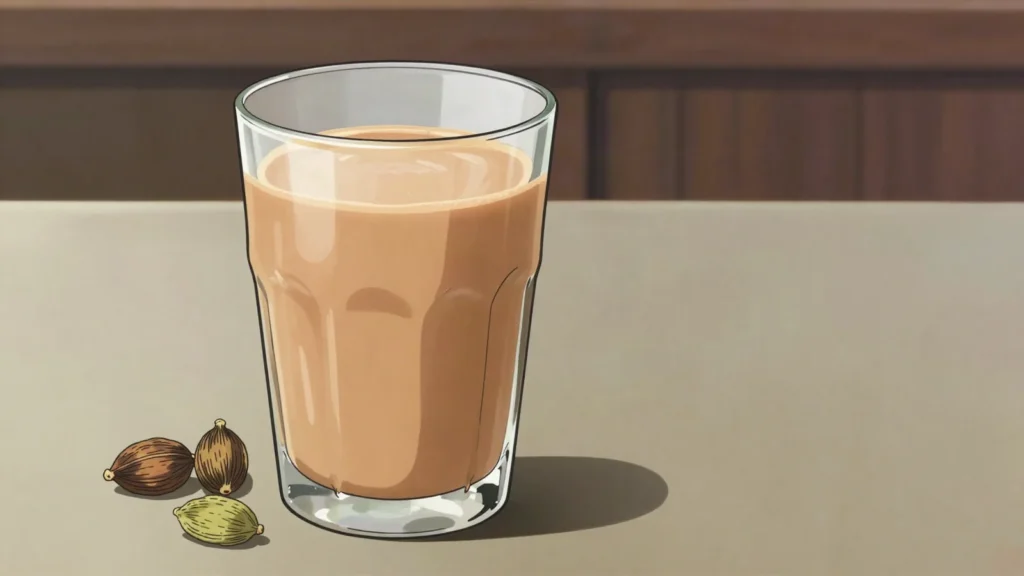

Ingredients
The tea
- 4 teaspoonsblack tea leaves
- a strong loose tea
- 500 mlwater
The milk
- 500 mlwhole milk
- or milk powder mixed with water
To sweeten
- 5 tablespoonssugar
- or to taste
Sometimes added
- 2cardamom pods, crushed
- a little ginger
Directions
- Put the measured water in a pot. Bring the pot up to a full boil. Add the tea leaves to the boiling water.
- Let it boil for about three minutes. Three minutes of boiling makes it strong. Add crushed cardamom if you want it.
- Add a little fresh ginger with it. Some households add it and some do not. Pour in all of the measured milk.
- Use a pot larger than you think you need. Never walk away from it on the heat. Bring it all back up to a boil. Let it boil for about three minutes.
- Lift the pot off if it rises too far. Return it once it has settled. It is how it is done in practice. Stir all the sugar into the pot. Let it dissolve in completely. Reduce it if you prefer it lighter.
- Taste it and adjust the sugar. It should be clearly sweet to taste. Pour it through a fine mesh sieve. Discard all of the spent leaves.
- Strain it twice if it is still gritty. Serving it is always done hot. Pour it out into cups or glasses. It is drunk hot through the day. Make it fresh wherever you can.
Technique
- Bhutan has two everyday teas and they are not competing versions of one drink: suja is churned with butter and salt, savoury and closer to a broth, and is the older and more ceremonial; ngaja is boiled with milk and sugar and is the everyday working drink that shops and offices serve.
- The tea is boiled rather than steeped, and boiled again with the milk, because milk mutes tea flavour considerably and a steeped tea would be lost in it. Boiling gives a tea strong enough to carry through.
- Milk foams up dramatically and climbs the pot, so use one larger than you think you need and never walk away. Lifting the pot off as it rises and returning it once it settles, two or three times, is deliberate practice rather than a mishap — it boils the tea without overflowing.
Substitutions
- Milk powder mixed with water is widely used in Bhutan and makes a perfectly standard ngaja, since fresh milk is not always available and powder keeps without refrigeration.
- Crushed cardamom, sometimes with a little ginger, goes in with the tea leaves in some households.
Variations
- Boiled milk tea is made right across the Himalaya and South Asia, each place with its own name and proportions; ngaja belongs to that family.
- Roughly equal water and milk is usual, with more milk giving a richer drink and more water a stronger tea flavour.
- It is often poured from a height, which aerates it and raises a foam.
History
Bhutan’s sweet counterpart to salted suja, drunk in shops and offices through the day.
Frequently asked questions
What is Ngaja?
Ngaja is a drink from Bhutan: sweet milk tea boiled with sugar, the everyday alternative to butter tea. Bhutan’s sweet counterpart to salted suja, drunk in shops and offices through the day.
How long does Ngaja take to make?
Ngaja takes 5 minutes of preparation and 10 minutes of cooking. The recipe makes serves 4. It is rated easy to make.
What can I substitute in Ngaja?
Yes, within limits. Milk powder mixed with water is widely used in Bhutan and makes a perfectly standard ngaja, since fresh milk is not always available and powder keeps without refrigeration. Crushed cardamom, sometimes with a little ginger, goes in with the tea leaves in some households.
What is the most important thing to get right in Ngaja?
Add a little fresh ginger with it. Some households add it and some do not. Pour in all of the measured milk.