
Ingredients
Eggs
- 8eggs
- 1/2 teaspoonsalt
- black pepper
The pan
- 60 gbutter
- or 60 g yak butter
- 150 gfresh soft cheese
- or 150 g feta, crumbled and rinsed
- 4green chillies, sliced
- or 2 teaspoons dried chilli flakes
- 1onion, finely sliced
- 2garlic cloves, sliced
- 1tomato, chopped, optional
To serve
- Bhutanese red rice
- or plain rice
- ezay, chilli relish
- butter tea, optional
Directions
- Reduce the quantity if you need to. Bhutanese cheese is fresh and soft. Slice the chillies and the onion. Crumble the fresh soft cheese up. Beat the eggs in a large bowl. Beating the eggs takes a light hand.
- Beat them just until the yolks break up. Do not whisk them up to a froth. Season them with salt and pepper. Melt the butter in a wide pan. Use a generous amount of butter.
- Add the sliced onion to the pan. Cook it for about four minutes. Add the garlic and the chillies. Cook them for two minutes only. Add the chopped tomato if using it. Add the crumbled cheese to the pan.
- Let it soften into the butter. Give it about two full minutes. Stir it through the onion and chilli. Turn the heat right down to low.
- Pour the beaten eggs into the pan. Low and slow keeps them soft and creamy. Stir slowly with a wooden spoon. Let the runny egg flow into the gap. Keep the curds large rather than small. Do not stir it constantly like a sauce.
- Take them off while still slightly runny. Eggs keep cooking in the hot pan. Let it sit for one minute off the heat. Serving it is done immediately.
- Spoon it onto plates or into a bowl. Serve red rice alongside the plate. Put the ezay out on the table. Butter tea goes with it in the cold. It does not keep well at all once cooked. Make it fresh again each time.
Technique
- Gondo means egg in Dzongkha and maru relates to butter, so the name is simply egg and butter; Bhutanese dish names are often that direct.
- Chilli in Bhutan is treated as a vegetable rather than a spice and goes in by the handful, which is why visitors routinely find the food too hot to eat.
- Bhutanese cheese is fresh, soft and slightly sour, softening into the dish rather than melting smooth, and rinsed feta or fresh paneer is the closest substitute.
Substitutions
- Rinsed crumbled feta or fresh paneer stands in for Bhutanese soft cheese.
- Ordinary butter works perfectly well in place of yak butter.
Variations
- Ema datshi, kewa datshi and shamu datshi use the same butter and cheese base.
- Some cooks add tomato to the pan.
- The chilli quantity varies enormously between households.
History
An everyday Bhutanese breakfast built on the same butter-and-cheese base as the country’s datshi dishes.
Frequently asked questions
What is Gondo Maru?
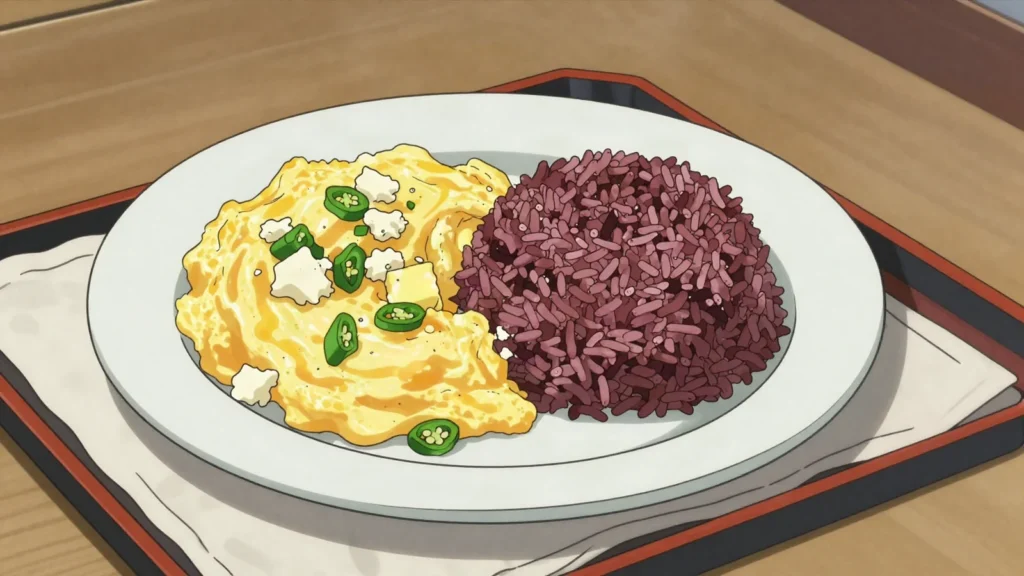
Gondo Maru is a breakfast from Bhutan: eggs scrambled in butter with fresh cheese and chilli, eaten with red rice. An everyday Bhutanese breakfast built on the same butter-and-cheese base as the country’s datshi dishes.
How long does Gondo Maru take to make?
Gondo Maru takes 10 minutes of preparation and 15 minutes of cooking. The recipe makes serves 4. It is rated easy to make.
What can I substitute in Gondo Maru?
Yes, within limits. Rinsed crumbled feta or fresh paneer stands in for Bhutanese soft cheese. Ordinary butter works perfectly well in place of yak butter.
What is the most important thing to get right in Gondo Maru?
Beat them just until the yolks break up. Do not whisk them up to a froth. Season them with salt and pepper. Melt the butter in a wide pan. Use a generous amount of butter.