
Ingredients
Grain
- 500 gmillet
- 100 grice
- 2 litreswater
Spices
- 2 tbspfresh ginger
- 1 tspcloves
- 1 tspblack peppercorns
- 2dried chillies
- 2pods calabash nutmeg, optional
To serve
- sugar
- evaporated milk
- koose
Directions
- Wash the millet and soak it overnight in plenty of water, together with the rice.
- Drain it and grind it with the ginger, cloves, peppercorns and chillies to a smooth wet paste, adding water as you go.
- Grind the spices in with the grain rather than adding them later. That is how the flavour ends up running through the whole porridge instead of sitting on top of it.
- Mix the paste with a litre of water and leave it covered at room temperature for 12 to 24 hours to sour.
- This is a short lactic souring, the same thing that happens in a sourdough starter, and it is what gives koko its tang. It should smell pleasantly sour rather than unpleasant.
- Strain the soured mixture through a fine sieve or cloth, pressing the solids and discarding the coarse bran.
- Let the strained liquid stand for 2 hours so the starch settles, then pour off the clear sour water on top and keep it.
- Both parts get used. The settled starch is the porridge and the sour water thins it and carries the acidity, so keep them separate rather than pouring anything away.
- Bring 500 ml of water to a rolling boil in a heavy pot.
- Whisk the starch slurry into the boiling water in a steady stream, whisking hard the whole time.
- Into boiling water, whisking, and never the other way round. Starch stirred into cool water and then heated sets into lumps you cannot break up.
- Cook for 10 to 15 minutes, stirring, until it thickens and turns glossy and the raw starch taste has gone.
- Thin it to the consistency you want with the reserved sour water, which also lets you set the sourness.
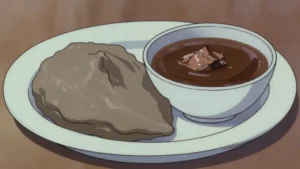
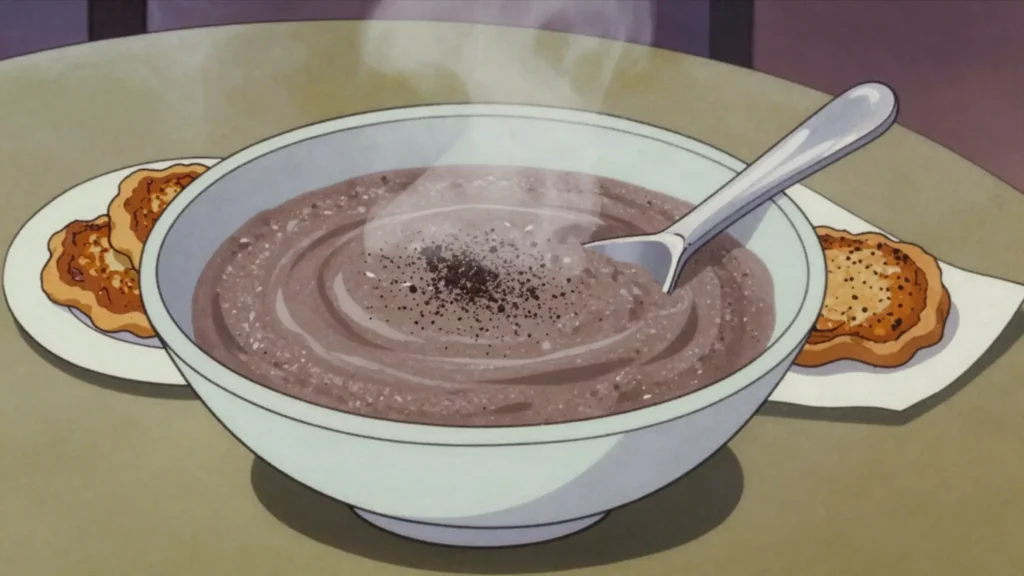
- Serve it hot in a bowl or a cup with sugar and evaporated milk stirred in, and koose alongside for dipping.
- It is sold by Hausa vendors from northern Nigeria and Ghana’s north, and it is still the standard Accra street breakfast.
Technique
- It is sold in cups or knotted plastic bags from carts before dawn and drunk on the way to work.
- The pairing with koose, black-eyed bean fritters, is fixed rather than a suggestion.
- It should be thin enough to drink rather than to eat with a spoon.
Substitutions
- Millet flour, which skips the grinding but gives a flatter flavour.
- A mix of millet and maize, which is common further south.
Variations
- With more chilli, which is the northern preference.
- Made thicker, to eat with a spoon.
- Without the souring step, for a milder porridge.
History
Spiced millet porridge sold by Hausa migrants from northern Nigeria and Ghana’s north, still the standard Accra street breakfast with koose.
Frequently asked questions
What is Hausa koko?
Hausa koko is a breakfast from Ghana: spiced fermented millet porridge sold at dawn. Spiced millet porridge sold by Hausa migrants from northern Nigeria and Ghana’s north, still the standard Accra street breakfast with koose.
How long does Hausa koko take to make?
Hausa koko takes 20 min plus overnight soaking and 24 hr souring of preparation and 20 min of cooking. The recipe makes 6 servings. It is rated medium to make.
What can I substitute in Hausa koko?
Yes, within limits. Millet flour, which skips the grinding but gives a flatter flavour. A mix of millet and maize, which is common further south.
What is the most important thing to get right in Hausa koko?
Grind the spices in with the grain rather than adding them later. That is how the flavour ends up running through the whole porridge instead of sitting on top of it.