
Ingredients
What is in the bottle
- Malted barley, the backbone of the grist
- Unmalted maize or maize grits, the adjunct that lightens the body and pales the colour
- Hops, used sparingly for a bitterness of roughly 12–16 IBU
- Bottom-fermenting lager yeast
- Treated brewing water
- Alcohol by volume: 5.4%
To serve
- 1 bottleCuca, chilled to 3–5 C
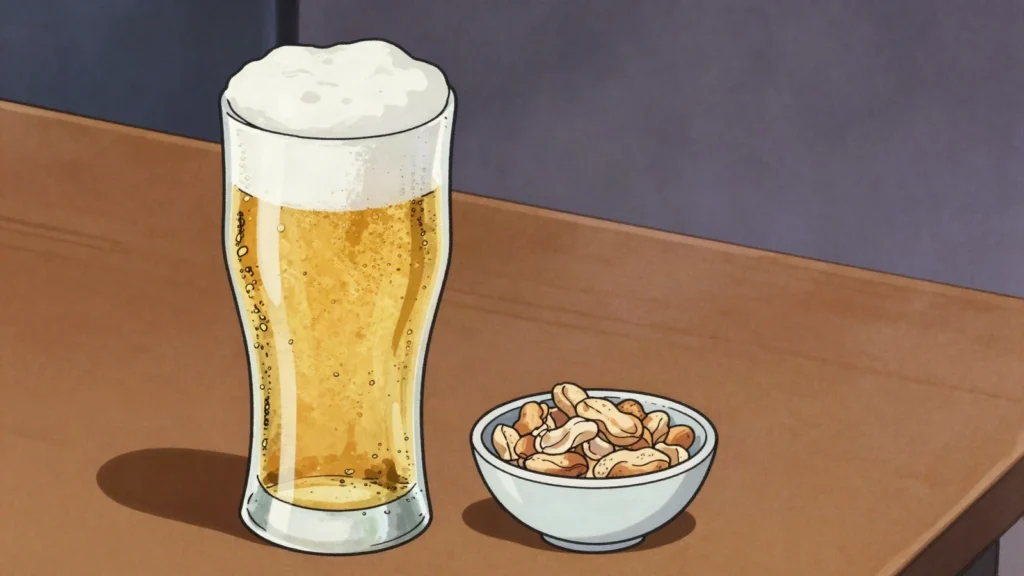
- a tall glass, rinsed with cold water, or drunk straight from the bottle
- a bowl of grilled peanuts or funge com muamba on the side
Directions
- Understand what you are drinking: Cuca is an industrial pale lager, first brewed in Luanda in 1975 and now made by Angola’s largest brewers, and it is not something you make at home.
- In the brewhouse, malted barley is milled and mashed with maize adjunct at 62–72°C (145–160°F) so enzymes convert starch to fermentable sugar, producing a sweet wort.
- The wort is lautered off the grain bed, then boiled for about an hour with hops, which isomerises the alpha acids into bitterness and sterilises the liquid.
- The hot wort is whirlpooled to drop out protein trub, cooled through a plate exchanger to around 10°C (50°F), and oxygenated as it runs to the fermenter.
- Lager yeast is pitched and ferments cool, at 9–12 C for about a week, giving the clean, low-ester profile that defines the style, then the beer is matured cold at close to 0°C (30°F) for two to four weeks to settle haze and mellow sulphur.
- It is filtered bright, carbonated to roughly 2.6 volumes, and pasteurised in the bottle for shelf stability in a hot climate.
- To serve it properly, keep the bottle in ice water rather than a freezer, so it comes to 3–5 C without frosting the glass and dulling what little aroma it has.
- Open, pour down the side of a tilted glass and then straighten to raise a two-finger head, or do as most of Luanda does and drink it from the bottle, cold, in the afternoon heat.
Technique
- Cuca is deeply woven into Angolan public life. Its slogan, o nosso orgulho, and its yellow-and-red livery are on beach bars, weddings and roadside kiosks across the country, and asking for uma Cuca in Luanda is close to asking simply for a beer.
- Maize adjunct is not a shortcut here but a regional signature: it thins the body and keeps the beer refreshing at 30°C (85°F), which malt-only lagers struggle to do.
- Serve it too cold and you taste nothing but carbonation. Between 3 and 5°C (40°F) you get the faint grain sweetness and the dry, quick finish that make it drinkable by the crate.
Substitutions
- Outside Angola, look for it in Portuguese grocers; failing that, any maize-adjunct tropical lager such as another African pale lager drinks in the same register.
- For a non-alcoholic table alternative in the same role, Angolans often drink cold Blue or a bottled mineral water with lime.
Variations
- Cuca Preta, a darker, sweeter variant with roasted malt.
- Draught Cuca, poured in Luanda bars, softer and less carbonated than the bottle.
History
Brewed in Angola since 1940s Portuguese rule, Cuca survived the civil war and remains the country’s dominant beer brand.
Frequently asked questions
What is Cuca?
Cuca is a wine & spirit from Angola: pale Luanda lager, the beer poured everywhere from beach bars to weddings. Brewed in Angola since 1940s Portuguese rule, Cuca survived the civil war and remains the country’s dominant beer brand.
How long does Cuca take to make?
Cuca takes 5 min of preparation and 4 weeks (industrial lagering) of cooking. The recipe makes 1 bottle, 330 ml. It is rated easy to make.
What can I substitute in Cuca?
Yes, within limits. Outside Angola, look for it in Portuguese grocers; failing that, any maize-adjunct tropical lager such as another African pale lager drinks in the same register. For a non-alcoholic table alternative in the same role, Angolans often drink cold Blue or a bottled mineral water with lime.
What is the most important thing to get right in Cuca?
To serve it properly, keep the bottle in ice water rather than a freezer, so it comes to 3–5 C without frosting the glass and dulling what little aroma it has.