
Ingredients
Paste
- 400 graw peanuts, skins on
- 3jindungo chillies, stems removed
- 3garlic cloves, peeled
- 1.5 tspfine salt
- 2 tbspred palm oil, or groundnut oil
- 2 tbspwarm water, if needed
Optional additions
- 1small onion, finely chopped and fried soft
- juice of half a lime
To serve
- 1loaf of bread, or grilled plantain and cassava
Directions
- Spread the peanuts in a dry heavy pan over medium heat and roast 12–15 minutes, shaking constantly, until the skins darken and split and the nuts smell sweet and toasty.
- Tip them onto a cloth, fold it over and rub hard to loosen the skins, then winnow the skins away by tossing the nuts in a wide bowl.
- Let the nuts cool to just warm. Hot nuts pounded straight away go oily and the paste splits.
- Pound the chillies, garlic and salt together in a heavy mortar to a rough paste.
- Add the peanuts a handful at a time and pound steadily, scraping the sides in, for 10–15 minutes. The nuts break down, then release their oil and the mass turns from crumbs into a coarse, gritty paste.
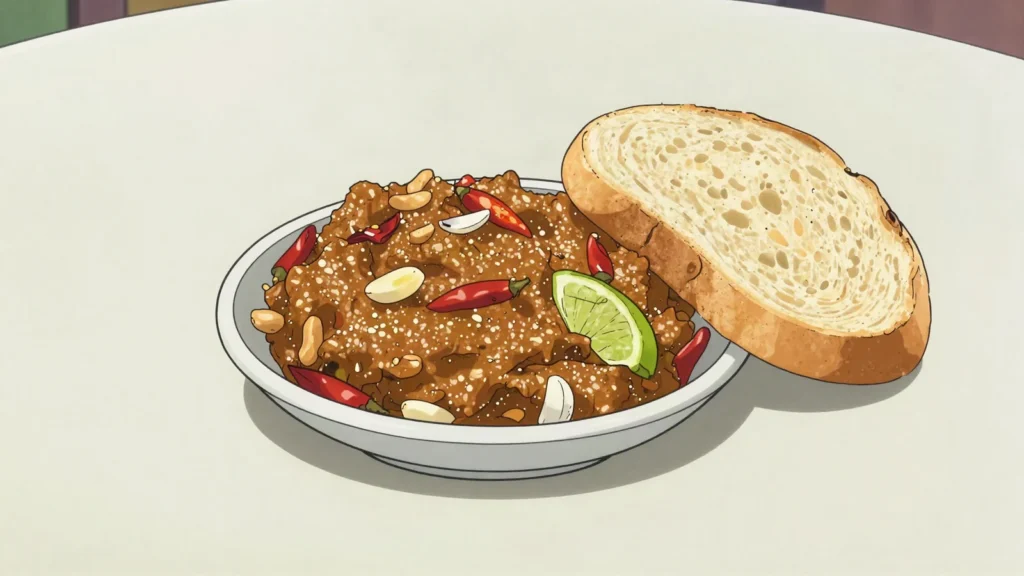
- Work in the palm oil a spoon at a time until the paste is thick and spreadable but still has grain; kitaba is deliberately coarse, not smooth like commercial peanut butter.
- Loosen with a little warm water only if it is too stiff, and stir in the fried onion and lime juice if using.
- Taste and adjust for salt and heat. It should be nutty, salty and hot enough to prickle.
- Pack into a jar, smooth the top and cover with a film of oil. Keep in the fridge up to two weeks, and let it come back to room temperature before serving.
Technique
- Ginguba, the peanut, is central to Angolan cooking, and kitaba is its simplest expression: roasted nuts, chilli, salt and nothing much else. The name is also used for the pounded paste that thickens stews.
- Roast the nuts properly. Under-roasted peanuts give a pale, raw-tasting paste, and the difference between just-done and burnt is about 60 seconds at the end, so keep the pan moving.
- A mortar gives the right texture. A food processor overheats the oil and drives the paste smooth, which is exactly what kitaba should not be, so pulse rather than run it if you use one.
Substitutions
- Blanched or ready-roasted unsalted peanuts save the skinning, but refresh them in a dry pan for 4 minutes to wake up the aroma.
- No palm oil: groundnut oil keeps it neutral and lets the peanut lead, though you lose the red colour.
Variations
- Kitaba spread thickly on fresh bread, the Luanda street breakfast.
- Loosened with hot water into a sauce for boiled cassava and greens.
- A sweet version pounded with sugar instead of chilli, closer to a peanut candy.
History
Groundnuts, called ginguba in Kimbundu, came from Brazil with Portuguese Atlantic trade and became Angola’s most-used sauce base.
Frequently asked questions
What is Kitaba?
Kitaba is a sauce & condiment from Angola: coarse roasted peanut paste beaten with chili, spread on bread or fish. Groundnuts, called ginguba in Kimbundu, came from Brazil with Portuguese Atlantic trade and became Angola’s most-used sauce base.
How long does Kitaba take to make?
Kitaba takes 25 min of preparation and 20 min of cooking. The recipe makes about 500 g. It is rated easy to make.
What can I substitute in Kitaba?
Yes, within limits. Blanched or ready-roasted unsalted peanuts save the skinning, but refresh them in a dry pan for 4 minutes to wake up the aroma. No palm oil: groundnut oil keeps it neutral and lets the peanut lead, though you lose the red colour.
What is the most important thing to get right in Kitaba?
Roast the nuts properly. Under-roasted peanuts give a pale, raw-tasting paste, and the difference between just-done and burnt is about 60 seconds at the end, so keep the pan moving.