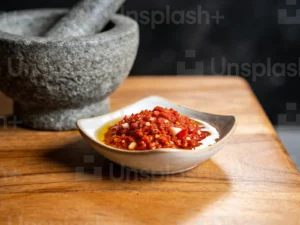

The fermented broad-bean and chilli paste at the base of Sichuan cooking — ruddy, salty, deeply savoury, and the thing that makes mapo tofu taste like mapo tofu. Pixian county near Chengdu has made it since the Qing dynasty.
It is a mould ferment of a low-acid bean, sun-aged in open jars for years, and the moulds involved include species that produce aflatoxin when the process goes wrong; the traditional yards, jars and starter are the safeguard.
What goes into it
- broad beans
- wheat flour
- salt
- erjingtiao chillies
- sun
How it is made
Broad beans are inoculated with an Aspergillus mould and left to grow a koji, then salted heavily and mixed with fresh chillies. The paste is put into wide open earthen jars in an outdoor yard and sun-aged for one to three years, uncovered by day and covered at night, stirred regularly. Time and the sun turn it from bright red to deep brown.
How long it takes: one to three years of open-air ageing
How it is eaten
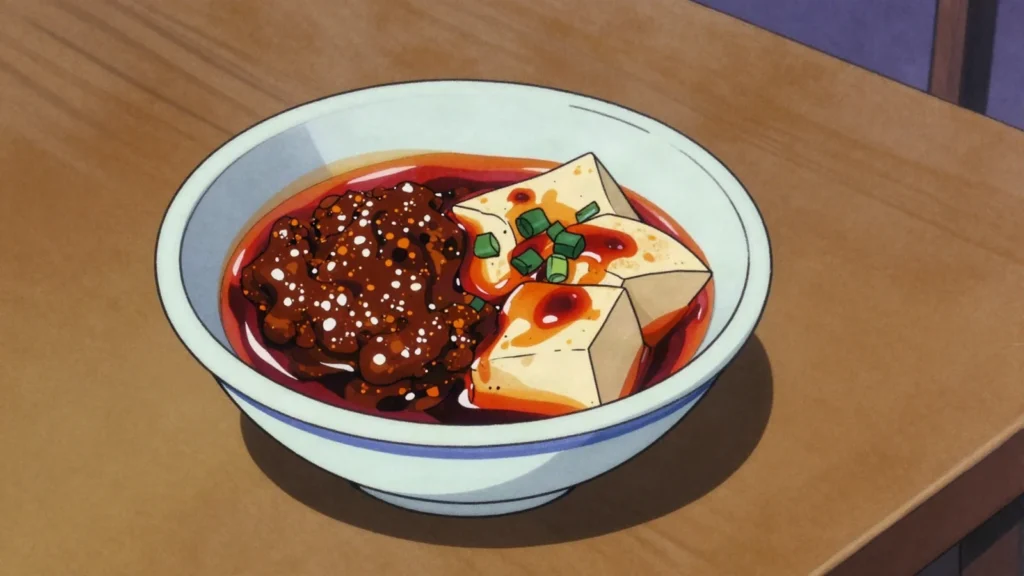
Fried in oil at the start of a dish — mapo tofu, twice-cooked pork, dan dan noodles.
History
Pixian county near Chengdu has made it since the Qing dynasty, sun-ageing the paste in open earthen jars for one to three years.
Frequently asked questions
What is Doubanjiang?
Doubanjiang is a sauce & condiment from China: fermented broad-bean and chili paste, the ruddy soul of Sichuan cooking. Pixian county near Chengdu has made it since the Qing dynasty, sun-ageing the paste in open earthen jars for one to three years.
How is Doubanjiang made?
Broad beans are inoculated with an Aspergillus mould and left to grow a koji, then salted heavily and mixed with fresh chillies. The paste is put into wide open earthen jars in an outdoor yard and sun-aged for one to three years, uncovered by day and covered at night, stirred regularly. Time and the sun turn it from bright red to deep brown. It takes one to three years of open-air ageing.
Can I make Doubanjiang at home?
No, and the atlas gives no method for it. It is a mould ferment of a low-acid bean, sun-aged in open jars for years, and the moulds involved include species that produce aflatoxin when the process goes wrong; the traditional yards, jars and starter are the safeguard.
What goes into Doubanjiang?
Broad beans, wheat flour, salt, erjingtiao chillies, sun.
How is Doubanjiang eaten?
Fried in oil at the start of a dish — mapo tofu, twice-cooked pork, dan dan noodles.