
Ingredients
Radish
- 2 kgponytail radishes (chonggak mu), with their greens
- 3 tbspcoarse salt
Paste
- 6 tbspgochugaru
- 3 tbspsalted shrimp, chopped
- 3 tbspfish sauce
- 8 clovesgarlic, crushed
- 3cm ginger, grated
- 1 tbspsugar
- 4 tbspglutinous rice porridge, cooled
- 4spring onions, in lengths
Directions
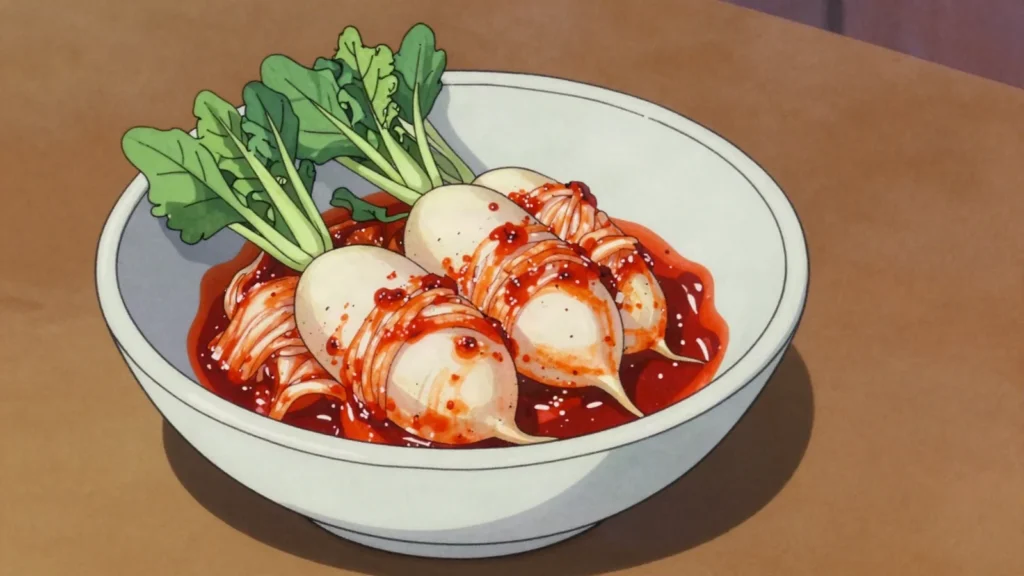
- Trim the ponytail radishes but keep the greens attached — the whole radish with its leafy top is what chonggak kimchi is, and cutting the greens off makes it kkakdugi with the wrong shape.
- Scrub them well, rubbing between the root and the leaves where grit collects, and split any thick ones lengthwise so they salt evenly.
- Rub with the coarse salt, working it into the greens as well, and leave two hours, turning once. Rinse briefly and drain well.
- Cook the glutinous rice porridge — a tablespoon of rice flour whisked into 150 ml water and simmered until thick — and cool it completely. It helps the paste cling to the radish and feeds the ferment.
- Mix the gochugaru into the cooled porridge first and let it bloom for five minutes. Dry chilli stirred straight onto the vegetables never colours evenly.
- Add the salted shrimp, fish sauce, garlic, ginger, sugar and spring onion and mix into a thick paste.
- Wearing gloves, coat each radish and its greens thoroughly, then fold the greens around the root and tuck them in so each one makes a neat bundle.
- Pack into a jar, pressing hard to drive out air, leaving headspace. Leave at room temperature a day or two until it fizzes, then refrigerate. Good after a week, better after a month.
Technique
- Keep the greens on and salt them too. They are half the pleasure of this kimchi.
- Bloom the gochugaru in the rice porridge before mixing.
- Scrub between root and leaves. Grit collects there and it is unpleasant to find later.
Substitutions
- Small daikon with their tops, if ponytail radishes are unavailable.
- Anchovy sauce in place of salted shrimp, or soy and miso for a vegan version.
Variations
- Eaten with noodles, which is its traditional partner.
- Older sour chonggak is chopped into stews and fried rice.
History
Named for the bachelor’s topknot the small radish resembles, and a favourite accompaniment to noodles.
Frequently asked questions
What is Chonggak Kimchi?
Chonggak Kimchi is a fermented & pickled from South Korea: whole ponytail radishes kimchi-fermented with their greens; crunchy and sharp. Named for the bachelor’s topknot the small radish resembles, and a favourite accompaniment to noodles.
How long does Chonggak Kimchi take to make?
Chonggak Kimchi takes 45 min plus 2 hours salting and 2 days fermenting of preparation and no cooking at all. The recipe makes makes about 2 kg. It is rated easy to make.
What can I substitute in Chonggak Kimchi?
Yes, within limits. Small daikon with their tops, if ponytail radishes are unavailable. Anchovy sauce in place of salted shrimp, or soy and miso for a vegan version.
What is the most important thing to get right in Chonggak Kimchi?
Trim the ponytail radishes but keep the greens attached — the whole radish with its leafy top is what chonggak kimchi is, and cutting the greens off makes it kkakdugi with the wrong shape.