
Ingredients
How it is made
- Fresh sugarcane, pressed within 24 hours of cutting into juice (garapa) at 14 to 16 Brix
- Wild yeast or a fubá (corn meal) starter, for the ferment
- A copper alembic still, for the artisanal method
- Barrels of oak, amburana, jequitibá or bálsamo, for ageing
To serve
- 50 mlcachaça at 38 to 48 percent ABV
- 1small tulip glass or a traditional copinho
Directions
- Cane is cut and pressed the same day; the juice sours fast, and the freshness of the garapa is the single biggest quality marker in cachaça.
- The juice is strained, diluted to about 15 Brix, and fermented in open vats for 20 to 30 hours with either wild yeast or a cultivated fubá starter, reaching roughly 8 percent alcohol.
- Artisanal producers distil this wine in a copper alembic in single batches. Industrial producers use continuous stainless columns, which is the main legal and stylistic divide.
- The distiller cuts the run in three: the head (cabeça, about 10 percent, discarded), the heart (coração, kept) and the tail (cauda, redistilled). The cuts define the spirit — kept too wide and it smells of solvent and sulphur.
- By Brazilian law the spirit must come off between 38 and 48 percent ABV and be made only from sugarcane; that is what separates cachaça from rum, which is usually made from molasses.
- Cachaça branca rests in stainless or neutral wood for up to a year and is bottled clear. Cachaça envelhecida spends at least a year in wood, and the native Brazilian timbers give flavours no other spirit has: amburana is all cinnamon and vanilla, jequitibá dry and faintly herbal.
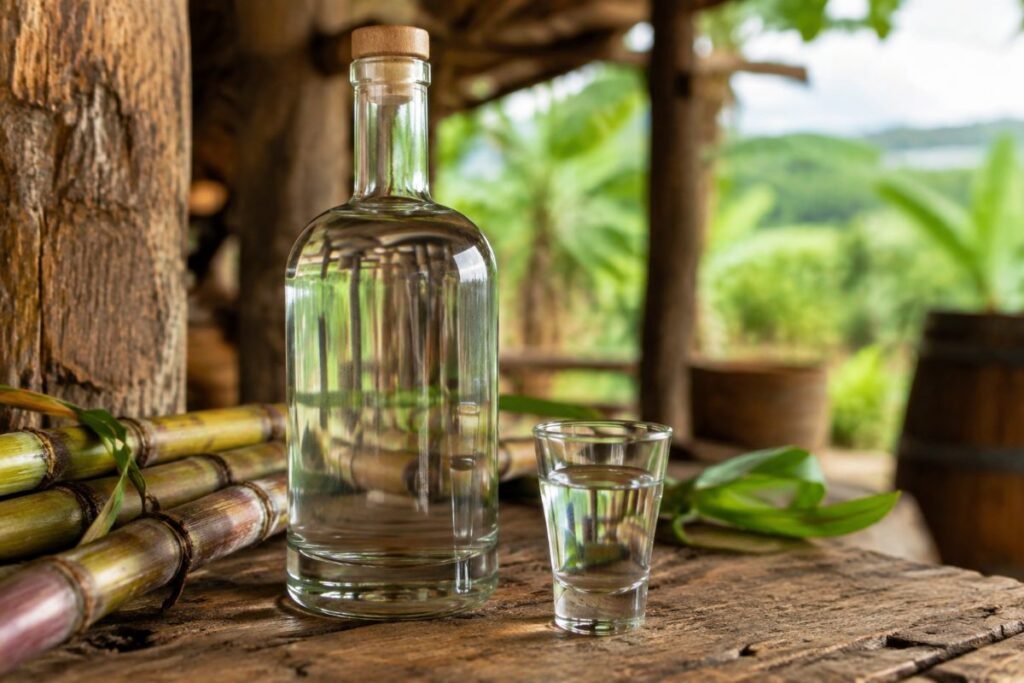
- To serve neat, pour 50 ml into a small tulip glass at room temperature, never chilled, and let it sit two minutes before nosing.
- Aged cachaça is drunk slowly after a meal; white cachaça is the base of the caipirinha and the bottle that stands beside a feijoada.
Technique
- Do not attempt this at home. Distilling spirits without a licence is illegal in most countries, and badly made cuts concentrate methanol and ethyl carbamate — this describes how cachaça is produced, not a home project.
- Minas Gerais is the heartland of artisanal alembic cachaça, and Salinas in particular is a protected regional indication.
- There are over four thousand registered brands and the vast majority never leaves Brazil, so abroad look for ‘alambique’ or ‘artesanal’ on the label as shorthand for the batch-distilled style.
Substitutions
- If you cannot find cachaça, an agricole-style rum distilled from fresh cane juice is by far the closest substitute; a molasses-based rum tastes heavier and sweeter and will change any drink built on it.
Variations
- Aged in bálsamo the spirit turns almost peppery, and it is the style most often drunk neat in the interior.
- Cachaça rested in fragrant umburana wood is a Christmas bottle in many Brazilian houses.
History
Distilled at Brazilian sugar mills from the 1530s; Portugal banned it in 1649 to protect Lisbon brandy, and the ban helped spark revolt in Rio.
Frequently asked questions
What is Cachaça?
Cachaça is a wine & spirit from Brazil: sugarcane spirit distilled from fresh juice, drunk neat or in caipirinhas. Distilled at Brazilian sugar mills from the 1530s; Portugal banned it in 1649 to protect Lisbon brandy, and the ban helped spark revolt in Rio.
How long does Cachaça take to make?
Cachaça takes 5 min to serve of preparation and Distillery process: 24 hr ferment, distillation, then 1 to 3 years in wood of cooking. The recipe makes serves 1 as a tasting pour. It is rated hard to make.
What can I substitute in Cachaça?
Yes, within limits. If you cannot find cachaça, an agricole-style rum distilled from fresh cane juice is by far the closest substitute; a molasses-based rum tastes heavier and sweeter and will change any drink built on it.
What is the most important thing to get right in Cachaça?
By Brazilian law the spirit must come off between 38 and 48 percent ABV and be made only from sugarcane; that is what separates cachaça from rum, which is usually made from molasses.