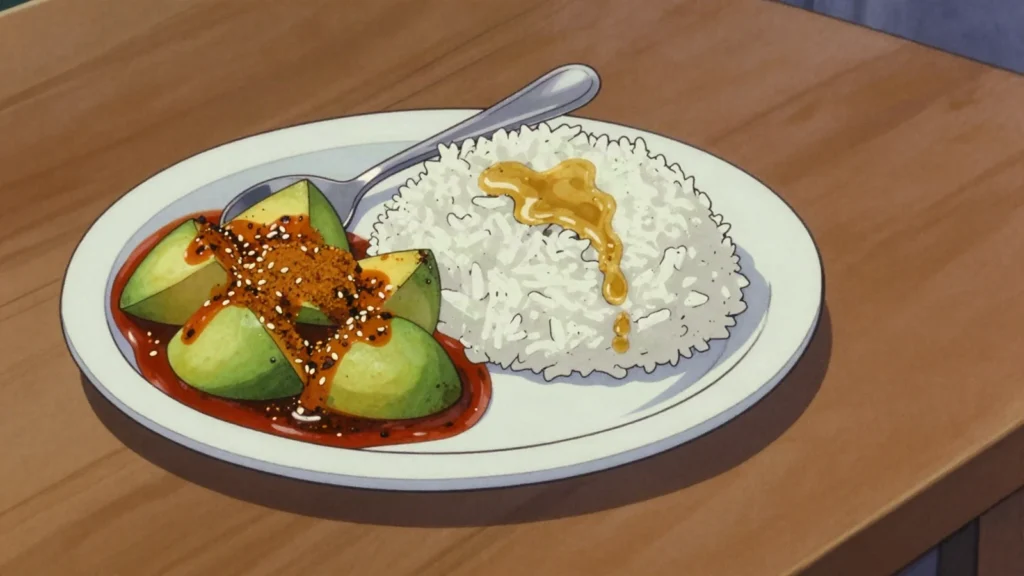

Ingredients
Mango
- 1.5 kgfirm sour green mango, cut in large pieces with a piece of stone on each
- the soft inner kernel discarded
Spice
- 200 gmustard powder, freshly ground
- 200 ghot red chilli powder, Guntur if you can get it
- 150 gsalt
- 1 tbspground turmeric
- 1 tspasafoetida
- 100 gchickpeas or fenugreek seed, optional
Oil
- 500 mlcold-pressed sesame oil
Directions
- Wipe the mangoes with a dry cloth — never wash them — and cut them into large pieces, each with a section of the hard shell of the stone still attached. Scrape out the soft kernel inside and discard it; left in, it rots and spoils the jar.
- Grind the mustard fresh on the day. This is not fussiness: pre-ground mustard has already lost the volatile compounds that give avakaya its pungency, and it is the single biggest difference between a good jar and a dull one.
- Mix the mustard powder, chilli powder, salt, turmeric and asafoetida together in a large dry bowl.
- Add the mango pieces and toss thoroughly with a dry spoon until every piece is thickly coated.
- Pour in about two-thirds of the sesame oil and mix again. The mixture should be wet and heavy, not dry and dusty.
- Pack into a clean bone-dry ceramic or glass jar, press down firmly, and pour the remaining oil over so it sits 2 cm above the mango.
- Cover and leave in a cool dark place for three days, then stir it thoroughly with a long dry spoon and top up with more oil if the level has dropped. Stir again on day five.
- It is ready after about a week and keeps a year. Always use a dry spoon and keep the surface covered with oil.
Technique
- Do not wash the mangoes. Wipe them. This is the rule every Telugu household enforces and it is about water, not dirt.
- Grind the mustard on the day. Everything else can be bought ground; this cannot.
- Take out the soft kernel from inside the stone. Leaving it in is a common mistake and it will spoil the jar within weeks.
Substitutions
- Groundnut oil in place of sesame, which is used in some households.
- Kashmiri chilli for a milder, redder pickle — but avakaya is meant to be fierce.
- Garlic cloves added whole, which makes it velluli avakaya.
Variations
- Pesara avakaya adds soaked mung beans, which soften over the year.
- Mixed with hot rice and a spoonful of ghee, which is the standard way it is eaten.
History
Made in Telugu households each summer in large batches; families judge the year by the quality of the mango crop and the mustard.
Frequently asked questions
What is Avakaya?
Avakaya is a fermented & pickled from India: andhra mango pickle heavy with mustard powder, chilli and sesame oil. Made in Telugu households each summer in large batches; families judge the year by the quality of the mango crop and the mustard.
How long does Avakaya take to make?
Avakaya takes 1 hour plus 3 days maturing of preparation and no cooking at all. The recipe makes fills a 2-litre jar. It is rated medium to make.
What can I substitute in Avakaya?
Yes, within limits. Groundnut oil in place of sesame, which is used in some households. Kashmiri chilli for a milder, redder pickle — but avakaya is meant to be fierce. Garlic cloves added whole, which makes it velluli avakaya.
What is the most important thing to get right in Avakaya?
Wipe the mangoes with a dry cloth — never wash them — and cut them into large pieces, each with a section of the hard shell of the stone still attached. Scrape out the soft kernel inside and discard it; left in, it rots and spoils the jar.