
Ingredients
Bread
- 6msemen or trid pastries, or 400 g stale flatbread
Chicken
- 1large chicken, jointed
- 3onions, sliced
- 100 gsmen or butter
- 3 tbspoil
Spice
- 2 tbspras el hanout
- 1 tbspground ginger
- 1 tspturmeric
- 1 tspblack pepper
- a good pinch of saffron
- salt
The fenugreek
- 3 tbspfenugreek seeds, helba
Also
- 250 gbrown or green lentils
- 1 litrewater or stock
- 1 bunchparsley and coriander, tied
To serve
- the broth, poured over at the table
Directions
- Soak the fenugreek seeds in cold water overnight, then boil them in fresh water for 10 minutes and drain them. Soaking and boiling takes the harshest bitterness out.
- Heat the smen and oil in a large pot and add the sliced onions. Cook the onions slowly for 20 minutes until soft and golden. Add the ras el hanout, ginger, turmeric, pepper and saffron and fry a minute. Add the chicken pieces and turn them in the spiced onions until coated.
- Pour in the water, add the herb bundle and the prepared fenugreek seeds, and bring to a simmer. Simmer, covered, for 45 minutes. Add the lentils and cook a further 30 minutes until both the chicken and the lentils are tender. The lentils go in partway through, because they cook faster than the chicken and would collapse if they went in at the start.
- Make it stronger than you would drink it, because it is going to be absorbed by a great deal of bread. Tear the msemen or trid into rough strips with your hands.
- Tear it rather than cutting it, because torn edges soak up the broth far better than clean cut ones. Trid, the very thin layered pastry, is the most traditional; msemen is the common substitute and stale flatbread works at a pinch.
- Steam the torn bread for 10 minutes over the simmering broth, in a couscoussier or a lined steamer. Ladle some of the hot broth over it and let it soak in for a few minutes. Pour it on in stages and let each pour absorb, rather than flooding it all at once.
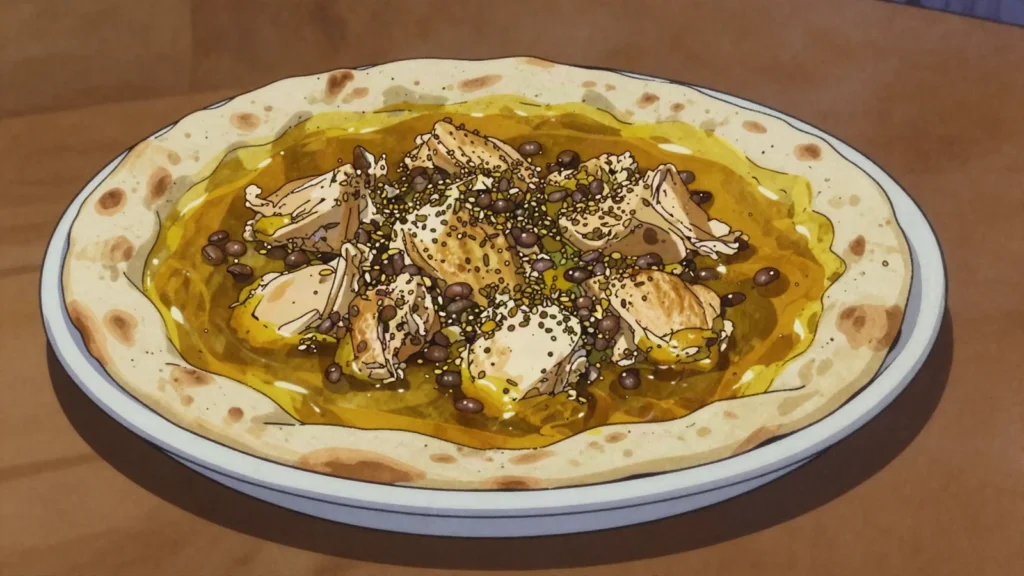
- Arrange the chicken pieces on top and scatter the lentils and fenugreek seeds over. Pour more broth over at the table, generously. Serve the remaining broth in a jug alongside, because people add more as they eat. It should be wet, rich and clearly bitter behind the spice, and it is unmistakable.
Technique
- Trid is sold ready-made in Moroccan shops and is worth seeking out.
- The fenugreek quantity is deliberate and reducing it makes a different and blander dish.
- It does not keep well, because the bread continues absorbing and goes to mush.
Substitutions
- Msemen, or any thin flatbread, torn and steamed.
- Ghee or butter in place of smen, which is milder.
Variations
- Made with trid, which is the most traditional.
- With more lentils and less chicken.
- With raisins added, which some households do.
History
A dish combining shredded, torn strips of msemen or trid flatbread with chicken, lentils and a fenugreek-infused sauce, documented across Morocco as a dish traditionally prepared for new mothers after childbirth, since fenugreek is traditionally believed within Moroccan culinary and folk medicine tradition to support recovery and milk production. Its combination of torn flatbread soaking in a rich, warmly spiced broth reflects a broader Moroccan and wider Maghrebi tradition of incorporating bread directly into stewed dishes rather than serving it only as a separate accompaniment. Rfissa remains closely associated with postpartum care and family celebration across Morocco, particularly prepared by mothers and grandmothers for new mothers within the family.
Frequently asked questions
What is Rfissa?
Rfissa is a main from Morocco: shredded msemen under chicken, lentils and fenugreek broth; served to new mothers. A dish combining shredded, torn strips of msemen or trid flatbread with chicken, lentils and a fenugreek-infused sauce, documented across Morocco as a dish traditionally prepared for new mothers after childbirth, since fenugreek is traditionally believed within Moroccan culinary and folk medicine tradition to support recovery and milk production. Its combination of torn flatbread soaking in a rich, warmly spiced broth reflects a broader Moroccan and wider Maghrebi tradition of incorporating bread directly into stewed dishes rather than serving it only as a separate accompaniment. Rfissa remains closely associated with postpartum care and family celebration across Morocco, particularly prepared by mothers and grandmothers for new mothers within the family.
How long does Rfissa take to make?
Rfissa takes 40 min of preparation and 1 hr 30 min of cooking. The recipe makes 6 servings. It is rated hard to make.
What can I substitute in Rfissa?
Yes, within limits. Msemen, or any thin flatbread, torn and steamed. Ghee or butter in place of smen, which is milder.
What is the most important thing to get right in Rfissa?
Tear it rather than cutting it, because torn edges soak up the broth far better than clean cut ones. Trid, the very thin layered pastry, is the most traditional; msemen is the common substitute and stale flatbread works at a pinch.