
Ingredients
Starter
- 100 gwholemeal flour
- 100 mlwater
- or a piece of dough from a previous batch
Dough
- 1 kgwholemeal or coarse wheat flour
- 650 mlwarm water
- 20 gsalt
- all of the starter
To finish
- bran or coarse semolina, for the trays
- flour, for dusting
Equipment
- flat trays or boards
- a clean cloth
- a baking stone or heavy tray
Directions
- Mix equal weights of wholemeal flour and water. Leave it covered in a warm place. Stir it and feed it fresh flour and water daily.
- Discard half before each feeding. After five to seven days it should bubble actively. Discard it and start again if it smells rotten. Put the flour and salt in a very large bowl.
- Add the starter and most of the water. Bring it together into a shaggy mass. Add the rest of the water as needed. The dough should be soft and slightly sticky.
- Knead it for a full fifteen minutes. Wholemeal dough needs longer kneading than white. Cover the bowl with a damp cloth. Leave it somewhere warm to rise. Give it four to six hours to rise.
- Divide the dough into four pieces. Shape each into a smooth ball. Flatten each ball into a thick round. Aim for about two centimetres thick. Scatter bran over flat trays or boards. That bran stops the dough sticking. Set each round onto its own tray. Dust the tops of them with flour.
- Cover them all with a thin cloth. The cloth keeps insects off and lets the sun through. Set the trays outside in direct sunlight. Leave them for two to four hours. Turn them once during that time. They should puff and the surface should dry. Set it at 40C with the door ajar. Baking it needs a very hot oven.
- Heat a baking stone at the highest setting you have. Give it a full forty-five minutes. Bake them for twelve to fifteen minutes. The crust should be deep brown in patches. Tear it by hand rather than cutting it. It keeps two days and goes hard after that. Keep a piece of dough back for the next batch.
Technique
- Aish shamsi belongs to Upper Egypt and is distinct from aish baladi, the more widely eaten flat pocket bread.
- The word aish in Egyptian Arabic means both bread and life, which says something about its place in the diet.
Substitutions
- A mature sourdough starter of any kind can leaven it if you have no dough from a previous batch.
- Coarse stoneground wholemeal is the closest widely available flour.
Variations
- Aish baladi is the everyday Egyptian flatbread and is baked differently.
- Some villages mix in maize or barley flour.
- A version with fenugreek in the dough is made in parts of Upper Egypt.
History
The name means sun bread: the dough is left in the sun on straw trays to rise before baking, a method of Upper Egypt’s villages.
Frequently asked questions
What is Aish shamsi?
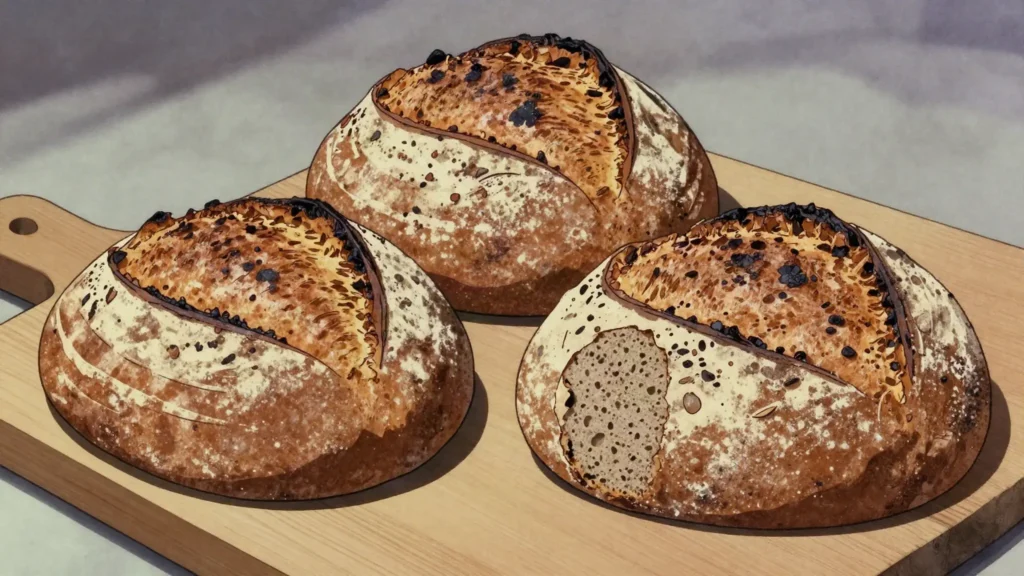
Aish shamsi is a bread & pastry from Egypt: sun-risen Upper Egyptian sourdough baked in domed clay ovens. The name means sun bread: the dough is left in the sun on straw trays to rise before baking, a method of Upper Egypt’s villages.
How long does Aish shamsi take to make?
Aish shamsi takes 30 minutes plus starter and rising of preparation and 20 minutes of cooking. The recipe makes 4 loaves. It is rated hard to make.
What can I substitute in Aish shamsi?
Yes, within limits. A mature sourdough starter of any kind can leaven it if you have no dough from a previous batch. Coarse stoneground wholemeal is the closest widely available flour.
What is the most important thing to get right in Aish shamsi?
Heat a baking stone at the highest setting you have. Give it a full forty-five minutes. Bake them for twelve to fifteen minutes. The crust should be deep brown in patches. Tear it by hand rather than cutting it. It keeps two days and goes hard after that. Keep a piece of dough back for the next batch.