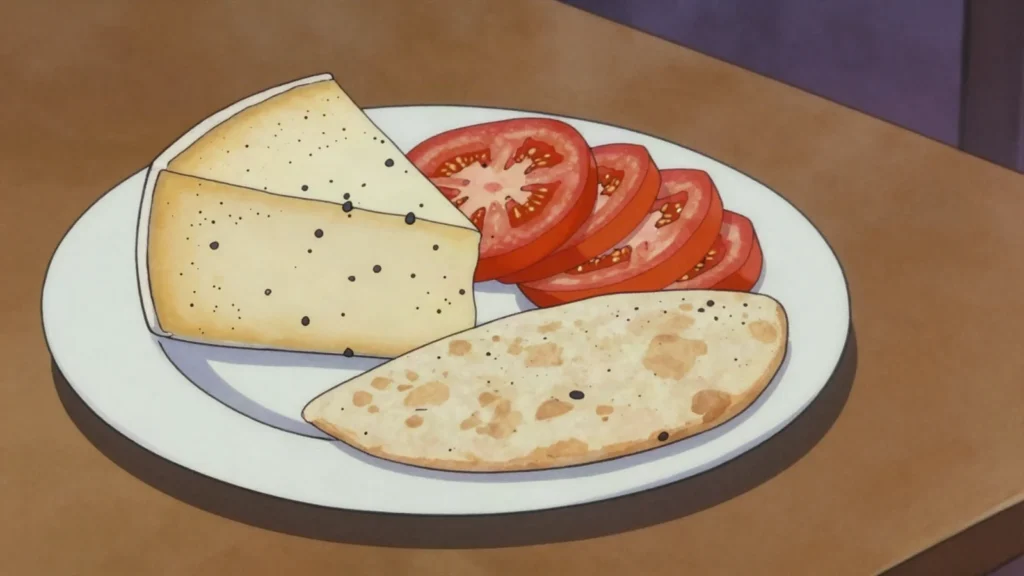

A hard aged cow’s-milk cheese, sharp and salty, named for the Rum — the Byzantines. Wheels are ripened in Egyptian stores for months to years, and the oldest are grated like pecorino rather than sliced.
It ripens for months to years in a warm store held at a controlled temperature — a dairy operation whose whole method is the room, not the recipe.
What goes into it
- cow’s milk, sometimes with buffalo milk
- rennet
- salt
How it is made
The milk is set with rennet, the curd cut fine and pressed hard into large wheels, then dry-salted and stacked in a warm ripening store. Unusually, the store is kept warm rather than cold, which drives a fast lipolysis and gives the cheese its pungency; the wheels are turned and rubbed for months or years.
How long it takes: three months to three years
How it is eaten
Sliced with bread and tomato, grated over pasta and rice, or with ful for breakfast.
History
Named after the Rum, the Byzantines; wheels are ripened in Egyptian stores for months to years, and the oldest are grated like pecorino.
Frequently asked questions
What is Rumi cheese?
Rumi cheese is a cheese & dairy from Egypt: hard aged cow’s cheese, sharp and salty, sliced onto bread or grated. Named after the Rum, the Byzantines; wheels are ripened in Egyptian stores for months to years, and the oldest are grated like pecorino.
How is Rumi cheese made?
The milk is set with rennet, the curd cut fine and pressed hard into large wheels, then dry-salted and stacked in a warm ripening store. Unusually, the store is kept warm rather than cold, which drives a fast lipolysis and gives the cheese its pungency; the wheels are turned and rubbed for months or years. It takes three months to three years.
Can I make Rumi cheese at home?
No, and the atlas gives no method for it. It ripens for months to years in a warm store held at a controlled temperature — a dairy operation whose whole method is the room, not the recipe.
What goes into Rumi cheese?
Cow’s milk, sometimes with buffalo milk, rennet, salt.
How is Rumi cheese eaten?
Sliced with bread and tomato, grated over pasta and rice, or with ful for breakfast.