
Ingredients
Fritters
- 500 gdried black-eyed peas
- 1medium onion, roughly chopped
- 1½ tsp salt
- 1 litredendê (red palm) oil, for deep frying
To fill
- 300 gvatapá — bread, dried shrimp, coconut milk and dendê, blended to a paste
- 200 gcaruru — okra stewed with dried shrimp and cashew
- 12whole dried shrimp
- chopped tomato and onion salad
- pepper sauce, to taste
Directions
- Soak the black-eyed peas in plenty of cold water for 4 hours. Rub them vigorously between your palms in the water and the skins will float off; pour them away and repeat until the peas are pale and naked. This step decides the colour and lightness of the fritter.
- Drain well and grind the peas with the onion to a stiff, smooth paste, using as little water as you can — a food processor run in bursts is closest to the traditional stone.
- Beat the paste hard with a wooden spoon for a full 5 minutes, lifting and slapping it back down, until it lightens in colour and a teaspoonful floats in a glass of water. Beat in the salt at the end.
- Heat the dendê to 180°C (350°F) in a deep pan. It should smell nutty, not acrid; overheated dendê turns bitter and loses its red colour.
- Shape ovals with two wet spoons and slide them in, four at a time. Fry 5–6 minutes, turning once, until deep russet and firm. Drain on a rack, not paper.
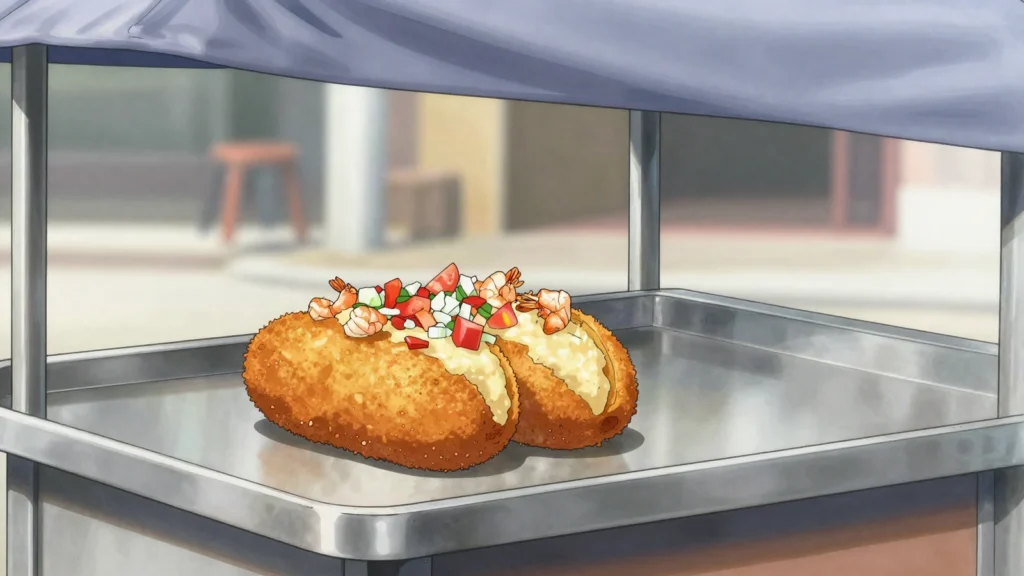
- Split each hot fritter along one side without cutting through, and fill with vatapá, caruru, a whole dried shrimp and a spoonful of tomato salad. Add pepper sauce at the table.
Technique
- Dendê is not interchangeable with other oils. Its colour, smell and flavour are the dish; frying in a neutral oil makes a black-eyed pea fritter, not acarajé.
- The float test in step 3 is the only reliable check that enough air has been beaten in. A paste that sinks will fry dense and heavy.
- Fry in small batches. Crowding drops the oil temperature and the fritters absorb it.
Substitutions
- Frozen peeled black-eyed peas save the soaking and skinning, at some cost to texture.
- Where dendê is unavailable, the fritter is still worth making in groundnut oil — but call it abará or akara rather than acarajé.
Variations
- Abará, the same batter steamed in banana leaf instead of fried.
- A vegetarian filling of vatapá made without shrimp, increasingly common in Salvador.
History
A fritter made from black-eyed pea paste, deep-fried in palm oil and split open to be filled with shrimp, vatapá and other toppings, documented across Brazil, particularly the state of Bahia, with direct roots traced to West African, specifically Yoruba, culinary and religious tradition, brought to Brazil through the transatlantic slave trade. Acarajé carries significant religious meaning within Brazilian Candomblé, an Afro-Brazilian religion with roots in West African spiritual tradition, where it is prepared as a ritual food offering, and the dish is traditionally sold on the street by women called baianas de acarajé, dressed in distinctive traditional white clothing reflecting that same Afro-Brazilian religious heritage. Acarajé remains one of the clearest and most historically significant expressions of West African culinary influence on Brazilian cuisine.
Frequently asked questions
What is Acarajé?
Acarajé is a street food from Brazil: bahian black-eyed-pea fritter fried in dendê, stuffed with vatapá, shrimp. A fritter made from black-eyed pea paste, deep-fried in palm oil and split open to be filled with shrimp, vatapá and other toppings, documented across Brazil, particularly the state of Bahia, with direct roots traced to West African, specifically Yoruba, culinary and religious tradition, brought to Brazil through the transatlantic slave trade. Acarajé carries significant religious meaning within Brazilian Candomblé, an Afro-Brazilian religion with roots in West African spiritual tradition, where it is prepared as a ritual food offering, and the dish is traditionally sold on the street by women called baianas de acarajé, dressed in distinctive traditional white clothing reflecting that same Afro-Brazilian religious heritage. Acarajé remains one of the clearest and most historically significant expressions of West African culinary influence on Brazilian cuisine.
How long does Acarajé take to make?
Acarajé takes 30 min plus 4 hr soaking of preparation and 25 min of cooking. The recipe makes 12 fritters. It is rated hard to make.
What can I substitute in Acarajé?
Yes, within limits. Frozen peeled black-eyed peas save the soaking and skinning, at some cost to texture. Where dendê is unavailable, the fritter is still worth making in groundnut oil — but call it abará or akara rather than acarajé.
What is the most important thing to get right in Acarajé?
The float test in step 3 is the only reliable check that enough air has been beaten in. A paste that sinks will fry dense and heavy.