
Ingredients
Achu (pounded cocoyam)
- 2 kgcocoyam (taro corms), scrubbed
- 150 mlhot water, as needed
- 1 tspsalt
- Banana leaves, softened over a flame, for wrapping
Broth
- 1 kgbeef shin and tripe, in pieces
- 300 gcow skin (kanda), soaked overnight and scraped
- 2 litreswater
- 2 tspsalt
- 2stock cubes
Yellow soup
- 250 mlred palm oil
- 2 tspfood-grade limestone (kanwa/akanwu), dissolved in 200 ml water and settled
- 3 tbspground achu spice (a Grassfields blend of country onion, njangsa, calabash nutmeg, alligator pepper and hot pepper)
- 2 tspground hot pepper
- 1 tspsalt
Directions
- Boil the cocoyams whole in their skins for 40 to 50 minutes until a knife slides straight through the middle. Peel them while still hot — they are unpleasant to peel cold, and cold corms will not pound smooth.
- Pound the hot cocoyam in a wooden mortar with a heavy pestle, adding hot water a splash at a time, for 20 to 30 minutes until it is silky, elastic and completely lump-free. Traditionally two people work together, one pounding and one turning.
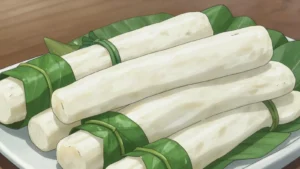
- Wrap the pounded paste in softened banana leaves to keep it warm and pliable; it stiffens fast in the open air.
- Meanwhile simmer the beef, tripe and kanda in the water with salt and stock cubes for 1.5 to 2 hours until the skin is gelatinous and the beef gives. Strain and keep both the broth and the meat.
- Let the limestone water settle for 20 minutes and carefully decant the clear liquid off the chalky sediment. Discard the sediment.
- Make the emulsion: put the palm oil in a bowl and beat in the clear limestone water a little at a time with a wooden spoon. The oil turns from deep red to bright egg-yellow and thickens as it emulsifies — this alkaline reaction is the defining trick of achu soup and there is no substitute for it.
- Beat in 500 ml of the hot broth in stages, then the achu spice, hot pepper and salt. The soup should be the consistency of thin custard and a clear yellow; if it splits, beat in more hot broth.
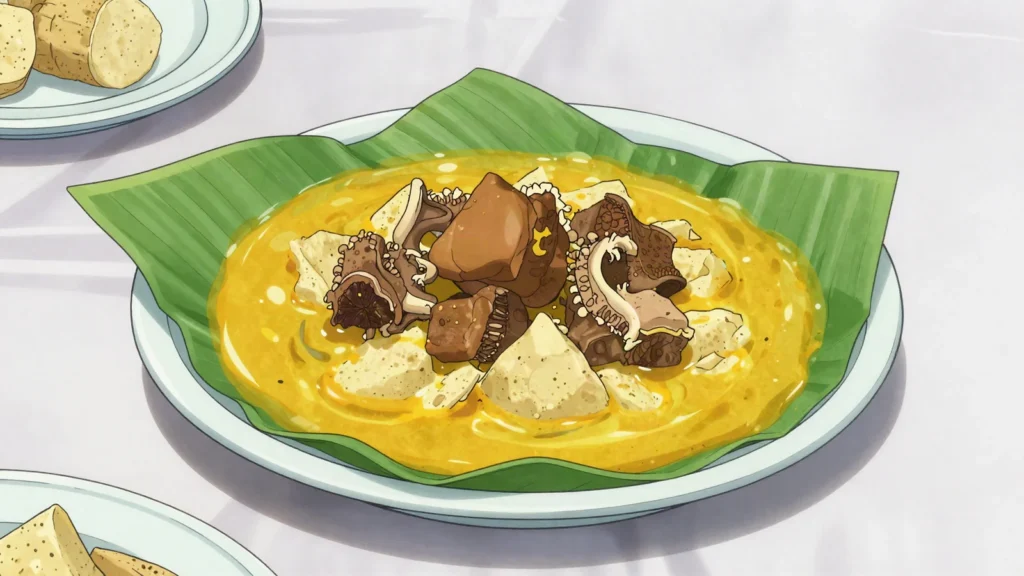
- Return the meat to the soup and warm through for 10 minutes. Serve a mound of achu on a plate with a well pressed into the middle with the thumb, fill the well with yellow soup and meat, and eat with the right hand, dipping from the edges.
Technique
- The yellow soup is chemistry, not colouring. Food-grade limestone (kanwa, akanwu, potash) saponifies part of the palm oil and creates a stable emulsion. Use only limestone sold for food, and only in the small amounts given — it is strongly alkaline.
- Achu is Bamileke and Bamenda Grassfields food, eaten for celebrations and on market days, and traditionally served with a specific set of meats including tripe and cow skin. Vegetarian versions are not part of the tradition.
- The paste must be pounded hot and eaten warm. Reheat wrapped in banana leaves over steam; microwaving turns it grainy.
Substitutions
- No wooden mortar: pass the hot boiled cocoyam through a potato ricer, then beat it hard in a stand mixer with the paddle for 8 minutes with hot water added gradually. The texture is close, though slightly less elastic.
- Achu spice is sold ready-ground by Cameroonian grocers online; without it, a blend of ground calabash nutmeg, black pepper and a little ground fennel seed is an honest approximation, not a match.
Variations
- Some households add smoked fish to the soup alongside the meats.
- In Bamenda a thinner, hotter soup is preferred; in Bafoussam it is made richer and thicker with extra palm oil.
History
A soft, stretchy pounded taro dish, coloured yellow with palm oil and served with a thick, spiced yellow soup, most strongly associated with the Bamileke people of Cameroon’s Western highlands region, where taro, or cocoyam, has long been a staple crop well suited to the area’s cooler, higher-elevation growing conditions compared to much of the rest of the country. Its distinctive yellow colour and rich flavour come specifically from red palm oil worked directly into the pounded taro, distinguishing achu clearly from plainer pounded starches found elsewhere in West and Central Africa. It carries particular ceremonial significance within Bamileke culture specifically, closely associated with traditional festivals, chieftaincy ceremonies and major celebrations rather than treated purely as routine everyday food.
Frequently asked questions
What is Achu?
Achu is a main from Cameroon: pounded cocoyam with spicy yellow palm-oil soup, western Grassfields pride. A soft, stretchy pounded taro dish, coloured yellow with palm oil and served with a thick, spiced yellow soup, most strongly associated with the Bamileke people of Cameroon’s Western highlands region, where taro, or cocoyam, has long been a staple crop well suited to the area’s cooler, higher-elevation growing conditions compared to much of the rest of the country. Its distinctive yellow colour and rich flavour come specifically from red palm oil worked directly into the pounded taro, distinguishing achu clearly from plainer pounded starches found elsewhere in West and Central Africa. It carries particular ceremonial significance within Bamileke culture specifically, closely associated with traditional festivals, chieftaincy ceremonies and major celebrations rather than treated purely as routine everyday food.
How long does Achu take to make?
Achu takes 45 min of preparation and 2 hr 30 min of cooking. The recipe makes 6 servings. It is rated hard to make.
What can I substitute in Achu?
Yes, within limits. No wooden mortar: pass the hot boiled cocoyam through a potato ricer, then beat it hard in a stand mixer with the paddle for 8 minutes with hot water added gradually. The texture is close, though slightly less elastic. Achu spice is sold ready-ground by Cameroonian grocers online; without it, a blend of ground calabash nutmeg, black pepper and a little ground fennel seed is an honest approximation, not a match.
What is the most important thing to get right in Achu?
The paste must be pounded hot and eaten warm. Reheat wrapped in banana leaves over steam; microwaving turns it grainy.