
Ingredients
Fruit
- 25 kghand-harvested Rkatsiteli grapes, ripe and sound, at about 22 Brix
- No added yeast: the ferment comes from the wild yeast on the skins
- No added sugar, acid or tannin
Vessel
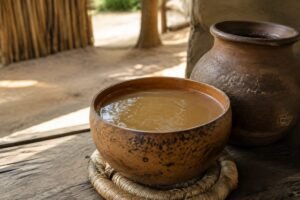
- 1beeswax-lined clay qvevri, about 20 litres, buried to the neck
- 1flat stone lid and wet clay to seal it
- Cold water, for the water seal around the neck
To serve
- Small clay bowls or tulip glasses
- Sulguni, pkhali, jonjoli and walnut sauces
Directions
- Crush the whole bunches by foot or in a hollowed-log satsnakheli press, taking juice, skins, pips and stems together. Run the juice and the full chacha into the buried qvevri, filling it to about four-fifths and leaving headspace for the rise.
- Top the qvevri right up with wine of the same batch, lay the stone lid on and seal it with wet clay; some cellars flood the rim with water as a second seal.
- Leave it sealed and undisturbed for about six months, through winter, with the skins settled on the bottom.
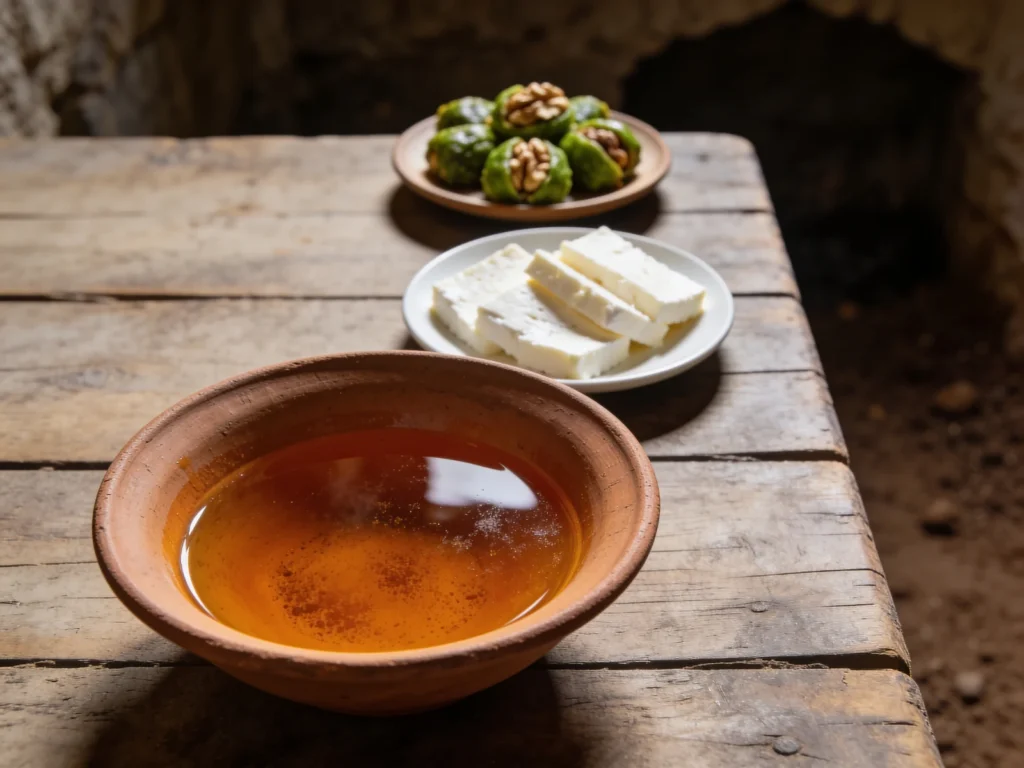
- Serve amber qvevri wine at 14–16°C (55–60°F) in a wide clay bowl or a tulip glass, never chilled hard, with sulguni, pkhali and walnut sauces at a supra led by a tamada.
Technique
- Qvevri winemaking was inscribed by UNESCO in 2013 and is around 8,000 years old; the vessel is not a fashion, it is the oldest continuous wine tradition on earth.
- Air is the enemy after fermentation. Any headspace under the lid oxidises the wine to vinegar, which is why topping up and sealing matter more than any other step.
- A working marani fills with carbon dioxide during fermentation. It is heavier than air, sits in the open qvevri mouth and can suffocate you; ventilate and never lean in.
- Amber wine is naturally cloudy and tannic. It is not filtered or fined, and a light haze or sediment is normal.
Substitutions
- No qvevri: an unglazed 30-litre terracotta amphora half-buried in damp sand, or even a food-grade fermenter kept at a steady 14°C (55°F), will give a fair skin-contact wine, but not the qvevri’s cool, slow, self-clarifying shape.
- Rkatsiteli is the classic Kakhetian white; Mtsvane, Kisi or Khikhvi ferment the same way with more aromatic results.
Variations
- Kakhuri method: 100 per cent chacha with stems, six months on skins, giving the darkest, most tannic amber.
- Imeruli method: only 10–30 per cent of the skins and no stems, for a lighter, paler wine.
- Red qvevri wine, made the same way with Saperavi, black and grippy.
History
UNESCO inscribed the qvevri method in 2013; grapes ferment with skins in beeswax-lined clay vessels buried to the neck in earth.
Frequently asked questions
What is Qvevri wine?
Qvevri wine is a wine & spirit from Georgia: amber and red wines fermented in buried clay vessels; 8,000-year tradition. UNESCO inscribed the qvevri method in 2013; grapes ferment with skins in beeswax-lined clay vessels buried to the neck in earth.
How long does Qvevri wine take to make?
Qvevri wine takes 3 hr over the harvest of preparation and 6 months in the qvevri of cooking. The recipe makes about 15 litres (one small qvevri). It is rated hard to make.
What can I substitute in Qvevri wine?
Yes, within limits. No qvevri: an unglazed 30-litre terracotta amphora half-buried in damp sand, or even a food-grade fermenter kept at a steady 14°C (55°F), will give a fair skin-contact wine, but not the qvevri’s cool, slow, self-clarifying shape. Rkatsiteli is the classic Kakhetian white; Mtsvane, Kisi or Khikhvi ferment the same way with more aromatic results.
What is the most important thing to get right in Qvevri wine?
Crush the whole bunches by foot or in a hollowed-log satsnakheli press, taking juice, skins, pips and stems together. Run the juice and the full chacha into the buried qvevri, filling it to about four-fifths and leaving headspace for the rise.