
Ingredients
The flours
- 300 gcassava flour
- from sweet cassava, properly processed
- read the safety note
- 200 gmaize flour
- finely ground
- or adjust the proportion to taste
The liquid
- about 1.2 litres water
- 1 teaspoonsalt
- optional
To serve
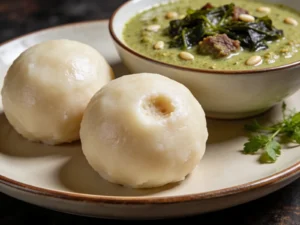
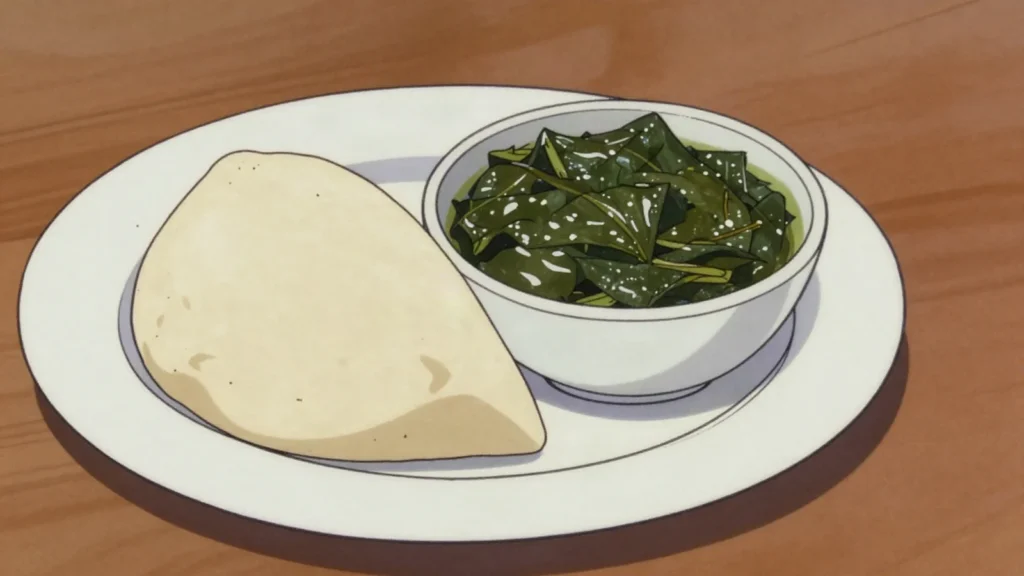
- isombe, cassava leaves with groundnut
- or a bean stew
- or a meat or fish sauce
- or vegetables in sauce
Equipment
- a heavy pot
- a stout wooden spoon
- or a wooden paddle
- a bowl of water
- for shaping
Directions
- Use finely ground flour, not coarse meal. Fine flour gives a smooth one. Use cassava flour here. This is a stiff porridge and it takes real work. Mix the flour into cold water first. Never add flour to hot water.
- Flour hitting hot water forms instant lumps. Those lumps never break down. Mix the two flours together dry. Whisk about a third of the mixture into cold water. Whisk it completely smooth. Bring the rest of the water to a boil.
- Use a heavy pot. Thin pots catch far more readily. Pour the cold slurry into the boiling water. Whisk constantly as you pour. Let it cook for about ten minutes. Stir it regularly. Now add the remaining dry flour. Add it gradually, a handful at a time.
- Stir hard after each addition. Use a stout wooden spoon. Press the dough against the side of the pot. Turn it and fold it repeatedly. The dough becomes very stiff. Hold the pot firmly with a cloth.
- Use a strong wooden spoon or paddle. It should be very stiff. Add more flour if it is too soft. Add a splash of hot water if it is too stiff. Cook it a further ten to fifteen minutes. Keep working it as it cooks. The flour must cook out. Keep children away from the pot. Wet a bowl with cold water. Tip the dough into it.
- Swirl the bowl to shape it into a mound. The dough sticks to everything dry. Keep a bowl of cold water beside you. Wet your hands and any tool. Turn the mound onto a plate. It should hold its shape. Serve it hot. Cold umutsima is hard and dense. Take a piece with the right hand. Roll it into a ball with your fingers. Press a dent into it with your thumb.
- Use that to scoop up the sauce. They must be pounded and cooked at length. Sprinkle it with water first. Never microwave it dry, which toughens it.
Technique
- Mix the flour into cold water first, then pour that slurry into boiling water while whisking. Flour added to hot water forms instant lumps that never break down — the commonest failure with any stiff porridge.
- Add the remaining dry flour gradually, a handful at a time, stirring hard after each addition. Press the dough against the side of the pot, turn it and fold it repeatedly — this is genuinely hard physical work and the dough resists the spoon.
- Use a stout wooden spoon or paddle, and hold the pot firmly with a cloth or wedge it. A flimsy spoon will break and a pot that slides while you stir is dangerous — neither is an exaggeration.
- Cook it a further ten to fifteen minutes after the flour is in, working it as it cooks. Undercooked cassava flour tastes raw and chalky and is not something to accept.
- Umutsima should be very stiff — stiffer than ubugali and stiffer than most stiff porridges. It should hold its shape completely and pull away from the pot sides. That stiffness is what defines it.
- Use finely ground cassava and maize flour, not coarse meal and not cornflour or cornstarch, which is a pure thickening starch giving a gluey tasteless result. Cassava flour is the whole ground root; tapioca starch is the extracted starch alone and behaves differently.
- Keep a bowl of cold water beside you and wet your hands and any tool. The dough sticks to everything dry, and water is what lets it release cleanly.
- The mixture is extremely hot, sticks to skin and holds heat like caramel. Keep children away from the pot.
- Serve it hot. It firms considerably as it cools, and cold umutsima is hard and dense.
- Cassava contains cyanogenic glycosides that release cyanide when the tissue is damaged. This recipe assumes commercially produced flour, which has been properly processed — buy it from a reputable African grocer. Cassava flour comes fermented and unfermented; fermented is more sour and often darker, and both are used.
- Chronic cyanide exposure from poorly processed cassava causes konzo, a permanent paralysis of the legs, appearing in drought and shortage when processing is shortened out of hunger. It is a disease of poverty rather than of cassava, which properly processed feeds hundreds of millions because it grows where little else will. Both facts belong together.
- Cassava leaves for isombe also contain cyanogenic compounds and must be pounded and cooked at length — never eaten raw or briefly cooked. Buy them ready pounded and cook them thoroughly.
- Leftovers sliced and fried are genuinely good and are how they are usually used.
Substitutions
- The cassava-to-maize ratio varies by household; more cassava gives a stickier, paler dough.
- All maize flour makes ubugali, the plainer relative.
- Sorghum or millet flour can replace some of the maize.
- Salt is used in some households and not others.
- Any thick sauce or stew serves as the accompaniment.
- Ready-pounded frozen cassava leaves replace fresh for isombe and must still be cooked thoroughly.
Variations
- Ubugali, made from maize flour alone, is the plainer Rwandan staple.
- Ugali in Kenya and Tanzania is the same maize principle.
- Nsima in Malawi and sadza in Zimbabwe belong to the same family.
- Fufu across West and Central Africa uses pounded roots rather than flour.
- Isombe, cassava leaves with groundnut, is the classic partner.
- Umutsima sliced and fried is how leftovers are eaten.
Frequently asked questions
What is Umutsima?
Umutsima is a main from Rwanda: dough of cassava and maize flour, stiffer and paler than ubugali.
How long does Umutsima take to make?
Umutsima takes 15 minutes of preparation and 30 minutes of cooking. The recipe makes serves 6. It is rated medium to make.
What can I substitute in Umutsima?
Yes, within limits. The cassava-to-maize ratio varies by household; more cassava gives a stickier, paler dough. All maize flour makes ubugali, the plainer relative. Sorghum or millet flour can replace some of the maize. Salt is used in some households and not others. Any thick sauce or stew serves as the accompaniment. Ready-pounded frozen cassava leaves replace fresh for isombe and must still be cooked thoroughly.
What is the most important thing to get right in Umutsima?
Use finely ground flour, not coarse meal. Fine flour gives a smooth one. Use cassava flour here. This is a stiff porridge and it takes real work. Mix the flour into cold water first. Never add flour to hot water.