
Ingredients
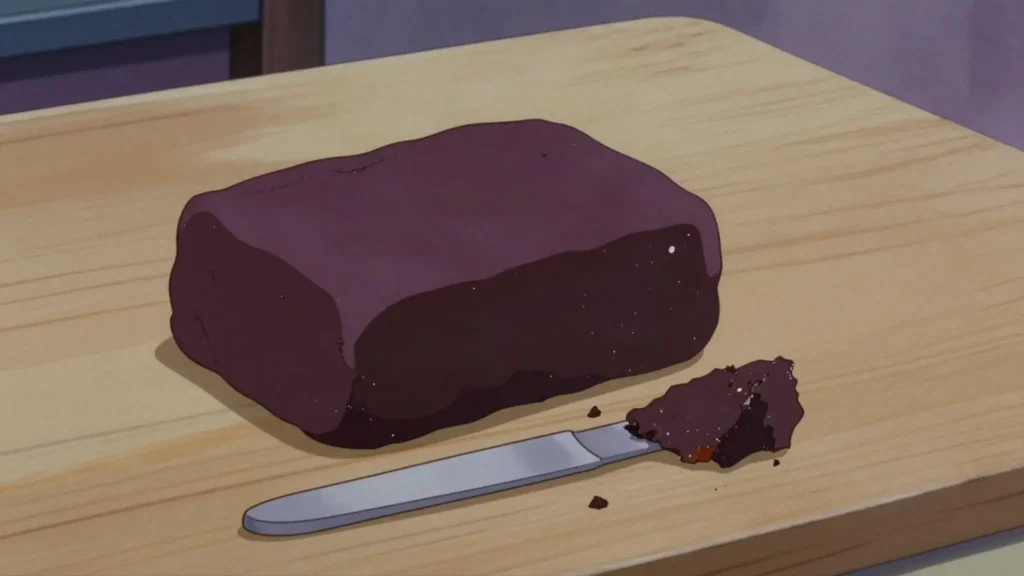
The paste
- 1block terasi, fermented shrimp paste, bought
To toast
- foil, or a skewer, or a dry pan
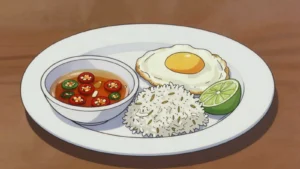
For sambal terasi
- 2 tsptoasted terasi
- 10red chillies
- 6shallots
- 4 clovesgarlic
- 2tomatoes
- 1 tsppalm sugar
- 1 tbsplime juice
- salt
- 4 tbspoil
To serve
- with rice, fried fish, lalapan
Directions
- Wrap a piece in foil and toast it in a dry pan for 2 or 3 minutes on each side. Or hold a piece on a skewer or fork over a gas flame until it darkens and crumbles.
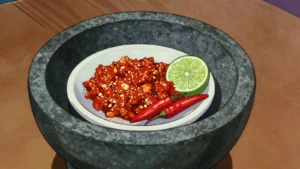
- Grind the chillies, shallots and garlic in a stone cobek, or pulse them in a blender. Add the toasted terasi and grind it through.
- Add the tomato and grind it coarsely. Now heat the oil and fry the paste over a medium heat for 8 to 10 minutes.
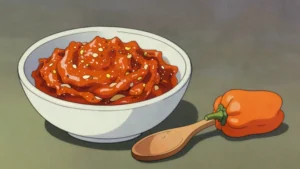
- Fry it until the raw smell has gone and the oil separates and rises to the surface. That separation is the sign it is properly cooked, and it is also what makes the sambal keep for weeks rather than days.
- Add the palm sugar and salt to the pan. Take it off the heat and stir in the lime juice.
- Add the lime off the heat, so its brightness survives. Taste it, and expect hot first, then salty, then faintly sweet and sour behind. Wrap the remaining terasi tightly in cling film and then in a sealed container or bag.
- Wrap it in several layers and keep it sealed, or everything in the cupboard will taste of it, and that is not an exaggeration. It keeps for a year or more at room temperature, since the salt preserves it completely.
Technique
- Cirebon on the north Java coast is the most famous production centre.
- Belacan, kapi, bagoong and prahok are the regional relatives.
- It keeps for a year or more sealed at room temperature.
Substitutions
- Malaysian belacan, which is very close.
- Thai kapi, which is softer and slightly milder.
Variations
- Sambal terasi, the standard chilli sambal.
- Used in nasi goreng.
- Stirred into vegetable dishes and soups.
History
Produced on the north Java coast, especially around Cirebon, by salting and drying tiny shrimp then fermenting them into pressed blocks.
Frequently asked questions
What is Terasi?
Terasi is a sauce & condiment from Indonesia: dark block of fermented shrimp, toasted until fierce and pounded into sambal. Produced on the north Java coast, especially around Cirebon, by salting and drying tiny shrimp then fermenting them into pressed blocks.
How long does Terasi take to make?
Terasi takes 5 min of preparation and 5 min of cooking. The recipe makes a small block, used a teaspoon at a time. It is rated easy to make.
What can I substitute in Terasi?
Yes, within limits. Malaysian belacan, which is very close. Thai kapi, which is softer and slightly milder.
What is the most important thing to get right in Terasi?
Fry it until the raw smell has gone and the oil separates and rises to the surface. That separation is the sign it is properly cooked, and it is also what makes the sambal keep for weeks rather than days.