
Ingredients
Potatoes
- 1.5 kgwaxy potatoes, Charlotte or Belle de Fontenay
Cheese
- 1whole Reblochon, about 450 g
The rest
- 250 gsmoked lardons or bacon
- 3onions, sliced
- 2 clovesgarlic
- 150 mldry white wine, Savoie for preference
- 100 mlcrème fraîche, optional
- black pepper
- salt, carefully
To serve
- green salad with a sharp vinaigrette
- charcuterie
- a cold Savoie white or a Mondeuse
Directions
- Use a whole Reblochon, and buy it ripe. Now the rind, which people ask about. Leave the rind on. Scrape off any excess white bloom if you prefer, but do not cut the rind away. Use a waxy potato that holds its shape, not a floury one. Floury potatoes disintegrate into mash under an hour of baking, and tartiflette should have distinct slices.
- Boil them whole in their skins until just tender, about 20 minutes. Boil them whole and unpeeled so they do not take on water, and undercook them slightly since they bake again.
- Cool them enough to handle, then peel and slice them about 1 cm thick. Now fry the lardons in a dry pan until the fat renders and they crisp. Lift them out and fry the onions slowly in that fat until soft and golden, about 15 minutes.
- Cook the onions properly soft and sweet rather than rushing them, since they are the only sweetness in a very rich dish. Add the garlic, then the wine, and let it bubble until almost gone. Layer half the potatoes in the dish, then the onions and lardons, then the rest of the potatoes. Season with plenty of black pepper.
- Spoon over the crème fraîche if you are using it, though many Savoyards consider it unnecessary. Cut the whole Reblochon horizontally through the middle, so you have two discs each with a rind on one side.
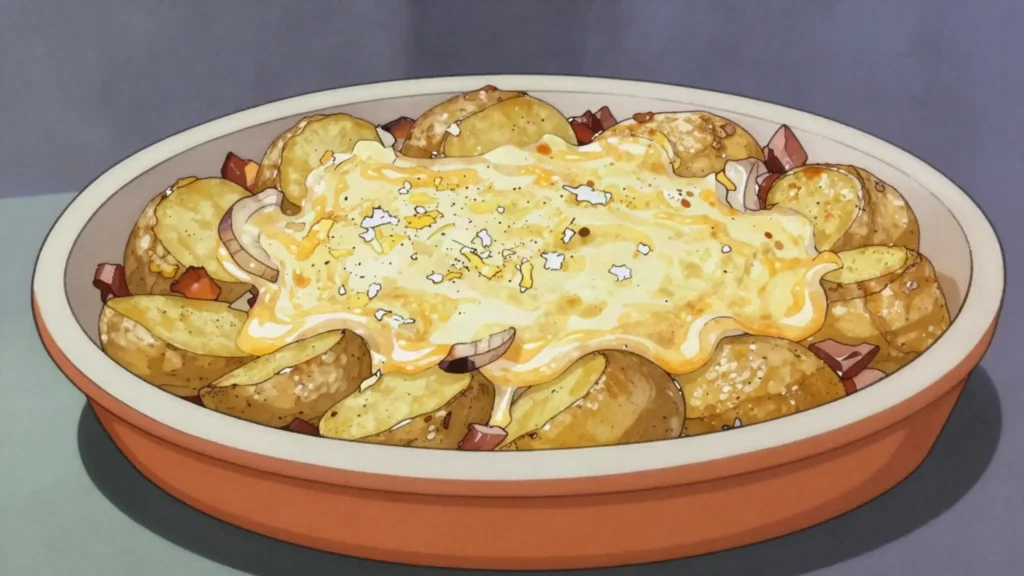
- Lay both halves rind side up on top of the potatoes. Cut the halves again if the dish is wide, keeping the rind uppermost. Bake at 200°C (390°F) for 25 to 30 minutes. It is done when the cheese is completely melted, bubbling, and browned and blistered on top.
- Let it stand 5 minutes before serving, which lets it settle enough to spoon out. Serve it straight from the dish, with a sharply dressed green salad. Serve charcuterie alongside and a cold Savoie white.
Technique
- It is a documented 1980s invention based on the older péla.
- Reblochon is unpasteurised in its traditional form.
- Croziflette substitutes crozets pasta for the potatoes.
Substitutions
- There is no real substitute for Reblochon; a ripe Vacherin or Mont d’Or is the nearest thing.
- Any waxy potato that holds its shape.
Variations
- Croziflette, made with crozets pasta.
- Made without lardons, for a vegetarian version.
- Péla, the older dish cooked in a pan on the hob.
History
A baked dish of potato, onion, bacon and melted Reblochon cheese, most strongly associated with the Savoie region in the French Alps, though its now-widespread popularity as a classic regional dish is considerably more recent than it might appear: tartiflette in its modern form is generally credited to a marketing campaign by the Reblochon cheese trade association in the 1980s, created specifically to boost sales of the cheese by promoting a new, appealing recipe built around it, rather than representing an old, continuously documented Alpine peasant dish. Older, simpler potato-and-cheese Savoyard dishes likely existed before that campaign and may have inspired it, but tartiflette’s specific name and now-standard recipe date to that comparatively recent commercial promotion. It has since become genuinely beloved as classic French Alpine winter comfort food regardless of that recent commercial origin.
Frequently asked questions
What is Tartiflette?
Tartiflette is a main from France: potatoes baked with reblochon, lardons, onions; Alpine ski food. A baked dish of potato, onion, bacon and melted Reblochon cheese, most strongly associated with the Savoie region in the French Alps, though its now-widespread popularity as a classic regional dish is considerably more recent than it might appear: tartiflette in its modern form is generally credited to a marketing campaign by the Reblochon cheese trade association in the 1980s, created specifically to boost sales of the cheese by promoting a new, appealing recipe built around it, rather than representing an old, continuously documented Alpine peasant dish. Older, simpler potato-and-cheese Savoyard dishes likely existed before that campaign and may have inspired it, but tartiflette’s specific name and now-standard recipe date to that comparatively recent commercial promotion. It has since become genuinely beloved as classic French Alpine winter comfort food regardless of that recent commercial origin.
How long does Tartiflette take to make?
Tartiflette takes 25 min of preparation and 1 hr of cooking. The recipe makes 6 servings. It is rated easy to make.
What can I substitute in Tartiflette?
Yes, within limits. There is no real substitute for Reblochon; a ripe Vacherin or Mont d’Or is the nearest thing. Any waxy potato that holds its shape.
What is the most important thing to get right in Tartiflette?
Use a whole Reblochon, and buy it ripe. Now the rind, which people ask about. Leave the rind on. Scrape off any excess white bloom if you prefer, but do not cut the rind away. Use a waxy potato that holds its shape, not a floury one. Floury potatoes disintegrate into mash under an hour of baking, and tartiflette should have distinct slices.