
Ingredients
Apples
- 1.5 kgfirm apples: Reinette, Braeburn, Golden Delicious or Cox
- juice of half a lemon
Caramel
- 150 gcaster sugar
- 100 gunsalted butter, in pieces
- a pinch of salt
Pastry
- 300 gall-butter puff pastry
- or a sweet shortcrust
To serve
- crème fraîche
- or vanilla ice cream
Equipment
- a heavy ovenproof frying pan or a Tatin mould, 24 cm
- a serving plate larger than the pan
Directions
- Use a firm apple that holds its shape, not a cooking apple. Bramleys and other cooking apples collapse into purée within minutes, which is exactly wrong here. Peel, halve and core the apples and toss them in lemon juice. The dry method is to melt the sugar alone in the pan until amber, then add the butter.
- Swirl the pan instead, since stirring makes sugar crystallise into grains. Take it to a deep amber, the colour of an old penny. Take it far enough. It goes from amber to burnt in seconds, so watch it closely and take it off the heat the moment it is right.
- Pack them in as tightly as you possibly can, standing them almost on edge and wedging in extra pieces. They shrink by a third or more as they cook, and a loosely packed tart collapses into a thin scattered layer when you turn it out.
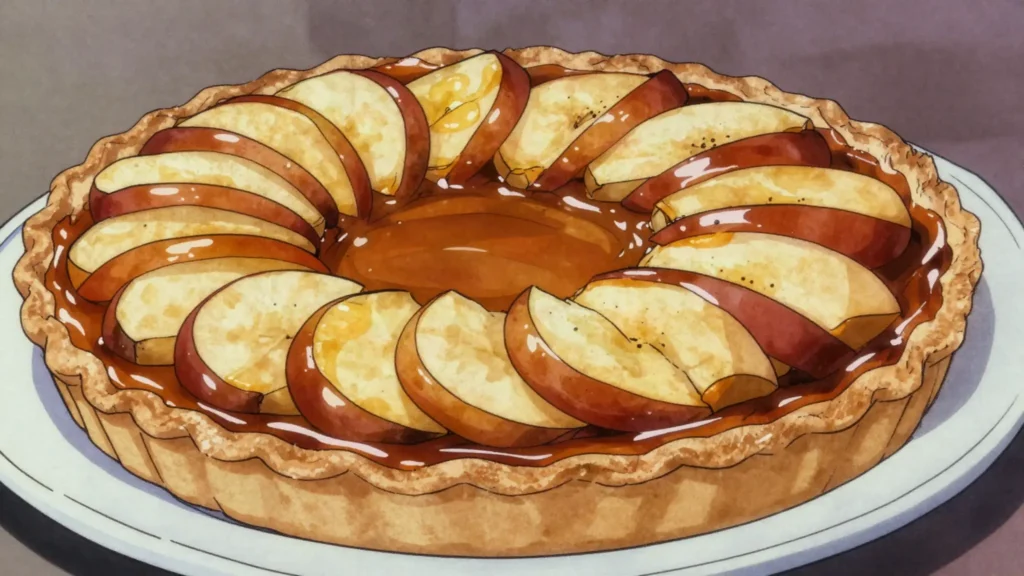
- Cut side up now means cut side down when it is inverted, which is what gives the neat glossy surface. Now cook the apples on the hob over a medium heat for 20 to 25 minutes. Baste them with the caramel occasionally and let the liquid reduce and thicken. The apples should be partly cooked, glossy and deep gold, and the caramel should be thick rather than watery.
- Roll the pastry into a disc slightly larger than the pan. Lay it over the apples and tuck the edges down inside the pan, between the apples and the wall. Cut a few small slits in the pastry to let steam escape.
- Bake at 200°C (390°F) for 25 to 30 minutes until the pastry is deep golden and crisp. Let it stand for 5 to 10 minutes, and no longer. Turn it out immediately and the molten caramel runs everywhere and the apples slide; leave it to go cold and the caramel sets like glue and welds the tart to the pan. Five to ten minutes is about right.
- Put a serving plate over the pan, hold both firmly with cloths, and invert it in one decisive movement. Do it in one confident motion rather than hesitating, and be aware that hot caramel can run out at the edge.
- Lift the pan away from the tart. If any apples stick to the pan, simply lift them off and put them back in place, which nobody will notice. Serve it warm, with crème fraîche or vanilla ice cream. It is best within an hour or two of baking and it does not keep well, since the pastry softens under the fruit.
Technique
- A dedicated Tatin mould has straight sides and is worth having if you make it often.
- Quince, pear and even shallot or endive versions are made on the same principle.
- It does not keep and is made to be eaten the same day.
Substitutions
- Any firm eating apple that holds its shape.
- Sweet shortcrust in place of puff, which is the older version.
Variations
- Made with pears or quince.
- Savoury, with shallots or endive.
- With a shortcrust base, as the Tatin sisters are said to have used.
History
An upside-down caramelised apple tart, its pastry baked on top of the fruit rather than beneath it and then flipped before serving, generally credited to the Tatin sisters, Stéphanie and Caroline, who ran a hotel in the Sologne region of France in the late 1800s, with one widely repeated account describing the tart’s invention as an accident, when Stéphanie is said to have left apples cooking in butter and sugar too long, then attempted to salvage the dish by placing pastry over the top and baking it before flipping the whole thing out, discovering the result was better than an ordinary apple tart. The specific details of that origin story cannot be fully verified, but the Tatin sisters’ hotel and its association with the tart’s popularization are well documented, and tarte tatin remains one of France’s most internationally recognized desserts.
Frequently asked questions
What is Tarte Tatin?
Tarte Tatin is a dessert from France: caramelised upside-down apple tart, served warm. An upside-down caramelised apple tart, its pastry baked on top of the fruit rather than beneath it and then flipped before serving, generally credited to the Tatin sisters, Stéphanie and Caroline, who ran a hotel in the Sologne region of France in the late 1800s, with one widely repeated account describing the tart’s invention as an accident, when Stéphanie is said to have left apples cooking in butter and sugar too long, then attempted to salvage the dish by placing pastry over the top and baking it before flipping the whole thing out, discovering the result was better than an ordinary apple tart. The specific details of that origin story cannot be fully verified, but the Tatin sisters’ hotel and its association with the tart’s popularization are well documented, and tarte tatin remains one of France’s most internationally recognized desserts.
How long does Tarte Tatin take to make?
Tarte Tatin takes 30 min of preparation and 1 hr of cooking. The recipe makes 8 servings. It is rated hard to make.
What can I substitute in Tarte Tatin?
Yes, within limits. Any firm eating apple that holds its shape. Sweet shortcrust in place of puff, which is the older version.
What is the most important thing to get right in Tarte Tatin?
Cut side up now means cut side down when it is inverted, which is what gives the neat glossy surface. Now cook the apples on the hob over a medium heat for 20 to 25 minutes. Baste them with the caramel occasionally and let the liquid reduce and thicken. The apples should be partly cooked, glossy and deep gold, and the caramel should be thick rather than watery.