
The sparkling wine of Champagne, made by a second fermentation in the bottle in chalk cellars cut deep under Reims and Épernay. The region was legally delimited in 1927 and its slopes and cellars listed by UNESCO in 2015.
It is a protected appellation made under licence, and the second fermentation happens under six atmospheres of pressure in a sealed bottle — a genuine explosion risk that the trade handles with purpose-built glass and equipment.
What goes into it
- Chardonnay, Pinot Noir and Meunier grapes
- yeast
- liqueur de tirage — sugar and yeast for the second fermentation
- dosage — sugar added at the end
How it is made
A dry base wine is made first, then blended across vineyards and often across years. Sugar and yeast are added, the wine is bottled and sealed, and a second fermentation happens inside that sealed bottle, trapping the carbon dioxide. The bottles rest on their lees for years, are gradually tipped neck-down so the sediment collects in the neck, and that plug is frozen and ejected before the bottle is topped up and corked.
How long it takes: 15 months minimum on the lees by law, three years for vintage, often much longer
How it is eaten
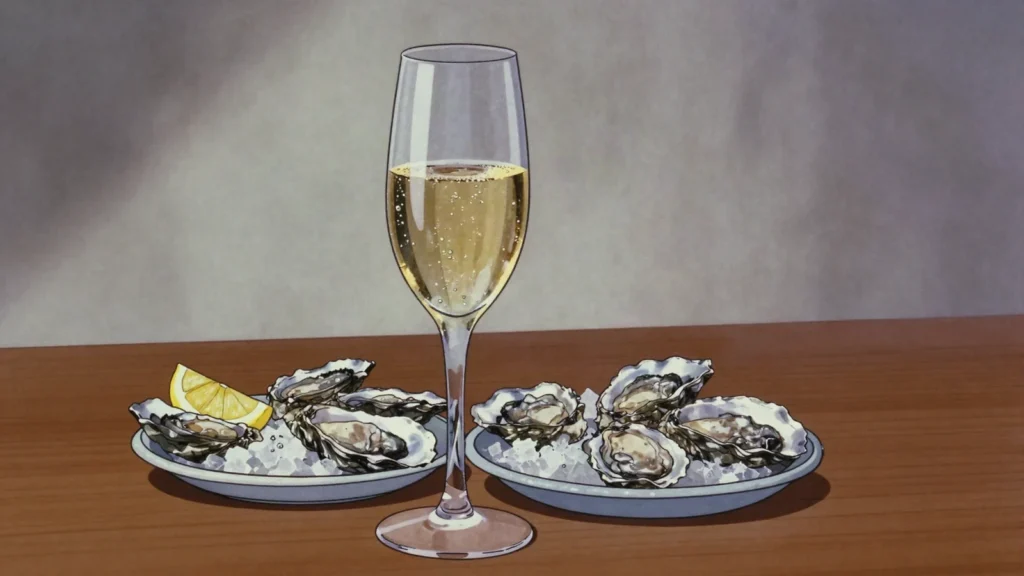
Cold, in a tulip glass rather than a coupe, as an aperitif or with shellfish.
History
Sparkling wine from chalk cellars where Dom Pérignon improved blending; the region was legally delimited in 1927 and its slopes listed by UNESCO in 2015.
Frequently asked questions
What is Champagne?
Champagne is a wine & spirit from France: sparkling wine of Champagne, the world’s celebration drink. Sparkling wine from chalk cellars where Dom Pérignon improved blending; the region was legally delimited in 1927 and its slopes listed by UNESCO in 2015.
How is Champagne made?
A dry base wine is made first, then blended across vineyards and often across years. Sugar and yeast are added, the wine is bottled and sealed, and a second fermentation happens inside that sealed bottle, trapping the carbon dioxide. The bottles rest on their lees for years, are gradually tipped neck-down so the sediment collects in the neck, and that plug is frozen and ejected before the bottle is topped up and corked. It takes 15 months minimum on the lees by law, three years for vintage, often much longer.
Can I make Champagne at home?
No, and the atlas gives no method for it. It is a protected appellation made under licence, and the second fermentation happens under six atmospheres of pressure in a sealed bottle — a genuine explosion risk that the trade handles with purpose-built glass and equipment.
What goes into Champagne?
Chardonnay, Pinot Noir and Meunier grapes, yeast, liqueur de tirage — sugar and yeast for the second fermentation, dosage — sugar added at the end.
How is Champagne eaten?
Cold, in a tulip glass rather than a coupe, as an aperitif or with shellfish.