
Ingredients
The beef
- 300 gdried beef
- shakam, sliced thin
- or bought air-dried beef
- see the notes
- soaked briefly
The vegetables
- 1large white radish
- daikon, cut into batons
- 2onions, sliced
- 4garlic cloves, crushed
The chillies
- 10dried red chillies
- or to taste
- torn or left whole
- 2fresh green chillies
- sliced, optional
The rest
- 3 tablespoonsoil
- or butter
- 1 teaspoonsalt
- about 200 ml water
- red rice, to serve
Directions
- Warm or humid air lets bacteria grow. Bhutanese winter air is genuinely cold and dry. Start with far fewer if you are unsure. Work in a well ventilated space. Wash with soap and plenty of water.
- Slice the dried beef quite thinly. Slice it across the grain of the meat. Use a very sharp knife for it. Take genuine care as you slice it. Cover the sliced beef with warm water. Give it about twenty full minutes.
- Taste the soaking water if unsure. Change the water if it is very salty. Peel the radish and cut it into batons. Cut them about the size of a finger. Large pieces stay firm and crunchy. Peel the skin off entirely first. Use a peeler or a sharp knife. Tear the dried chillies open first. Shake the seeds out for less heat. Leave them in for the full effect. Heat the oil in a wide heavy pan.
- Use a wide pan rather than a deep one. Add the sliced onion to the pan. Cook it for about eight minutes. It should soften and turn golden. Add the crushed garlic to the pan. Give it about one full minute. Add the dried chillies to the pan.
- Fry them briefly in the hot oil. Give them about thirty seconds only. Take them off if they blacken. Add the drained beef to the pan. Stir it through the chilli oil. Let it take up all of the flavour. Give it about three whole minutes. Add the radish batons to the pan. Stir them through everything else.
- Let them take up the oil and chilli. Give them about two whole minutes. Pour a little water into the pan. Add only enough to steam the radish. About two hundred millilitres is right.
- Cover it and simmer it gently. Give it about fifteen minutes. Take the lid off near the end. It should cling rather than pool. Cook it down until it is right. Stir sliced green chilli in at the end. Add it for the last two minutes. Taste it and then adjust the salt.
- Taste before adding any at all. It often needs very little indeed. Cook it down further if it is wet. Serving it is always done hot. Serve it over Bhutanese red rice. It keeps three days refrigerated.
Technique
- Meat dries safely in Bhutan’s cold dry winter air because cold slows bacteria while dryness stops them, and both together are what makes it work. Most kitchens cannot reproduce that: drying meat in warm or humid air lets bacteria grow faster than the drying proceeds, and the result can be genuinely dangerous. The atlas does not recommend home air-drying — buy commercially dried beef, biltong or similar air-dried cured beef, produced under controlled conditions.
- Fry the dried chillies about thirty seconds only, since they burn very quickly and burnt chillies taste acrid and bitter, ruining the whole dish. Frying them also releases capsaicin into the air, which genuinely irritates the throat and makes people cough — ventilate the kitchen well first.
- Soak the sliced dried beef about twenty minutes only: that softens it enough to cook and removes some salt, but long soaking makes it too soft and loses the characteristic chew. Taste the soaking water and change it if very salty.
Substitutions
- Fresh beef can be used instead, giving a quite different dish since the chewy dried texture is lost — the atlas records that plainly.
- Bhutanese red rice is the traditional partner, nutty and slightly chewy and grown in the high valleys; plain rice works as a substitute.
Variations
- Slice the dried beef across the grain, which shortens the fibres and makes it far less tough to chew; it is genuinely hard to cut, so use a very sharp knife and take real care. It stays chewy throughout, which is characteristic rather than a fault.
- Ten dried chillies is genuinely what is used, since Bhutanese food is very hot and chilli is treated as a vegetable rather than a seasoning. Start with far fewer if you are unsure — the dish still works with less, and there is no shame in adjusting it.
- Cut the radish into finger-sized batons, since large pieces stay crunchy and small ones collapse entirely, and cook it down until the liquid clings rather than pools — this is a fairly dry dish.
History
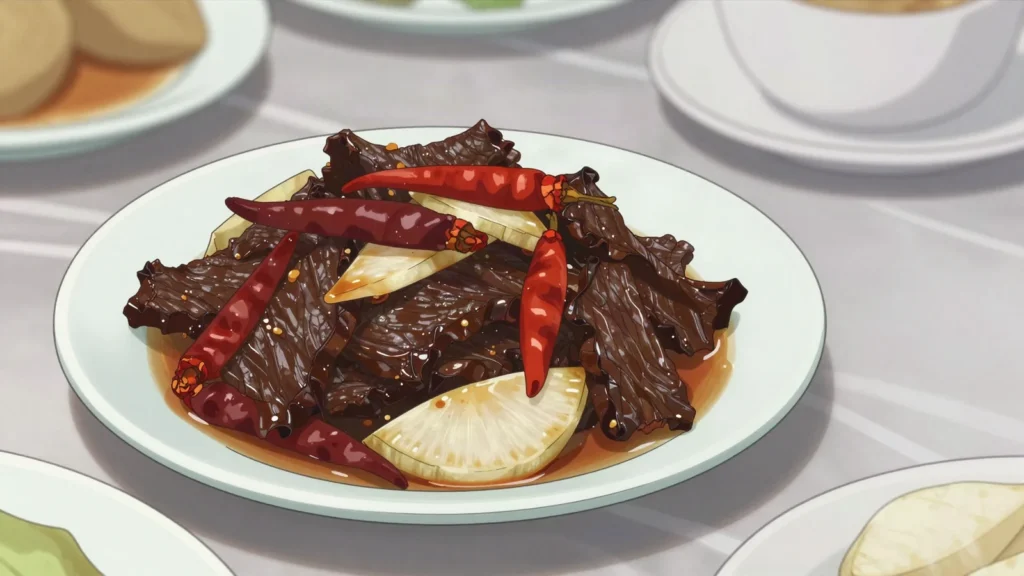
Air-dried beef strips cooked with chilli and radish, preserved in Bhutan’s cold dry winter air before refrigeration reached the valleys.
Frequently asked questions
What is Shakam Paa?
Shakam Paa is a main from Bhutan: sun-dried beef stir-fried with dried chilies and radish. Air-dried beef strips cooked with chilli and radish, preserved in Bhutan’s cold dry winter air before refrigeration reached the valleys.
How long does Shakam Paa take to make?
Shakam Paa takes 20 minutes plus soaking of preparation and 30 minutes of cooking. The recipe makes serves 4. It is rated medium to make.
What can I substitute in Shakam Paa?
Yes, within limits. Fresh beef can be used instead, giving a quite different dish since the chewy dried texture is lost — the atlas records that plainly. Bhutanese red rice is the traditional partner, nutty and slightly chewy and grown in the high valleys; plain rice works as a substitute.
What is the most important thing to get right in Shakam Paa?
Use a wide pan rather than a deep one. Add the sliced onion to the pan. Cook it for about eight minutes. It should soften and turn golden. Add the crushed garlic to the pan. Give it about one full minute. Add the dried chillies to the pan.