
Ingredients
Greens
- 800 gmixed leaves: rape (chomolia), pumpkin leaves, beetroot tops, spinach or wild seruoe, stems stripped and leaves shredded
- 1large onion, finely sliced
- 2tomatoes, chopped
- 3 tbspsunflower oil
- 1 tspsalt
- ½ tspblack pepper
- 120 mlwater
Optional finishing
- 2 tbspcoarsely ground roasted peanuts
- 1green chilli, sliced
To serve
- Papa (stiff maize porridge), hot
Directions
- Strip the tough central ribs from the leaves. Pumpkin leaves also need their hairy outer skin pulled off the stems, working from the cut end like stringing celery.
- Wash the leaves in two changes of water, since garden and wild greens carry grit, then stack, roll and slice into 1 cm ribbons.
- Heat the oil in a heavy pot over medium heat and fry the onion 6–8 minutes until soft and just beginning to colour at the edges.
- Add the tomatoes and cook 4–5 minutes, pressing them with the spoon, until they collapse into a loose sauce and the oil separates at the sides.
- Add the shredded leaves in handfuls, stirring each batch until it wilts before adding the next. They will reduce to about a third of their volume.
- Pour in the water, season with salt and pepper, cover and braise over low heat for 12–15 minutes, stirring twice.
- The moroho is ready when the leaves are completely tender with no squeak between the teeth, and the liquid has reduced to a glossy film rather than a pool. Tough greens like rape may want 5 minutes longer.
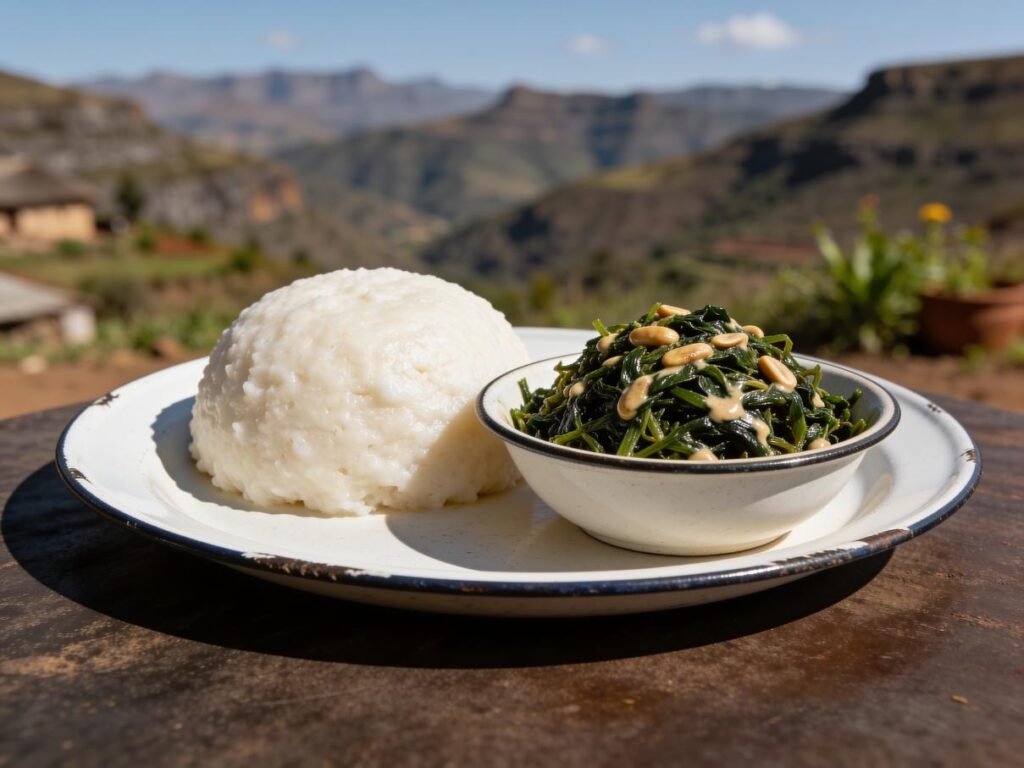
- Stir in the ground peanuts and chilli if using, check the salt, and serve hot beside papa, eaten with the fingers by pinching up porridge and using it to scoop the greens.
Technique
- Moroho is a category, not a fixed recipe: it means whatever leaves are in the garden or gathered wild that week, and Basotho cooks mix cultivated rape with wild seruoe and lerotho.
- Long braising is correct here. These are robust, slightly bitter leaves, and quick-wilting them the way you would treat spinach leaves them fibrous and harsh.
- Ground peanuts are a common Lesotho enrichment and add body without meat; add them at the end so they do not scorch.
- Traditionally the pot goes on a three-legged stand over coals, and the smoke is part of the flavour. A heavy cast-iron pot on a low flame is the nearest indoor equivalent.
Substitutions
- No rape or pumpkin leaves: use a mixture of kale, cavolo nero and Swiss chard, braised for the same length of time.
- Sunflower oil is standard, but a spoonful of butter stirred in at the end is the celebratory version.
Variations
- Moroho with a spoon of thick sour milk stirred in off the heat.
- A version cooked with sliced potato so it stretches to feed more.
- Moroho le lipabi, served with coarse toasted maize meal sprinkled over.
History
A dish of leafy greens, most often wild spinach, pumpkin leaf or other locally available greens, cooked simply with onion and tomato, developed in Basotho home cooking as an everyday vegetable accompaniment to papa, the country’s staple maize porridge. Its preparation, using whatever leafy greens are seasonally available and foraged or grown locally, reflects a resourceful, practical approach to vegetable cooking well suited to Lesotho’s mountainous terrain and its correspondingly limited variety of large-scale cultivated produce compared to lower-elevation agricultural regions. Moroho remains a common, everyday dish across Basotho households, considered an essential nutritional and flavour counterpart to the comparatively plain, starchy papa it is almost always served alongside.
Frequently asked questions
What is Moroho?
Moroho is a salad & side from Lesotho: wild or garden greens braised with onion. A dish of leafy greens, most often wild spinach, pumpkin leaf or other locally available greens, cooked simply with onion and tomato, developed in Basotho home cooking as an everyday vegetable accompaniment to papa, the country’s staple maize porridge. Its preparation, using whatever leafy greens are seasonally available and foraged or grown locally, reflects a resourceful, practical approach to vegetable cooking well suited to Lesotho’s mountainous terrain and its correspondingly limited variety of large-scale cultivated produce compared to lower-elevation agricultural regions. Moroho remains a common, everyday dish across Basotho households, considered an essential nutritional and flavour counterpart to the comparatively plain, starchy papa it is almost always served alongside.
How long does Moroho take to make?
Moroho takes 15 min of preparation and 25 min of cooking. The recipe makes 4 servings. It is rated easy to make.
What can I substitute in Moroho?
Yes, within limits. No rape or pumpkin leaves: use a mixture of kale, cavolo nero and Swiss chard, braised for the same length of time. Sunflower oil is standard, but a spoonful of butter stirred in at the end is the celebratory version.
What is the most important thing to get right in Moroho?
The moroho is ready when the leaves are completely tender with no squeak between the teeth, and the liquid has reduced to a glossy film rather than a pool. Tough greens like rape may want 5 minutes longer.