
Ingredients
The wrappers
- 24samosa pastry strips
- or spring roll wrappers
- cut into strips
The fish filling
- 500 gwhite fish
- or tinned tuna, drained
- 2onions, finely chopped
- 4garlic cloves, crushed
- 3cm ginger, grated
- 2green chillies, chopped
- 1 teaspoonground cumin
- 1 teaspoonground turmeric
- 1 teaspooncurry powder
- chopped coriander
- juice of 1 lime
- 3 tablespoonsoil
- salt
The paste
- 3 tablespoonsplain flour
- a little water
To fry
- oil, for deep frying
- a deep heavy pot
Directions
- Flour paste seals the final edge. The filling must be cooked and cooled. Poach or steam the fish until just cooked. Give it about eight full minutes. Flake the cooked fish carefully. Check thoroughly for any bones. Check the fish very thoroughly. Heat the oil in a wide frying pan. Add all the chopped onion to it. Cook it for about ten full minutes. The onion should soften completely.
- Cook it properly before anything else. It should not brown much though. Add the garlic, ginger and chilli. Give them about one full minute. Add the cumin, turmeric and curry powder. Fry them briefly in the hot oil. Heat releases their aromatic oils. Give them about thirty seconds only. Stir them so they do not burn. Fold the flaked fish into the pan.
- Fold it gently rather than stirring. That keeps the flakes reasonably whole. Cook the filling until quite dry. All the liquid must cook away. Stir in the lime and coriander. Add them off the heat entirely. Both of them fade if cooked at all.
- Let the filling cool completely. Hot filling melts the thin pastry. Cool it right down completely first. Mix the flour with a little water. Add water a few drops at a time. Work it into a thick smooth paste. It should be much like thick glue.
- Lay a pastry strip on the bench. Keep the rest covered as you work. They dry out very quickly indeed. Fold one corner across into a triangle. Fold it diagonally across the strip.
- Hold the cone open in your hand. The cone must have a closed point. Check the point before you fill it. Press it closed if it gapes at all. Spoon the cold filling into the cone. Fill it about three quarters full. Leave room to fold the flap over. Press it down gently as you fill. Brush the remaining flap with paste.
- Fold the flap over the opening. Press it down firmly all round. Work right along the whole edge. Check there are no gaps at all. Heating the oil takes real attention. Pour the oil into a deep heavy pot. Fill it no more than half full at all.
- Heat it to about one hundred and eighty degrees. A deep pot of hot oil is genuinely dangerous. Keep a lid nearby to smother a flare-up. Never put water on an oil fire at all.
- Keep children well away from the pot. Do not crowd the pot at any point. Work in small batches instead. They also need room to turn over. Turn them over for even colour. The filling only needs warming. Lift them out onto a wire rack.
- Let all the excess oil drip away. That softens the pastry within minutes. Serve them straight from the fryer. The filling is extremely hot inside. Freeze them separated on a tray. Fry them straight from frozen. They keep for one day once fried.
Technique
- Check the flaked fish very thoroughly for bones, running your fingers through it: nobody expects a bone inside a samosa and bites down without care, and a bone can lodge in the throat. The filling is hidden entirely, so this matters more than it would in a visible dish.
- Fish and meat versions look completely identical from the outside and nobody can tell them apart — say clearly what is in them, since fish allergy can be severe.
- Seal every edge with flour paste thick enough to work like glue and check the cone’s point is closed before filling: an unsealed samosa opens in the oil, spills its filling and makes the oil spit badly. Cook the filling quite dry too, since fish releases a lot of moisture and a wet filling makes soggy pastry and bursts them in the oil.
Substitutions
- Tinned tuna stands in for fresh white fish and is genuinely as common, being quicker; meat fillings are also made and look identical from outside.
- A deep pot of hot oil is genuinely dangerous. Fill it no more than half full, never leave it unattended, lower them in gently, keep a lid nearby to smother a flare-up, never put water on an oil fire and keep children away.
Variations
- Fold the flaked fish into the pan gently rather than stirring, which keeps the flakes reasonably whole where vigorous stirring makes a paste; stir the lime and coriander in off the heat, since both fade if cooked.
- Keep the pastry strips covered as you work and use one at a time, since they dry out very quickly and dry pastry cracks when folded and refuses to seal. Cool the filling completely first, since hot filling melts the pastry and steams inside the wrapper.
- They freeze extremely well unfried, separated on a tray then bagged, and fry straight from frozen — which is how Ramadan batches are made. The samosa reached the Comoros with Indian and Yemeni traders across the Indian Ocean, and the fish filling reflects the islands directly; the atlas also carries Somali sambuus and Burmese samusa thoke.
History
The samosa, brought by Indian and Yemeni traders; Comorians fry it for Ramadan and sell it from street baskets.
Frequently asked questions
What is Samoussa?
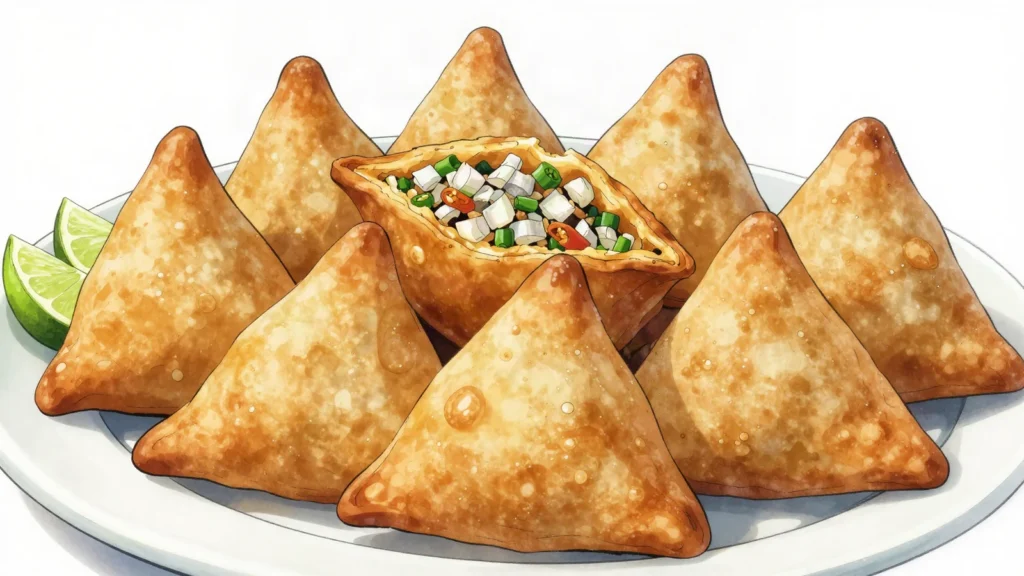
Samoussa is a street food from Comoros: crisp fried triangles filled with spiced fish or meat. The samosa, brought by Indian and Yemeni traders; Comorians fry it for Ramadan and sell it from street baskets.
How long does Samoussa take to make?
Samoussa takes 1 hour of preparation and 30 minutes of cooking. The recipe makes about 24 pastries. It is rated hard to make.
What can I substitute in Samoussa?
Yes, within limits. Tinned tuna stands in for fresh white fish and is genuinely as common, being quicker; meat fillings are also made and look identical from outside. A deep pot of hot oil is genuinely dangerous. Fill it no more than half full, never leave it unattended, lower them in gently, keep a lid nearby to smother a flare-up, never put water on an oil fire and keep children away.
What is the most important thing to get right in Samoussa?
Flour paste seals the final edge. The filling must be cooked and cooled. Poach or steam the fish until just cooked. Give it about eight full minutes. Flake the cooked fish carefully. Check thoroughly for any bones. Check the fish very thoroughly. Heat the oil in a wide frying pan. Add all the chopped onion to it. Cook it for about ten full minutes. The onion should soften completely.