
Ingredients
Dough
- 500 gplain flour
- 300 mlwarm water
- 1 tspsalt
- 1 tspsugar
- oil, for stretching
To layer
- 250 gghee or samneh, melted
Between the layers
- 400 mldouble cream, or qishta
- 150 gsugar
To finish
- 200 ghoney
- 50 gbutter
- ground cardamom
- crushed pistachios or almonds
Equipment
- a large oiled surface
- a round baking tin
Directions
- Mix the flour, salt, sugar and warm water into a soft dough. Knead it hard for a full 10 to 12 minutes until it is very smooth and stretchy. Knead it properly. The dough must stretch until you can see through it, and an under-worked one tears at the first pull.
- Divide it into 8 to 10 balls, coat each thoroughly in oil, cover, and rest at least an hour. Oil a large smooth surface generously rather than flouring it. Flour makes the dough grip and tear; oil lets it slide out thin, which is why every stretched-dough tradition uses it. Take a ball, flatten it, and push it outward with oiled palms until it is a huge translucent sheet.
- Work from the centre outward and let the weight of the dough help as it hangs over the edge. It should end up thin enough to read through, and the edges will be thicker.
- Fold the sheet loosely into a rough square or gather it and lay it in the tin. Lay it in the tin loosely and gathered rather than flat and stretched, so it keeps air and folds between the layers. Now spread a thin layer of sweetened cream over it.
- Repeat: another stretched and ghee-brushed sheet, then cream, and keep building. Keep the cream layers thin. Too much and the middle stays wet and the pastry never crisps. Brush the top generously with more ghee.
- Bake at 190°C (375°F) for 35 to 40 minutes until deep golden and crisp on top. The top should be properly browned and the edges crisp, while the middle stays soft with the cream.
- Pour it slowly across the whole surface, in stages, letting each pour soak in. Use more honey than feels reasonable, because it is the point of the dish. Scatter crushed pistachios or almonds over. Let it stand 15 minutes before cutting, so the honey settles through. Serve it warm, cut into squares or wedges, with sweet tea.
Technique
- Samneh, aged clarified butter, gives a distinctly different and more traditional flavour than plain ghee.
- Qishta, the thickened Middle Eastern cream, is the traditional filling and double cream stands in.
- It does not keep well and the layers soften overnight.
Substitutions
- Filo pastry, using several buttered sheets per layer, which is far easier and less good.
- Clotted cream or thick double cream in place of qishta.
Variations
- Made with more cream, as a richer version.
- With banana layered through, which is common in Yemen.
- Bint al-sahn, the related Yemeni honey bread with fewer cream layers.
History
Sold in Yemeni bakeries and made for celebrations; the sheets are stretched paper-thin and stacked.
Frequently asked questions
What is Sabaya?
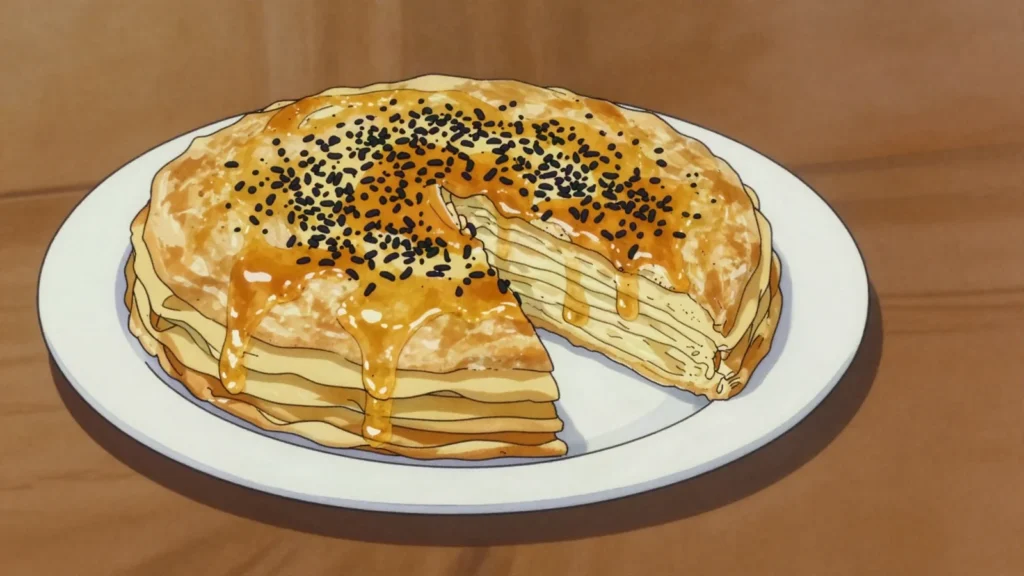
Sabaya is a dessert from Yemen: layered pastry sheets baked with cream and drenched in honey. Sold in Yemeni bakeries and made for celebrations; the sheets are stretched paper-thin and stacked.
How long does Sabaya take to make?
Sabaya takes 1 hr plus 1 hr resting of preparation and 40 min of cooking. The recipe makes 8 servings. It is rated hard to make.
What can I substitute in Sabaya?
Yes, within limits. Filo pastry, using several buttered sheets per layer, which is far easier and less good. Clotted cream or thick double cream in place of qishta.
What is the most important thing to get right in Sabaya?
Mix the flour, salt, sugar and warm water into a soft dough. Knead it hard for a full 10 to 12 minutes until it is very smooth and stretchy. Knead it properly. The dough must stretch until you can see through it, and an under-worked one tears at the first pull.