
Ingredients
The cane juice
- 4 litresfresh cane juice
- pressed from cane
- or 2 kg unrefined cane sugar
- with 1 litre water
- see the note
To clarify
- a little lime juice
- optional
- a fine cloth, to strain
The moulds
- small wooden moulds
- or metal tins
- lightly oiled
- or banana leaf cones
The equipment
- a wide heavy pan
- a sugar thermometer
- a long-handled spoon
- thick oven gloves
Directions
- Use a pan far deeper than seems needed. Never lean over the pan while it boils. Keep children entirely out of the kitchen. Run a sugar burn under cold water at once.
- Keep it there for a full twenty minutes. Do not try to pull the sugar off the skin. Use a pan at least three times the volume. It is done at cane mills rather than homes. Brown sugar often has it added back. Rapadou never had it taken out at all. Strain the cane juice through a fine cloth. Strain it twice if it looks dirty.
- Add a little lime juice to the pan. Acid helps impurities coagulate together. Pour the juice into a wide heavy pan. It must be very much larger than the juice. Bring it right up to a steady boil. Lower the heat if it climbs the pan. Skim the scum from the surface. Lift it off with a long-handled spoon.
- Keep skimming until no more rises. Let it boil steadily for about an hour. Stir it more as it gets thicker. Thick syrup catches and burns on the base. Use a sugar thermometer throughout. It must reach about one hundred and twenty degrees.
- Drop a little syrup into cold water. It should form a soft pliable ball. Use a spoon to take that sample. Never dip fingers into hot syrup. Let the sample cool in the water first. Only then should you touch it at all.
- Take the pan right off the heat. Beat the syrup with a wooden spoon. Beat it for two or three minutes. It must go into moulds before it sets. Pour it quickly into the oiled moulds. Have all the moulds ready beforehand. Work fast and steadily throughout. Oil them lightly before pouring.
- Press the surface level with a spoon. Work quickly before it sets hard. Press it down into the corners. Let the blocks cool completely. They need several hours to set hard. Warm the mould briefly if one sticks. Do not force it while it is warm.
- Wrap the blocks and keep them dry. Damp turns it soft and sticky. Keep it sealed in a dry place. It keeps for many months that way. Grate or chop it to sweeten things. Grate it on a coarse metal grater. Take real care as it can shatter. Dissolving it is straightforward enough.
- Warm it in a little water to dissolve it. It dissolves slowly in cold liquid. Warm water speeds it considerably. It keeps many months wrapped and dry.
Technique
- This boils sugar past one hundred and twenty degrees, far above boiling water, and molten sugar is the most dangerous thing in a kitchen: water splashes and runs off skin where sugar sticks and keeps burning. Wear long sleeves and thick gloves, use a pan at least three times the volume of the liquid since cane syrup can triple as it foams, never lean over it, and keep children out of the kitchen. Run any sugar burn under cold water for a full twenty minutes, do not try to pull the sugar off the skin, and seek medical help for anything beyond small.
- The last stage happens very fast — temperature climbs quickly once the water has gone and it overshoots within a minute, so watch the thermometer constantly near the end. To test without one, drop a little syrup into cold water with a spoon and look for a soft pliable ball that holds its shape; never dip fingers into hot syrup and let the sample cool in the water first.
- Beating the syrup off the heat for two or three minutes is what makes rapadou grainy and crumbly rather than glassy and hard — it goes from glossy to matte as it starts crystallising. It stiffens rapidly once beaten, so have every mould oiled and ready beforehand.
Substitutions
- Unrefined cane sugar dissolved in water stands in where fresh cane juice cannot be had — it is not the same thing at all, but gives a comparable block, and the atlas gives the substitute plainly rather than pretending otherwise. Fresh cane juice ferments within hours in warm weather, which is why mills press and boil on the same day.
- The same product is made across every cane-growing region with essentially the same technique and mainly different mould shapes: panela in Colombia and Ecuador, rapadura in Brazil, piloncillo in Mexico.
Variations
- Rapadou is whole unrefined cane sugar with nothing removed and the molasses never taken out — a genuine difference in kind from white sugar, which has it removed, or brown sugar, which often has it added back.
- Skim the grey-green scum thoroughly as it rises during the first boiling, and a little lime juice helps impurities coagulate so they rise to be skimmed — a genuine traditional practice giving a cleaner block.
- Unrefined sugar absorbs moisture readily and damp turns it soft and sticky, so keep the blocks wrapped and sealed somewhere dry, where they last many months.
History
Boiled down at small Haitian cane mills and sold in cakes; it sweetens porridge, coffee and clairin.
Frequently asked questions
What is Rapadou?
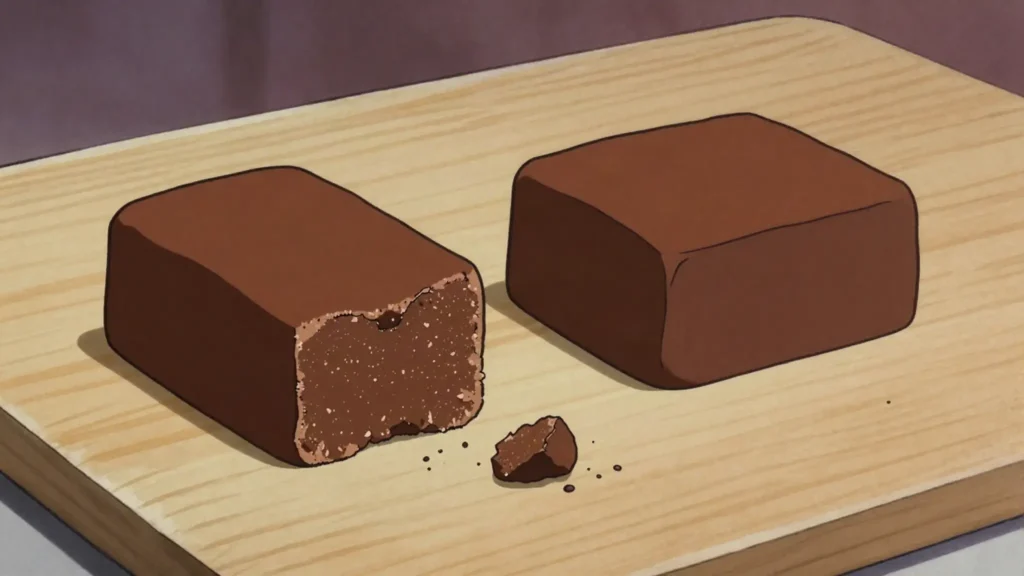
Rapadou is a snack from Haiti: hard block of unrefined cane sugar, dark and molasses-scented, chewed or dissolved. Boiled down at small Haitian cane mills and sold in cakes; it sweetens porridge, coffee and clairin.
How long does Rapadou take to make?
Rapadou takes 20 minutes of preparation and 1 hour of cooking. The recipe makes about 8 small blocks. It is rated hard to make.
What can I substitute in Rapadou?
Yes, within limits. Unrefined cane sugar dissolved in water stands in where fresh cane juice cannot be had — it is not the same thing at all, but gives a comparable block, and the atlas gives the substitute plainly rather than pretending otherwise. Fresh cane juice ferments within hours in warm weather, which is why mills press and boil on the same day. The same product is made across every cane-growing region with essentially the same technique and mainly different mould shapes: panela in Colombia and Ecuador, rapadura in Brazil, piloncillo in Mexico.
What is the most important thing to get right in Rapadou?
Use a pan far deeper than seems needed. Never lean over the pan while it boils. Keep children entirely out of the kitchen. Run a sugar burn under cold water at once.