
Ingredients
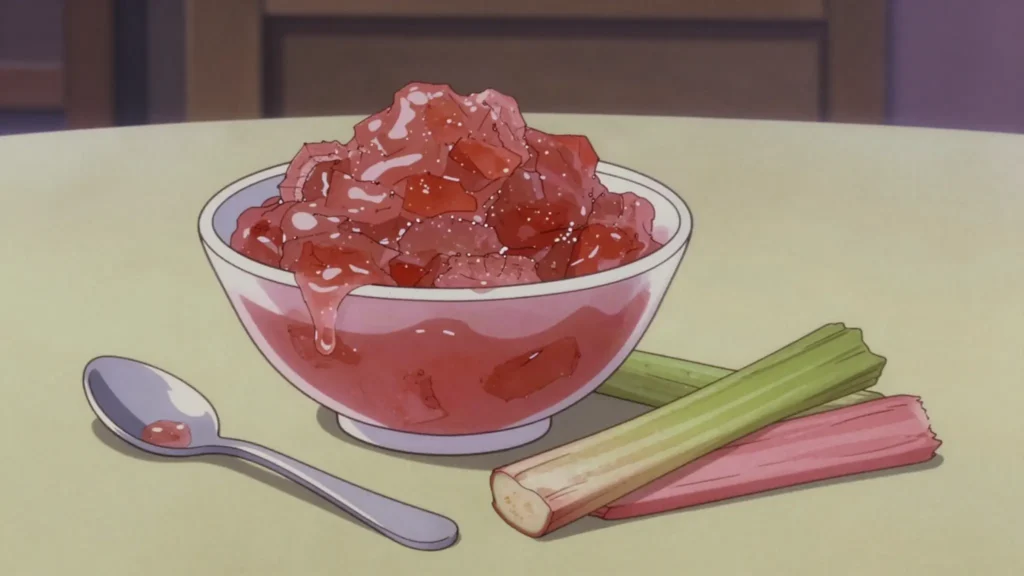
The rhubarb
- 1.5 kgrhubarb stalks
- leaves cut off and discarded
- chopped into short lengths
The rest
- 1 kgsugar
- or to taste
- a little water
- just to start it
- juice of 1 lemon
- optional
Sometimes added
- 1vanilla pod
- split
- a piece of fresh ginger
- a stick of cinnamon
The jars
- clean glass jars
- sterilised
- with tight lids
Directions
- Cut them right off and discard them. Cut the leaves off where they meet the stalk. Discard every part of the leaf. Do not compost them near food plants. Wash the stalks after trimming them. Rhubarb tolerates cold and short summers.
- Use a deep pan rather than a shallow one. Stir with a long-handled spoon. Cut every leaf off and discard it. Cut at the very top of the stalk. Leave no leaf material at all. Wash the trimmed stalks thoroughly. Wash it under running cold water.
- Trim off any dry or damaged ends. Young rhubarb needs no peeling at all. Pull the outer strings off those. Chop the stalks into short lengths. About two centimetres is a good size.
- Layer the rhubarb and sugar in the pan. Let it all stand for a few hours. Add a splash of water to begin it. Heat it very gently until juice runs. Heat the pan gently at the start. Stir it until the sugar fully dissolves. Bring it up to a rolling boil. It needs a proper vigorous boil.
- Stir it regularly as it boils. Use a heavy pan to reduce that risk. Skim the foam from the surface. Skim it off with a large spoon. Cooking it down takes real time. Boil it for about forty minutes. Chill a small plate in the freezer first. Spoon a little jam onto the cold plate. Let it sit there for a full minute. It should wrinkle rather than running. Boil it five more minutes and retest.
- Take the pan off the heat while testing. Understanding the soft set is worth explaining. Add vanilla, ginger or cinnamon. Add them near the end of the boiling. Wash the jars in very hot soapy water. One hundred and forty degrees for fifteen minutes.
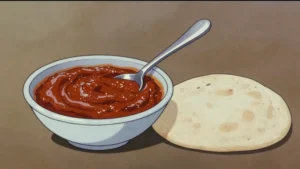
- Ladle the hot jam into the hot jars. Use a jam funnel if you have one. That keeps the rims entirely clean. Put the lids on while it is still hot. Storing it is straightforward enough. Discard any jar showing mould at all. Serving it is done in many ways. Spread it on pancakes or flatbread. Spoon it over cold skyr as well. It is thick, sour and very high in protein.
Technique
- Rhubarb leaves are genuinely toxic, containing high levels of oxalic acid, and must never be eaten — this is well documented rather than a folk belief. Cut them off where they meet the stalk, discard every part of the leaf, and wash the stalks after trimming. The stalks themselves are entirely safe.
- Boiling jam is far hotter than boiling water, sticks to skin and burns very badly, and it spits as it thickens — thick jam erupts in slow heavy bubbles that throw hot jam upward. Use a deep pan rather than a shallow one, stir with a long-handled spoon and never lean over it while it boils.
- Heat it gently until the sugar has fully dissolved before raising the heat at all, since undissolved sugar scorches on the base and taints the whole batch. Then it needs a genuine rolling boil rather than a simmer, stirred regularly and scraped off the bottom.
Substitutions
- Rhubarb is low in pectin so this sets softer than most jams, which is characteristic; lemon juice adds acid and some pectin, longer boiling thickens by reduction, and jam sugar with added pectin is the third route. The traditional version is simply boiled down with none of them.
- Less sugar gives a sharper fresher jam but keeps for far less time — refrigerate a low-sugar jam and say plainly which one you have made.
Variations
- Test the set on a plate chilled in the freezer: spoon a little on, leave it a minute, push it with a finger, and it should wrinkle rather than run. Take the pan off the heat while testing. Do not keep boiling hoping for a firm set, since rhubarb simply has little pectin and overboiling gives a dark caramel taste.
- Sterilise the jars in a low oven at one hundred and forty degrees for fifteen minutes and fill them while both jam and jars are hot — cold jars crack, and the cooling jam pulls the partial vacuum that seals the lid.
- Layering the rhubarb with the sugar for a few hours first draws the juice out so little water is needed; starting it straight away with a splash of water works equally well.
History
Rhubarb grows readily in Icelandic gardens, and jamming it is a standard late summer task.
Frequently asked questions
What is Rabarbarasulta?
Rabarbarasulta is a sauce & condiment from Iceland: thick rhubarb jam eaten on pancakes, flatbread and skyr. Rhubarb grows readily in Icelandic gardens, and jamming it is a standard late summer task.
How long does Rabarbarasulta take to make?
Rabarbarasulta takes 20 minutes of preparation and 45 minutes of cooking. The recipe makes about 4 jars. It is rated easy to make.
What can I substitute in Rabarbarasulta?
Yes, within limits. Rhubarb is low in pectin so this sets softer than most jams, which is characteristic; lemon juice adds acid and some pectin, longer boiling thickens by reduction, and jam sugar with added pectin is the third route. The traditional version is simply boiled down with none of them. Less sugar gives a sharper fresher jam but keeps for far less time — refrigerate a low-sugar jam and say plainly which one you have made.
What is the most important thing to get right in Rabarbarasulta?
Cut them right off and discard them. Cut the leaves off where they meet the stalk. Discard every part of the leaf. Do not compost them near food plants. Wash the stalks after trimming them. Rhubarb tolerates cold and short summers.