
Ingredients
The chicken
- 8chicken pieces
- thighs and drumsticks
- juice of 2 limes
- 4garlic cloves, crushed
- 1 teaspoonground cumin
- 1 teaspoonoregano
- salt and pepper
The coating
- 200 gplain flour
- 1 teaspoonpaprika
- 1 teaspoonsalt
- black pepper
The tajadas
- 3green plantains
- sliced thin lengthwise
- oil, for deep frying
- salt
The toppings
- half a cabbage, finely shredded
- juice of 2 limes
- 2tomatoes, chopped
- salt
- ketchup and mayonnaise
- hot sauce
Directions
- Slice them thin and lengthwise. Hot sauce goes on top as well. Check it rather than guessing. Wash hands after handling raw chicken. Wash boards and knives as well. Do not let raw juices touch other food. Mix the lime juice, garlic and spices. Rub it all over the chicken pieces. Two hours is a good minimum here.
- Oil both of your hands lightly. Cut both of the ends off first. Score the skin lengthwise in strips. Score down through the skin only. Oil your hands before you start. Slice them thin along their length. Aim for about three millimetres.
- Heat the oil to one hundred and seventy degrees. A deep pot of hot oil is genuinely dangerous. Keep a lid nearby to smother a flare-up. Never put water on an oil fire at all. Keep children well away from the pot. Fry all the slices in batches. Give them about three minutes. Lift them out onto a wire rack. Salt them while they are still hot.
- Salt sticks to hot oily surfaces. Salt them straight from the oil. Mix the flour with paprika and seasoning. Lift the chicken from the marinade. Press it into the seasoned flour. Coat every single piece thoroughly. Press the flour into all the crevices.
- Shake off all the excess afterwards. Loose flour burns in the hot oil. Shake it off properly each time. Heat the oil to one hundred and seventy degrees. Chicken on the bone needs real time.
- Bone reads hotter than the meat. Check the thickest part of the thigh. Pierce the thigh with a knife tip. The juices should run entirely clear. Lift the chicken onto a wire rack. Let all the excess oil drip away. Making the slaw is done meanwhile.
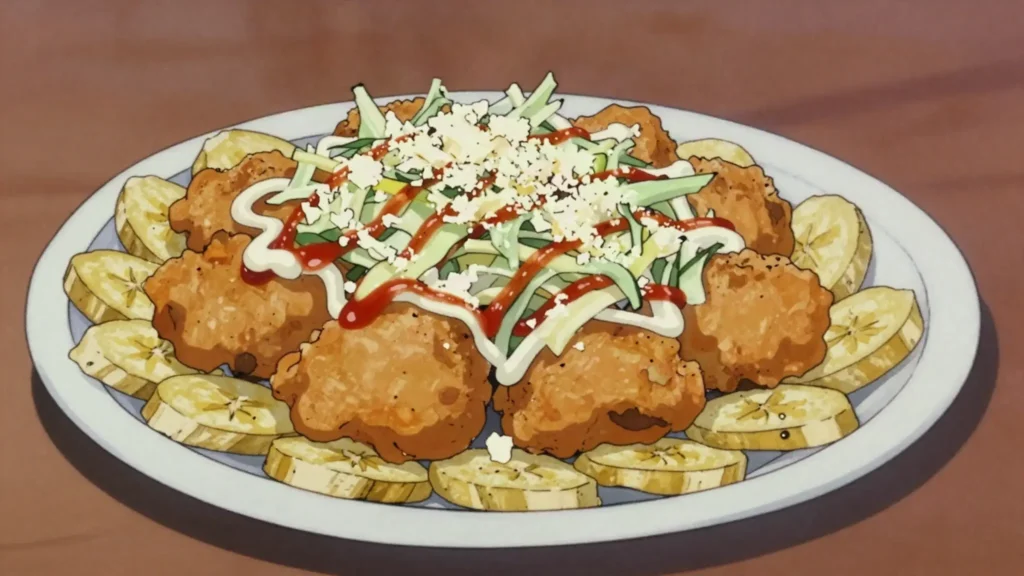
- Shred the cabbage very finely. Slice the cabbage as thin as you can. Toss it with lime juice and salt. Add the chopped tomato in to it. Twenty minutes is about right. Lay the plantain slices on a plate. Spread them out as a base layer. Cover the whole plate with them. They take the sauces from above. Set the fried chicken on the plantain.
- Pile the cabbage slaw over it. Squeeze ketchup over everything. Squeeze mayonnaise over that too. Add plenty of hot sauce to taste. Serving it is always done immediately. Assemble every single plate fresh.
Technique
- Chicken must be cooked right through, since undercooked chicken carries real risk. Fry bone-in pieces at a moderate one hundred and seventy degrees for about fifteen minutes — too hot and the coating burns while the inside stays raw. Check the thickest part of the thigh, avoiding the bone, for seventy-five degrees, or pierce it and look for entirely clear juices. Wash hands, boards and knives after handling it raw.
- Tajadas are sliced thin lengthwise and fried once, coming out like plantain crisps — quite unlike patacones, which are thick and twice fried. Use genuinely green plantains, which are starchy and firm and fry crisp, since ripe ones go soft and sweet.
- A mandoline is genuinely dangerous and takes fingertips off very easily: always use the guard, and never slice the last piece by hand.
Substitutions
- Green plantain releases a sticky sap that stains hands and clothes darkly, so oil your hands before peeling; score the skin lengthwise and prise each strip away, since it does not slip off.
- Dress the cabbage slaw with lime about twenty minutes before serving, since the lime softens it over time and it should stay crisp.
Variations
- The plantain goes down first as the base, the chicken on top, then the slaw, then the sauces — the plantain soaks up what runs down, which is a deliberate arrangement.
- Chuco means dirty in Honduran slang and the nickname pollo chuco refers to the messy pile of sauces running over everything; it is affectionate.
- Salt the fried plantain straight from the oil while hot and oily, since salt slides off once cooled.
History
Fried chicken over green plantain slices with cabbage and sauces, sold from Tegucigalpa street stands and known as pollo chuco.
Frequently asked questions
What is Pollo con tajadas?
Pollo con tajadas is a street food from Honduras: fried chicken over green plantain slices with slaw and sauces. Fried chicken over green plantain slices with cabbage and sauces, sold from Tegucigalpa street stands and known as pollo chuco.
How long does Pollo con tajadas take to make?
Pollo con tajadas takes 40 minutes plus marinating of preparation and 40 minutes of cooking. The recipe makes serves 4. It is rated medium to make.
What can I substitute in Pollo con tajadas?
Yes, within limits. Green plantain releases a sticky sap that stains hands and clothes darkly, so oil your hands before peeling; score the skin lengthwise and prise each strip away, since it does not slip off. Dress the cabbage slaw with lime about twenty minutes before serving, since the lime softens it over time and it should stay crisp.
What is the most important thing to get right in Pollo con tajadas?
Slice them thin and lengthwise. Hot sauce goes on top as well. Check it rather than guessing. Wash hands after handling raw chicken. Wash boards and knives as well. Do not let raw juices touch other food. Mix the lime juice, garlic and spices. Rub it all over the chicken pieces. Two hours is a good minimum here.