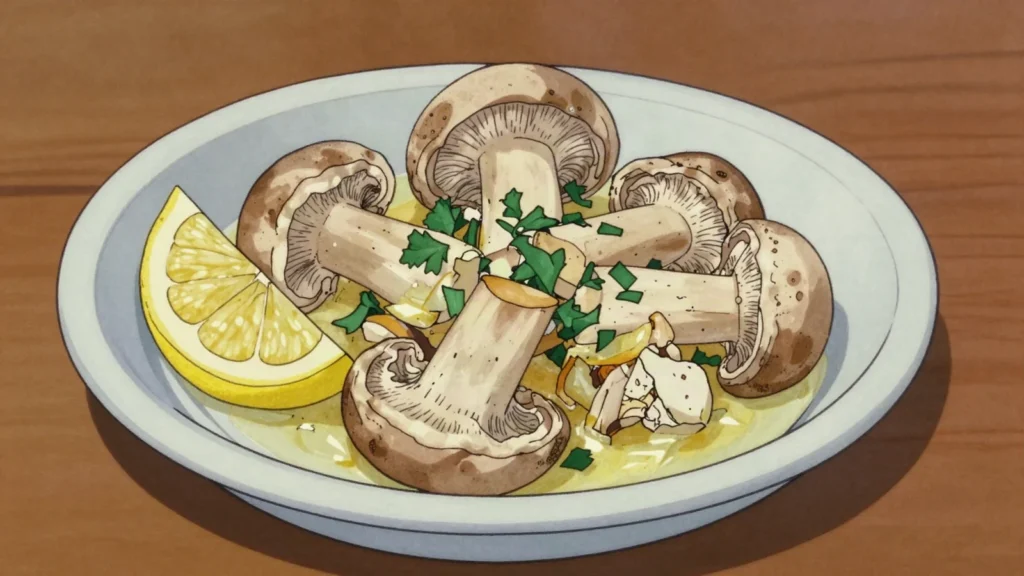

Ingredients
The mushrooms
- 1 kgomajova
- termitomyces, from a trusted source
- cleaned and sliced thickly
To cook
- 80 gbutter
- 1onion, finely chopped
- 2garlic cloves, crushed
- salt and black pepper
Sometimes added
- a little cream
- chopped parsley
- a squeeze of lemon
To serve
- with bread
- or alongside meat
- in the rainy season
Directions
- Butter, onion, garlic and seasoning. A prized ingredient wants little done to it. Keep it plain and let them show. Brush the soil off each mushroom.
- Use a soft brush or a dry cloth. Brush rather than washing them. Trim the gritty base of each stem. Cut it off and discard it entirely. Rinsing them is done sparingly. Rinse them quickly if very dirty. Pat them dry immediately after.
- Slice all the mushrooms thickly. Thick slices hold their meaty texture. Cut them about a centimetre thick. Keep all the pieces substantial. Melt the butter in a wide pan. Add the chopped onion in to it.
- Cook it for about five minutes. Use a wide pan rather than a deep one. Add the sliced mushrooms to the pan. Keep it high enough to sizzle. Cook them in batches if the pan is full. Cooking them takes about eight minutes. Stir them through now and then. The pan looks wet for a few minutes. Wait for that stage rather than stopping early.
- Add the crushed garlic to the pan. Cook it for one full minute only. Add it near the end rather than the start. One minute is quite enough for it.
- Season them with salt and black pepper. Salt draws water out of mushrooms. Add it once they have browned. Stir a little cream into the pan. Let it bubble for a full minute. Some cooks add it and some do not.
- Scatter chopped parsley over them. Add a squeeze of lemon if you like. Add it right at the very last moment. Serving them is always done hot. Spoon them all out onto plates. Serve bread alongside to mop the butter. They are eaten hot from the pan.
Technique
- Wild mushrooms include genuinely deadly species, some closely resembling edible ones, and misidentification has killed people; there is no general test for edibility. The atlas carries the same warning in full under nhedzi and it applies equally here. In Namibia the knowledge is passed on directly, with people shown the species, the mounds and the season in the field, and that teaching is the real safeguard. Buy from a roadside seller who knows exactly what they sell, or use cultivated mushrooms — the atlas gives the recipe as it is cooked rather than telling anyone to forage.
- Do not soak them: mushrooms absorb water readily and turn slimy, then steam rather than frying. Brush the soil off, trim the gritty stem base, and rinse only quickly if very dirty, patting dry at once. Slice them thickly, about a centimetre, since thin slices shrink to nothing where thick ones hold their meaty texture.
- Use a wide pan on a good heat and cook in batches rather than crowding: they release their water first and the pan looks wet for some minutes, then the water evaporates and only then do they brown. The browning is where the flavour is, so wait for that stage. Salt after they have browned, since salt added early draws water out and makes them stew.
Substitutions
- A little cream stirred in makes a richer dish and softens the flavour; some cooks add it and some do not.
- A squeeze of lemon at the very end lifts the richness and is optional rather than standard.
Variations
- They grow in a genuine partnership with termites, which cultivate the fungus underground on plant material they gather and eat it; the mushroom is that fungus fruiting up from the mound after the first rains.
- Caps the width of a plate are ordinary and one mushroom can feed several people; very large caps are cut in wedges or across into strips.
- They are cooked very simply in butter with onion and garlic, since heavy seasoning masks a prized flavour.
History
Giant termite-mound mushrooms that fruit after the first rains in the north and are sold by the roadside on sticks.
Frequently asked questions
What is Omajova?
Omajova is a salad & side from Namibia: giant termite-mound mushrooms sautéed in butter, rainy-season delicacy. Giant termite-mound mushrooms that fruit after the first rains in the north and are sold by the roadside on sticks.
How long does Omajova take to make?
Omajova takes 20 minutes of preparation and 15 minutes of cooking. The recipe makes serves 4. It is rated easy to make.
What can I substitute in Omajova?
Yes, within limits. A little cream stirred in makes a richer dish and softens the flavour; some cooks add it and some do not. A squeeze of lemon at the very end lifts the richness and is optional rather than standard.
What is the most important thing to get right in Omajova?
Use a soft brush or a dry cloth. Brush rather than washing them. Trim the gritty base of each stem. Cut it off and discard it entirely. Rinsing them is done sparingly. Rinse them quickly if very dirty. Pat them dry immediately after.